Iran-US Peace Talks Far Apart Amid Hormuz Crisis
Digital Desk
Iran says it remains far from a peace deal with the US as Houthis threaten the Bab al-Mandeb. India protests after Iranian forces fire on two Indian ships in the Strait of Hormuz.
Iran ‘far’ from final US deal as Houthis threaten key strait
Tehran cites major gaps after progress in negotiations
Iran has confirmed that despite recent diplomatic progress, the country remains “far” from a final peace agreement with the United States. The warning came as Yemen’s Houthi rebels threatened to close the strategic Bab al-Mandeb Strait, escalating fears of a wider maritime conflict.
Iranian parliamentary speaker Mohammad Bagher Ghalibaf, also a lead negotiator, made the admission in a televised national address. He confirmed that while talks had moved forward, fundamental differences persist.
“We are still far from the final discussion,” Mr. Ghalibaf said. “We made progress in the negotiations, but there are many gaps and some fundamental points remain.”
Indian vessels targeted in Hormuz
In a significant escalation for New Delhi, Iranian forces opened fire on two Indian ships in the Strait of Hormuz. Official sources confirmed that 14 vessels were intercepted in total, while 13 were allowed to return. The Ministry of External Affairs has summoned the Iranian ambassador to register a strong protest.
The Islamic Revolutionary Guard Corps Navy has declared the strait closed, warning that any ship attempting passage will be targeted. A maritime agency also reported a tanker came under fire from gunboats in the same waterway.
Houthis deliver stern warning to Trump
Meanwhile, Yemen’s Houthi administration has issued a direct threat to close the Bab al-Mandeb Strait. The warning is aimed at US President Donald Trump over what the group calls “all practices and policies that obstruct peace.”
Houthi deputy foreign minister Hussein al-Ezzi stated that if Sanaa decides to close the strait, no global power would be able to reopen it. The development places additional pressure on global shipping lanes already disrupted by the Hormuz closure.
US releases emergency oil reserves
Amid the growing supply crisis, the United States has withdrawn 26 million barrels of oil from its emergency reserves. The stockpile has been released to private companies in an effort to stabilise global markets.
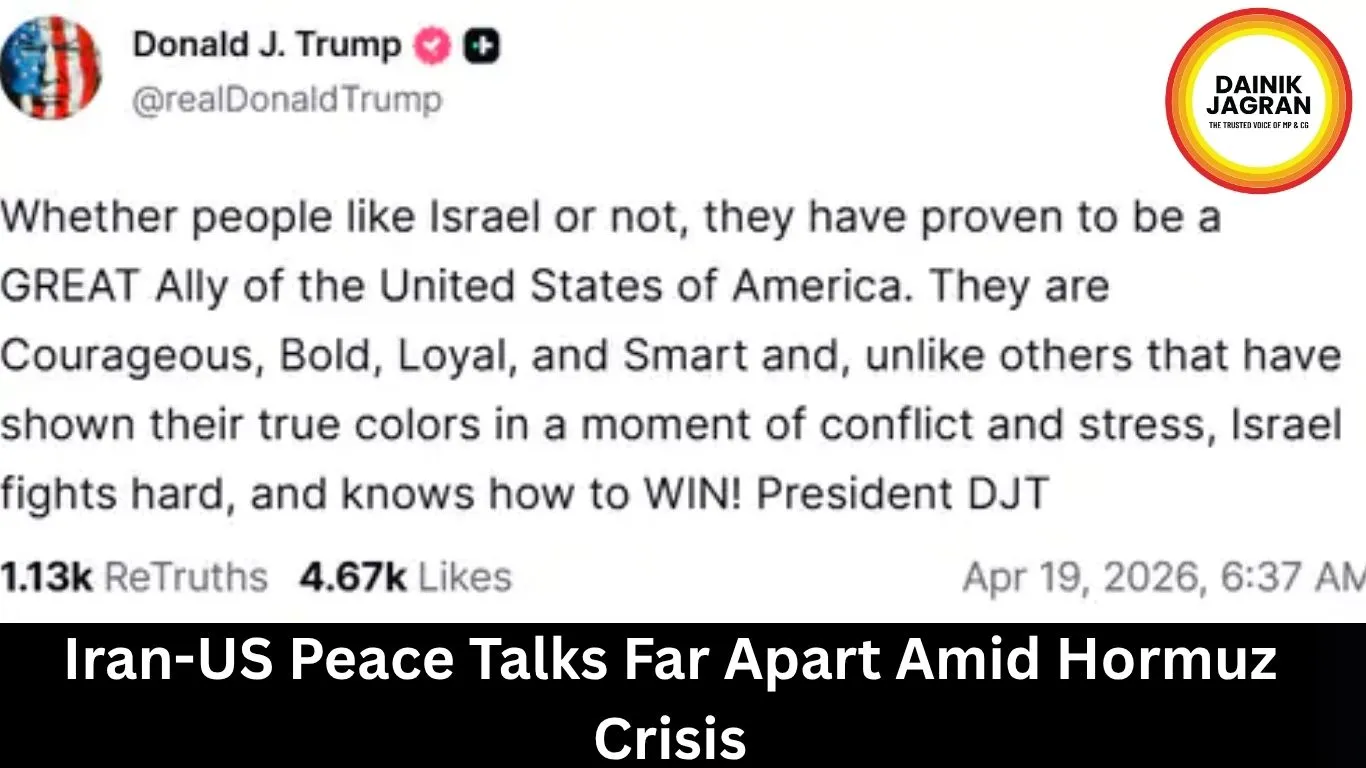
President Trump has also made it clear that while a deal with Iran may be near, the ongoing naval blockade against the country will continue until an agreement is finalised. “Whether people like Israel or not, they have proven to be a GREAT Ally,” Mr. Trump posted on Truth Social.
Next round of talks possible in Pakistan
Diplomatic sources indicate that the next round of US-Iran negotiations could take place in Pakistan as early as Monday. However, neither side has officially confirmed the date or venue.
Iranian deputy foreign minister Saeed Khatibzadeh has also criticised Washington for refusing to abandon its “maximalist” demands. Tehran insists that any lasting peace must address the full scope of regional tensions.
India stresses strong ties with Tehran
Despite the firing on Indian vessels, an Iranian representative has publicly stated that the bilateral relationship between Tehran and New Delhi remains “very strong.” The statement appears aimed at containing diplomatic fallout from the Hormuz incident.
Indian officials, however, continue to monitor the situation closely. The government has advised all Indian-flagged vessels to avoid the strait until further notice. The Ministry of External Affairs is expected to issue a formal demarche to Iran later this week.
Global impact and what comes next
The twin threats to the Strait of Hormuz and Bab al-Mandeb now endanger nearly 40 per cent of the world’s seaborne oil supply. Asian nations, including India and Bangladesh, have already begun reporting fuel shortages and price volatility.
Military analysts suggest Iran still retains nearly 70 per cent of its pre-war ballistic missile stockpile. With the current ceasefire set to expire on April 22, all eyes remain on whether diplomatic channels in Pakistan can bridge the remaining gaps before tensions boil over once again.
--------
🚨 Beat the News Rush – Join Now!
Get breaking alerts, hot exclusives, and game-changing stories instantly on your phone. No delays, no fluff – just the edge you need. ⚡
Tap to join:
🟢 WhatsApp Channel: Dainik Jagran MP CG
Crave more?
🅕 Facebook: Dainik Jagran MP CG English
🅧 Twitter (X): Dainik Jagran MP CG
🅘 Instagram: Dainik Jagran MP CG
Share the fire – keep your crew ahead! 🗞️🔥
Iran-US Peace Talks Far Apart Amid Hormuz Crisis
Digital Desk
Iran ‘far’ from final US deal as Houthis threaten key strait
Tehran cites major gaps after progress in negotiations
Iran has confirmed that despite recent diplomatic progress, the country remains “far” from a final peace agreement with the United States. The warning came as Yemen’s Houthi rebels threatened to close the strategic Bab al-Mandeb Strait, escalating fears of a wider maritime conflict.
Iranian parliamentary speaker Mohammad Bagher Ghalibaf, also a lead negotiator, made the admission in a televised national address. He confirmed that while talks had moved forward, fundamental differences persist.
“We are still far from the final discussion,” Mr. Ghalibaf said. “We made progress in the negotiations, but there are many gaps and some fundamental points remain.”
Indian vessels targeted in Hormuz
In a significant escalation for New Delhi, Iranian forces opened fire on two Indian ships in the Strait of Hormuz. Official sources confirmed that 14 vessels were intercepted in total, while 13 were allowed to return. The Ministry of External Affairs has summoned the Iranian ambassador to register a strong protest.
The Islamic Revolutionary Guard Corps Navy has declared the strait closed, warning that any ship attempting passage will be targeted. A maritime agency also reported a tanker came under fire from gunboats in the same waterway.
Houthis deliver stern warning to Trump
Meanwhile, Yemen’s Houthi administration has issued a direct threat to close the Bab al-Mandeb Strait. The warning is aimed at US President Donald Trump over what the group calls “all practices and policies that obstruct peace.”
Houthi deputy foreign minister Hussein al-Ezzi stated that if Sanaa decides to close the strait, no global power would be able to reopen it. The development places additional pressure on global shipping lanes already disrupted by the Hormuz closure.
US releases emergency oil reserves
Amid the growing supply crisis, the United States has withdrawn 26 million barrels of oil from its emergency reserves. The stockpile has been released to private companies in an effort to stabilise global markets.
President Trump has also made it clear that while a deal with Iran may be near, the ongoing naval blockade against the country will continue until an agreement is finalised. “Whether people like Israel or not, they have proven to be a GREAT Ally,” Mr. Trump posted on Truth Social.
Next round of talks possible in Pakistan
Diplomatic sources indicate that the next round of US-Iran negotiations could take place in Pakistan as early as Monday. However, neither side has officially confirmed the date or venue.
Iranian deputy foreign minister Saeed Khatibzadeh has also criticised Washington for refusing to abandon its “maximalist” demands. Tehran insists that any lasting peace must address the full scope of regional tensions.
India stresses strong ties with Tehran
Despite the firing on Indian vessels, an Iranian representative has publicly stated that the bilateral relationship between Tehran and New Delhi remains “very strong.” The statement appears aimed at containing diplomatic fallout from the Hormuz incident.
Indian officials, however, continue to monitor the situation closely. The government has advised all Indian-flagged vessels to avoid the strait until further notice. The Ministry of External Affairs is expected to issue a formal demarche to Iran later this week.
Global impact and what comes next
The twin threats to the Strait of Hormuz and Bab al-Mandeb now endanger nearly 40 per cent of the world’s seaborne oil supply. Asian nations, including India and Bangladesh, have already begun reporting fuel shortages and price volatility.
Military analysts suggest Iran still retains nearly 70 per cent of its pre-war ballistic missile stockpile. With the current ceasefire set to expire on April 22, all eyes remain on whether diplomatic channels in Pakistan can bridge the remaining gaps before tensions boil over once again.