


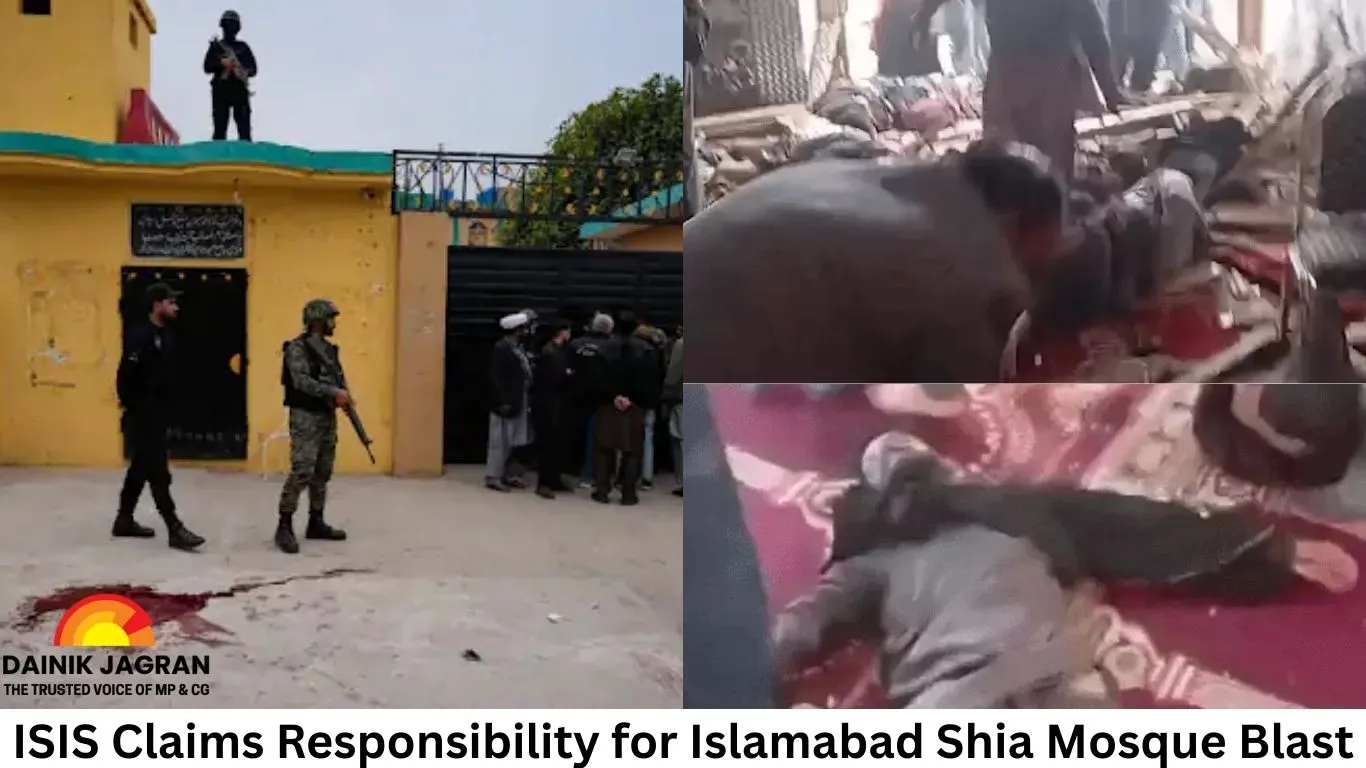
ISIS Claims Responsibility for Islamabad Shia Mosque Blast; India Rejects Pakistan’s Allegations
Digital Desk
The blast occurred at the Khadija al-Kubra mosque (Imambargah) in the Shahzad Town area when a suicide bomber detonated explosives amid a large congregation of worshippers. The explosion caused extensive damage and panic, with rescue teams rushing the injured to nearby hospitals. While official figures put the death toll at 31, some local media reports suggested higher casualties.
India strongly condemned the attack and rejected allegations from Pakistan linking New Delhi to the incident. In a late-night statement, the Ministry of External Affairs (MEA) termed the claims “baseless” and said Pakistan was “deceiving itself” by blaming others for its internal security failures. The response followed remarks by Pakistan’s Defence Minister Khawaja Asif, who alleged involvement by India and Afghanistan.
Pakistan’s leadership expressed grief and condemnation. President Asif Ali Zardari described the targeting of worshippers as “an attack against humanity” and directed authorities to ensure proper medical care for the injured. Parliamentary Affairs Minister Dr Tariq Fazal Chaudhary also denounced the bombing, urging national unity and support for law enforcement agencies in combating terrorism.
The Islamabad attack has renewed concerns about security in Pakistan’s capital, coming just months after a November 2025 suicide blast outside the District and Sessions Court in the G-11 area that killed at least 12 people. Analysts say the latest incident underscores the expanding reach of militant groups, including Islamic State-Khorasan (IS-K), beyond traditional conflict zones.
According to the Global Terrorism Index 2025, Pakistan is now the world’s second most terror-affected country, after Burkina Faso. The report highlights a sharp escalation in militant violence, with attacks by Tehreek-e-Taliban Pakistan (TTP) rising by 90% and Baloch Liberation Army (BLA) incidents increasing by 60% over the past year. IS-K has also intensified operations, increasingly targeting major urban centres.
Khyber Pakhtunkhwa and Balochistan remain the most affected regions, accounting for nearly 90% of terror incidents nationwide. Security experts warn that without sustained counterterrorism efforts and political consensus, Pakistan faces a growing threat to civilian safety and regional stability.
.jpg)




