


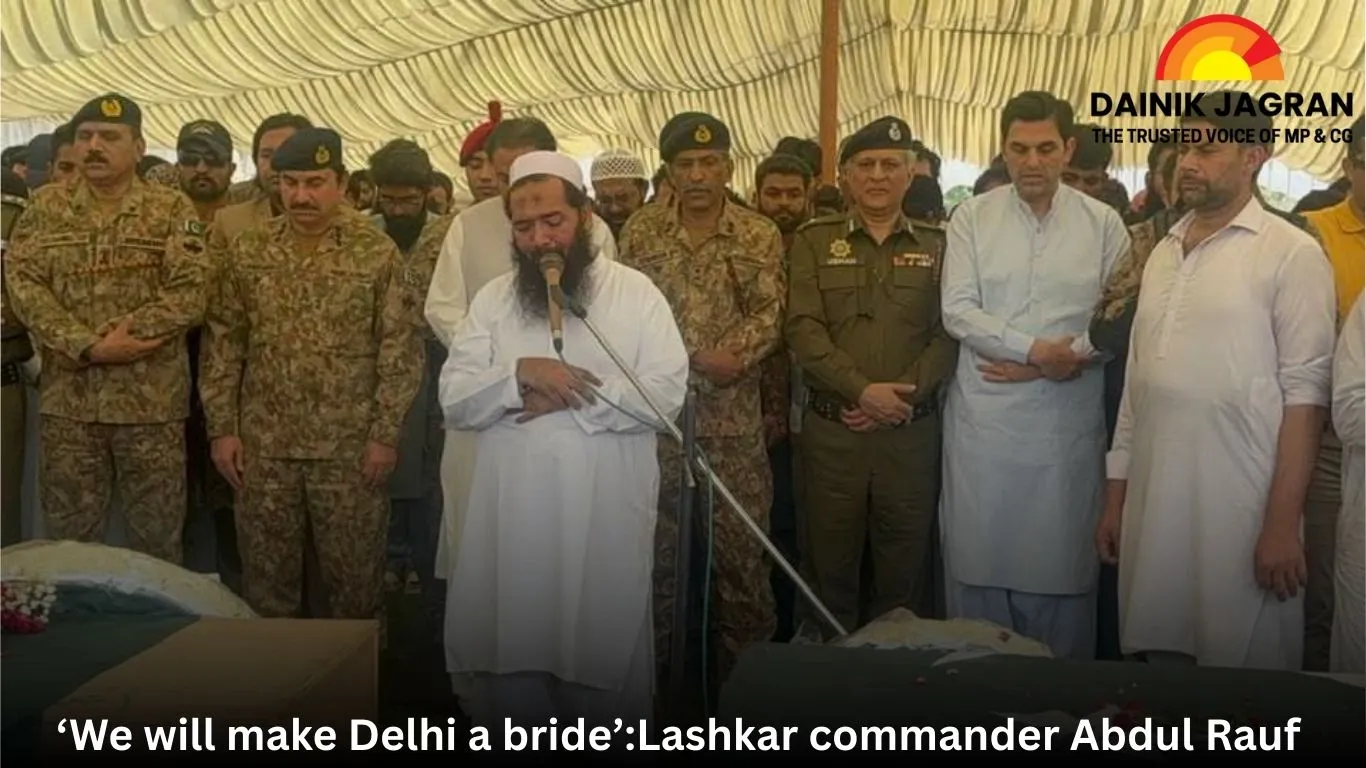
Lashkar commander Abdul Rauf issues fresh threats against India; video triggers security concerns
Digital Desk
Rauf invokes extremist slogans and claims that Pakistan has “taught India a lesson,” asserting that New Delhi would not “dare” to attack Pakistan for decades. He makes provocative references to Delhi and reiterates calls linked to the long-propagated “Ghazwa-e-Hind” narrative. Rauf also dismisses India’s military capabilities, including advanced fighter jets and missile systems, while claiming Pakistan’s nuclear status as a deterrent.
Rauf, a close associate of LeT founder Hafiz Saeed, references Abdul Rehman Makki—Saeed’s brother-in-law who died last year—and repeats claims that the Kashmir conflict is far from over. He rejects assessments that militancy in Jammu and Kashmir has declined, warning of escalation.
The LeT commander has been under U.S. sanctions and has been linked to the Falah-e-Insaniyat Foundation, an organisation banned for terror financing. Following India’s air strikes on terror infrastructure in Pakistan earlier this year, Rauf was reportedly seen leading funeral prayers for killed militants. At the time, the Pakistani military described him as a “common man,” a claim disputed by international records that match his identity with a designated terrorist listed by the United States.
Indian security agencies are closely monitoring the developments, viewing the video as part of a pattern of propaganda aimed at incitement and recruitment. Officials note that such statements underscore the persistence of terror networks operating from Pakistani soil and the challenges in curbing their public activities.
The resurfaced video comes amid heightened regional sensitivities and renewed diplomatic focus on cross-border terrorism, with authorities reiterating that threats and rhetoric will be met with firm counterterror measures.




.jpg)




