

The remarks came after Trump allegedly posted screenshots of personal exchanges from January on Truth Social, including a message in which Macron questioned Washington’s intentions regarding Greenland. Macron did not directly name Trump in the interview with Raj Shamani, but his comments were widely seen as a response to the disclosure.
“It’s not wrong to disagree,” Macron said, adding that diplomacy requires civility even in moments of tension. He emphasised that democratic systems allow leadership changes through elections, making threats or humiliation unnecessary in political discourse. He also reiterated his opposition to hateful language and political hostility.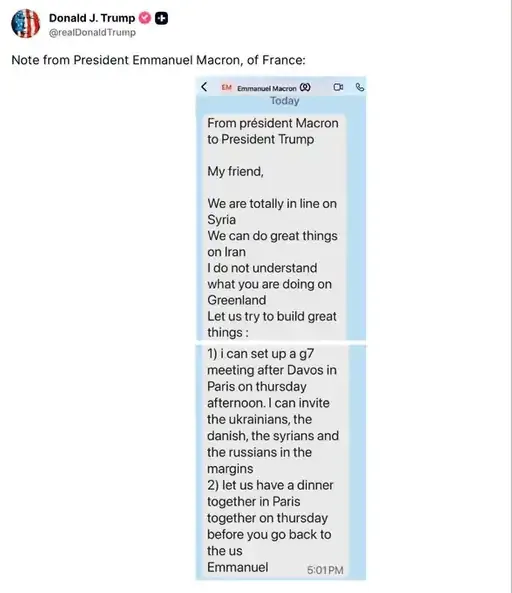
The dispute marks the latest episode in a long-running series of public disagreements between the French and American leaders. Relations have periodically frayed over defence spending within NATO, trade policy, and global agreements. Tensions resurfaced recently after France declined to join a U.S.-backed initiative described as a “Board of Peace” focused on Gaza’s development, citing concerns about unclear references to the Israel-Palestine conflict in its framework.
Trump subsequently warned he could impose tariffs of up to 200 percent on French wine and champagne, a move analysts said would escalate trade friction between the allies. Paris reacted cautiously but firmly, signalling it would resist economic pressure while continuing diplomatic engagement.
Macron’s comments in India align with positions he voiced last month at the World Economic Forum in Davos, where he said Europe should not be threatened with sanctions and that stable alliances depend on trust. His latest remarks suggest France intends to maintain that line even as disputes with Washington persist.
Diplomatic observers note that public airing of private communications between heads of state is rare and risks undermining confidence in confidential negotiations. Whether the episode causes lasting damage may depend on future interactions between Paris and Washington, particularly on trade, security, and geopolitical coordination.
For now, Macron’s message was clear: disagreements are inevitable, but the tone in which they are handled can shape the strength—or fragility—of international partnerships.

Macron Urges Respect in Diplomacy After Leak Row With Trump
Digital Desk
The remarks came after Trump allegedly posted screenshots of personal exchanges from January on Truth Social, including a message in which Macron questioned Washington’s intentions regarding Greenland. Macron did not directly name Trump in the interview with Raj Shamani, but his comments were widely seen as a response to the disclosure.
“It’s not wrong to disagree,” Macron said, adding that diplomacy requires civility even in moments of tension. He emphasised that democratic systems allow leadership changes through elections, making threats or humiliation unnecessary in political discourse. He also reiterated his opposition to hateful language and political hostility.
The dispute marks the latest episode in a long-running series of public disagreements between the French and American leaders. Relations have periodically frayed over defence spending within NATO, trade policy, and global agreements. Tensions resurfaced recently after France declined to join a U.S.-backed initiative described as a “Board of Peace” focused on Gaza’s development, citing concerns about unclear references to the Israel-Palestine conflict in its framework.
Trump subsequently warned he could impose tariffs of up to 200 percent on French wine and champagne, a move analysts said would escalate trade friction between the allies. Paris reacted cautiously but firmly, signalling it would resist economic pressure while continuing diplomatic engagement.
Macron’s comments in India align with positions he voiced last month at the World Economic Forum in Davos, where he said Europe should not be threatened with sanctions and that stable alliances depend on trust. His latest remarks suggest France intends to maintain that line even as disputes with Washington persist.
Diplomatic observers note that public airing of private communications between heads of state is rare and risks undermining confidence in confidential negotiations. Whether the episode causes lasting damage may depend on future interactions between Paris and Washington, particularly on trade, security, and geopolitical coordination.
For now, Macron’s message was clear: disagreements are inevitable, but the tone in which they are handled can shape the strength—or fragility—of international partnerships.
.jpg)




