

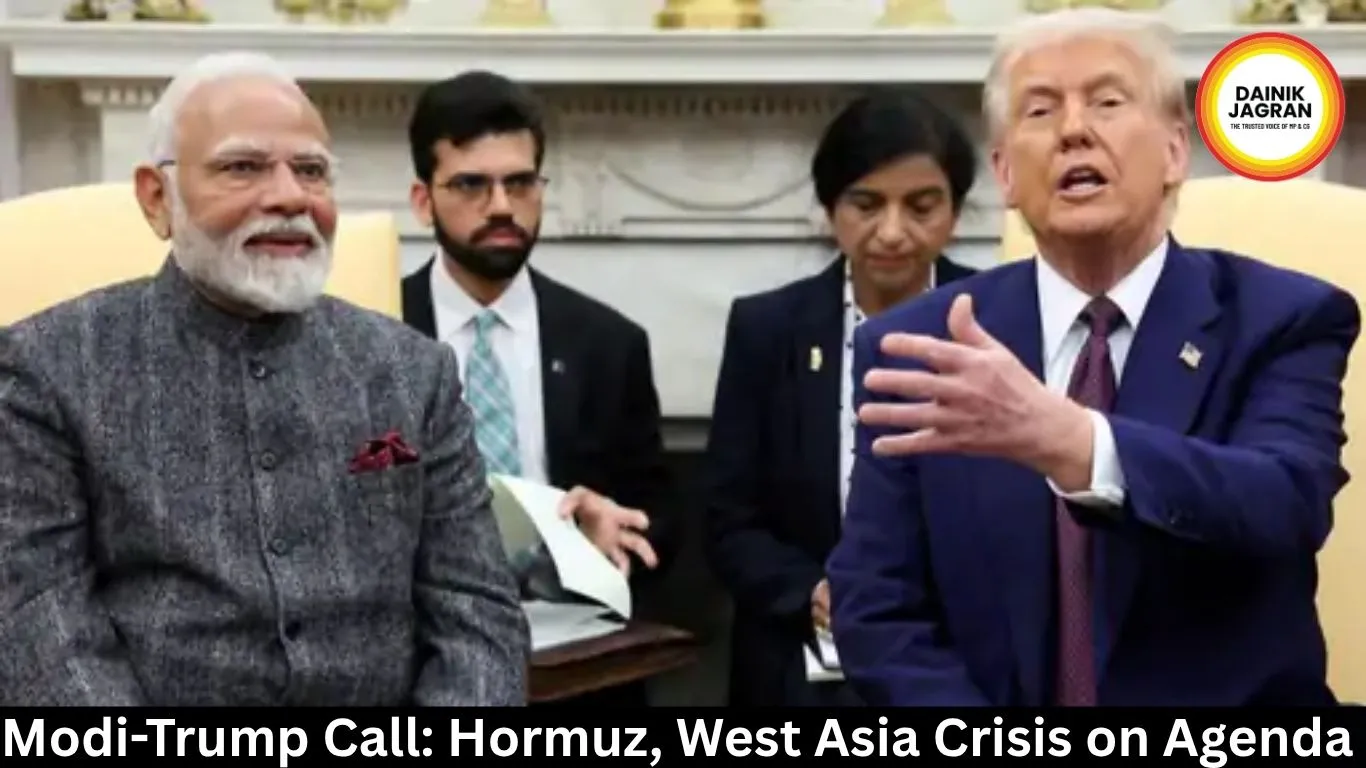
Modi-Trump Call: Hormuz, West Asia Crisis on Agenda

Digital Desk

Modi-Trump Call: Hormuz, West Asia Crisis on Agenda

 PM Modi and US President Trump held a 40-minute call on April 14, discussing the Strait of Hormuz crisis and West Asia situation, with major India-US energy deals expected soon.

Modi, Trump Hold 40-Minute Call, Stress Keeping Hormuz Open

India and the US reaffirm their strategic partnership as PM Modi and President Trump discuss the West Asia crisis and global energy security post-ceasefire.

Leaders Speak After Ceasefire

Prime Minister Narendra Modi and US President Donald Trump held a substantive telephone conversation on Tuesday, April 14, their first exchange since the US-Iran ceasefire came into effect on April 7. The call lasted nearly 40 minutes, amid ongoing tensions in the Strait of Hormuz, where maritime traffic has remained severely restricted.

Modi posted on X after the call: "Received a call from my friend President Donald Trump. We reviewed the substantial progress achieved in our bilateral cooperation in various sectors. We are committed to further strengthening our Comprehensive Global Strategic Partnership in all areas."

Hormuz at the Centre

The Strait of Hormuz dominated the agenda. The conflict in the Middle East has disrupted sectors from air travel to shipping and gas supplies, including through the near-closure of the Strait of Hormuz, which serves as a conduit for 40% of India's crude oil imports.

Commercial traffic through the Strait remained well below typical levels, with just six vessels crossing on April 13, compared with 14 the previous day, according to ship tracking firm Kpler. The firm noted that confidence among shipowners remains weak, with uncertainty around enforcement, insurance constraints, and counterparty exposure continuing to weigh on transit decisions.

'We All Love You,' Says Trump

The call carried a notably warm personal tone. The conversation ended with Trump telling PM Modi: "I just want you to know we all love you," according to US Ambassador to India Sergio Gor.

Gor confirmed the call's duration and described it as highly productive, hinting at significant developments on the bilateral front in the near term.

Big Energy Deals on the Horizon

Gor said: "We have some big-ticket items that will be announced over the next few days or weeks, and the relationship is on a firm footing. We will have something very interesting and exciting." When asked to elaborate, he added that the deals expected to be announced soon would be related to energy.

The US envoy also addressed the Strait of Hormuz blockade directly, stating: "You have a nation that is holding the entire world hostage. These are international waterways. There are international treaties." He added that the US wants the waterway reopened, noting it benefits the entire world, including India.

India's Consistent Position

New Delhi has maintained a clear stance throughout the West Asia crisis. India welcomed the ceasefire reached between the United States and Iran while hoping it will lead to lasting peace in the region. New Delhi believes the conflict has already caused immense suffering and disrupted global energy supply and trade networks.

India has also stated that it expects unimpeded freedom of navigation and the global flow of commerce to prevail through the Strait of Hormuz.

Third Call This Year

The April 14 conversation was their third this year, coming against the backdrop of heightened tensions following the US-Iran conflict. Trump briefed Modi on the latest developments in the region, including the ongoing ceasefire dynamics.

Modi and Trump had previously spoken on March 24, when Modi said India supports de-escalation and the restoration of peace at the earliest, and underlined the importance of ensuring the Strait of Hormuz remains open, secure, and accessible — calling it vital for global peace, stability, and economic well-being.

What Comes Next

The conversation touched upon future collaboration, with indications that major agreements — especially in the energy sector — could be finalised in the coming weeks. As the ceasefire remains fragile and shipping flows through the Strait of Hormuz stay well below normal, India's diplomatic engagement with Washington signals New Delhi's active role in shaping a stable resolution to the ongoing West Asia crisis. The India-US Comprehensive Global Strategic Partnership appears poised for a new phase, with energy cooperation at its core.


--------

🚨 Beat the News Rush – Join Now!

Get breaking alerts, hot exclusives, and game-changing stories instantly on your phone. No delays, no fluff – just the edge you need. ⚡

Tap to join: 

🟢 WhatsApp Channel: Dainik Jagran MP CG

Crave more?

🅕 Facebook: Dainik Jagran MP CG English

🅧 Twitter (X): Dainik Jagran MP CG

🅘 Instagram: Dainik Jagran MP CG

Share the fire – keep your crew ahead! 🗞️🔥

english.dainikjagranmpcg.com
15 Apr 2026 By Abhishek Joshi

Modi-Trump Call: Hormuz, West Asia Crisis on Agenda

Digital Desk

Modi, Trump Hold 40-Minute Call, Stress Keeping Hormuz Open

India and the US reaffirm their strategic partnership as PM Modi and President Trump discuss the West Asia crisis and global energy security post-ceasefire.

Leaders Speak After Ceasefire

Prime Minister Narendra Modi and US President Donald Trump held a substantive telephone conversation on Tuesday, April 14, their first exchange since the US-Iran ceasefire came into effect on April 7. The call lasted nearly 40 minutes, amid ongoing tensions in the Strait of Hormuz, where maritime traffic has remained severely restricted.

Modi posted on X after the call: "Received a call from my friend President Donald Trump. We reviewed the substantial progress achieved in our bilateral cooperation in various sectors. We are committed to further strengthening our Comprehensive Global Strategic Partnership in all areas."

Hormuz at the Centre

The Strait of Hormuz dominated the agenda. The conflict in the Middle East has disrupted sectors from air travel to shipping and gas supplies, including through the near-closure of the Strait of Hormuz, which serves as a conduit for 40% of India's crude oil imports.

Commercial traffic through the Strait remained well below typical levels, with just six vessels crossing on April 13, compared with 14 the previous day, according to ship tracking firm Kpler. The firm noted that confidence among shipowners remains weak, with uncertainty around enforcement, insurance constraints, and counterparty exposure continuing to weigh on transit decisions.

'We All Love You,' Says Trump

The call carried a notably warm personal tone. The conversation ended with Trump telling PM Modi: "I just want you to know we all love you," according to US Ambassador to India Sergio Gor.

Gor confirmed the call's duration and described it as highly productive, hinting at significant developments on the bilateral front in the near term.

Big Energy Deals on the Horizon

Gor said: "We have some big-ticket items that will be announced over the next few days or weeks, and the relationship is on a firm footing. We will have something very interesting and exciting." When asked to elaborate, he added that the deals expected to be announced soon would be related to energy.

The US envoy also addressed the Strait of Hormuz blockade directly, stating: "You have a nation that is holding the entire world hostage. These are international waterways. There are international treaties." He added that the US wants the waterway reopened, noting it benefits the entire world, including India.

India's Consistent Position

New Delhi has maintained a clear stance throughout the West Asia crisis. India welcomed the ceasefire reached between the United States and Iran while hoping it will lead to lasting peace in the region. New Delhi believes the conflict has already caused immense suffering and disrupted global energy supply and trade networks.

India has also stated that it expects unimpeded freedom of navigation and the global flow of commerce to prevail through the Strait of Hormuz.

Third Call This Year

The April 14 conversation was their third this year, coming against the backdrop of heightened tensions following the US-Iran conflict. Trump briefed Modi on the latest developments in the region, including the ongoing ceasefire dynamics.

Modi and Trump had previously spoken on March 24, when Modi said India supports de-escalation and the restoration of peace at the earliest, and underlined the importance of ensuring the Strait of Hormuz remains open, secure, and accessible — calling it vital for global peace, stability, and economic well-being.

What Comes Next

The conversation touched upon future collaboration, with indications that major agreements — especially in the energy sector — could be finalised in the coming weeks. As the ceasefire remains fragile and shipping flows through the Strait of Hormuz stay well below normal, India's diplomatic engagement with Washington signals New Delhi's active role in shaping a stable resolution to the ongoing West Asia crisis. The India-US Comprehensive Global Strategic Partnership appears poised for a new phase, with energy cooperation at its core.


https://english.dainikjagranmpcg.com/international/modi-trump-call-hormuz-west-asia-crisis-on-agenda/article-16918

Related Posts

Latest News


