Pakistan Drifting Towards ‘Punjabistan’? Growing Unrest in Balochistan, PoK Raises Questions Over Federal Unity
Digital Desk
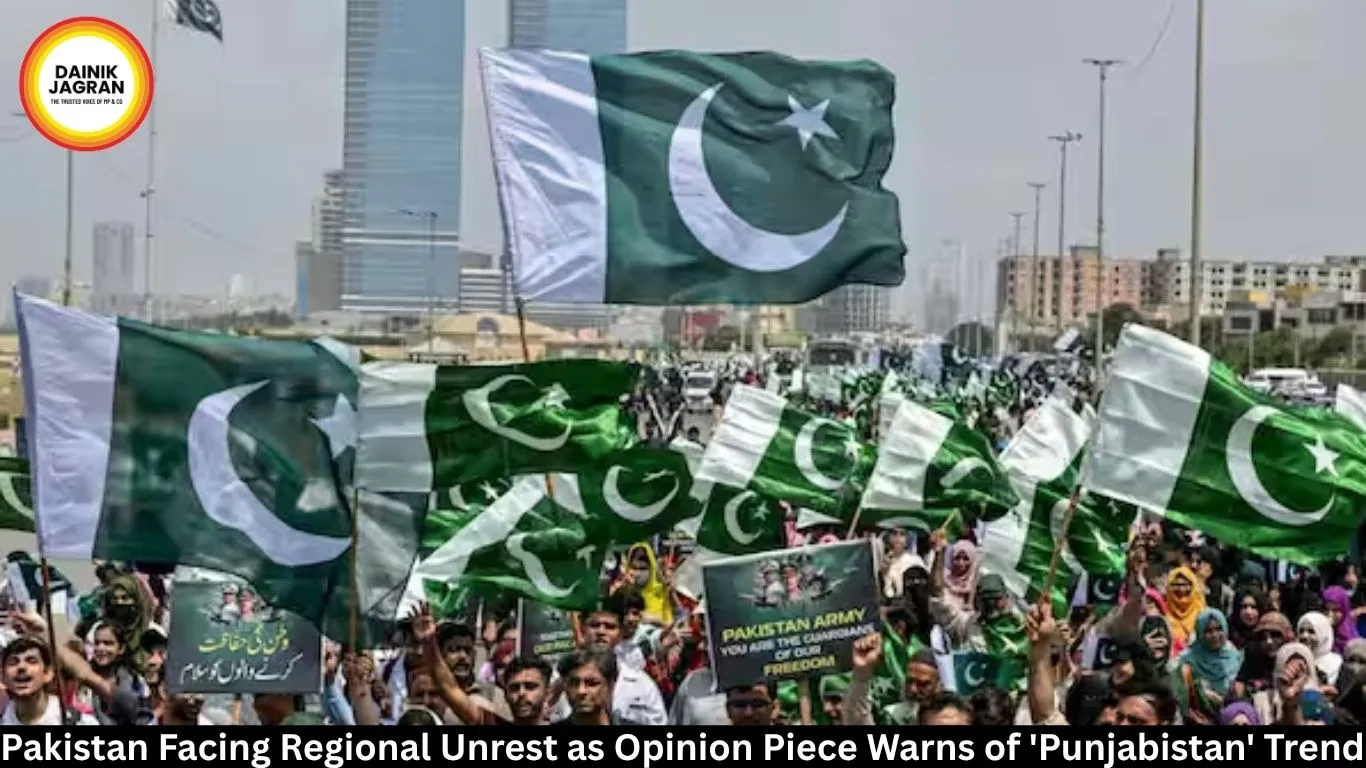
Growing protests in Balochistan, Khyber Pakhtunkhwa and Pakistan-occupied Kashmir have reignited debate over Pakistan's federal structure, with an opinion article warning of increasing Punjab-centric governance.
Pakistan is facing one of its most challenging internal phases in recent years, with unrest intensifying across several peripheral regions, including Balochistan, Khyber Pakhtunkhwa and Pakistan-occupied Kashmir (PoK). Amid political instability, economic distress and security challenges, concerns are growing over the country's federal structure and its ability to address long-standing regional grievances.
An opinion article published by Firstpost argues that Pakistan is increasingly becoming a state dominated by Punjab's political and military establishment, warning that the country risks evolving into what it describes as "Punjabistan" if existing trends continue.
Protests Expand Beyond Balochistan
While Balochistan has witnessed an insurgency for years and Khyber Pakhtunkhwa continues to grapple with militancy, PoK has also seen repeated protests in recent months.
According to the analysis, demonstrations in PoK are particularly significant because the region has traditionally been projected by Islamabad as a model under its administration. However, growing public anger over inflation, electricity prices, governance and political representation has challenged that narrative.
The article notes that many residents increasingly view themselves as politically and economically marginalized within Pakistan's federal framework.
Economic Crisis Adds Fuel
Pakistan's prolonged economic crisis has added to public dissatisfaction across provinces. Rising inflation, subsidy cuts and increasing utility costs have triggered protests in several regions.
The opinion piece argues that shrinking government resources have intensified perceptions that Punjab continues to receive a disproportionate share of political attention and public investment while peripheral regions bear the burden of economic hardship.
Questions Over Governance
The commentary also argues that Pakistan's political system remains heavily influenced by its military establishment.
It cites the political trajectory of former Prime Minister Imran Khan as an example of how civilian leadership often depends on support from the country's military. The article suggests that successive governments have struggled to resolve regional disputes through political dialogue, relying instead on security-centric approaches.
Structural Challenges Highlighted
The article references observations made by scholars including John R. Schmidt and Babar Ayaz, who have argued that Pakistan's centralized governance model has historically favored Punjab, contributing to repeated unrest in other provinces.
According to the analysis, the absence of an inclusive federal structure and uneven distribution of political power have deepened dissatisfaction in Balochistan, Khyber Pakhtunkhwa and PoK.
Opinion, Not Official Position
The Firstpost article concludes that Pakistan has long projected itself as a homeland for Muslims but has increasingly functioned as a state dominated by Punjab's political and military elite.
It argues that unless structural political and economic reforms are undertaken, regional alienation could continue to grow, potentially weakening the country's federal cohesion.
The article represents the personal views of its author and does not constitute an official assessment or government position.
--------
🚨 Beat the News Rush – Join Now!
Get breaking alerts, hot exclusives, and game-changing stories instantly on your phone. No delays, no fluff – just the edge you need. ⚡
Tap to join:
🟢 WhatsApp Channel: Dainik Jagran MP CG
Crave more?
🅕 Facebook: Dainik Jagran MP CG English
🅧 Twitter (X): Dainik Jagran MP CG
🅘 Instagram: Dainik Jagran MP CG
Share the fire – keep your crew ahead! 🗞️🔥
Pakistan Drifting Towards ‘Punjabistan’? Growing Unrest in Balochistan, PoK Raises Questions Over Federal Unity
Digital Desk
Pakistan is facing one of its most challenging internal phases in recent years, with unrest intensifying across several peripheral regions, including Balochistan, Khyber Pakhtunkhwa and Pakistan-occupied Kashmir (PoK). Amid political instability, economic distress and security challenges, concerns are growing over the country's federal structure and its ability to address long-standing regional grievances.
An opinion article published by Firstpost argues that Pakistan is increasingly becoming a state dominated by Punjab's political and military establishment, warning that the country risks evolving into what it describes as "Punjabistan" if existing trends continue.
Protests Expand Beyond Balochistan
While Balochistan has witnessed an insurgency for years and Khyber Pakhtunkhwa continues to grapple with militancy, PoK has also seen repeated protests in recent months.
According to the analysis, demonstrations in PoK are particularly significant because the region has traditionally been projected by Islamabad as a model under its administration. However, growing public anger over inflation, electricity prices, governance and political representation has challenged that narrative.
The article notes that many residents increasingly view themselves as politically and economically marginalized within Pakistan's federal framework.
Economic Crisis Adds Fuel
Pakistan's prolonged economic crisis has added to public dissatisfaction across provinces. Rising inflation, subsidy cuts and increasing utility costs have triggered protests in several regions.
The opinion piece argues that shrinking government resources have intensified perceptions that Punjab continues to receive a disproportionate share of political attention and public investment while peripheral regions bear the burden of economic hardship.
Questions Over Governance
The commentary also argues that Pakistan's political system remains heavily influenced by its military establishment.
It cites the political trajectory of former Prime Minister Imran Khan as an example of how civilian leadership often depends on support from the country's military. The article suggests that successive governments have struggled to resolve regional disputes through political dialogue, relying instead on security-centric approaches.
Structural Challenges Highlighted
The article references observations made by scholars including John R. Schmidt and Babar Ayaz, who have argued that Pakistan's centralized governance model has historically favored Punjab, contributing to repeated unrest in other provinces.
According to the analysis, the absence of an inclusive federal structure and uneven distribution of political power have deepened dissatisfaction in Balochistan, Khyber Pakhtunkhwa and PoK.
Opinion, Not Official Position
The Firstpost article concludes that Pakistan has long projected itself as a homeland for Muslims but has increasingly functioned as a state dominated by Punjab's political and military elite.
It argues that unless structural political and economic reforms are undertaken, regional alienation could continue to grow, potentially weakening the country's federal cohesion.
The article represents the personal views of its author and does not constitute an official assessment or government position.