Pakistan PM's Candid Confession: 'Ashamed to Beg' for Foreign Loans
Digital Desk
In a stark address to business leaders in Islamabad, Sharif laid bare the personal and national cost of the country's severe debt dependency. He described a situation where accepting loans forces Pakistan to "bow" its head and compromise its self-respect, often agreeing to conditions that go against its national interest. His remarks underscore a sovereignty crisis where short-term survival comes at the price of long-term autonomy and dignity.
"Our Heads Bow Down in Shame"
The Prime Minister's language was strikingly raw. He revealed that both he and Chief of Army Staff Field Marshal Asim Munir have been forced to "quietly" visit foreign capitals to secure billions in loans. "We feel ashamed when Field Marshal Asim Munir and I go around the world begging for money," Sharif stated. He elaborated on the humiliating position this creates: "Taking loans is a huge burden on our self-respect... We cannot say no to many things they want us to do". This rare public acknowledgment from the nation's highest civilian and military leaders highlights the severity of the financial desperation.
A Country Running on Financial Life Support
Sharif's confession is grounded in grim economic realities. Pakistan's economy is surviving on constant external support and refinancing, not organic growth.
Mounting Debt: The country's total public debt is staggering, having nearly doubled in four years to over PKR 76 trillion (approximately $273 billion) as of March 2025. It is now on its 23rd program with the International Monetary Fund (IMF), a fact that underscores a cycle of borrowing rather than reform.
Human Cost: The economic fragility has dire social consequences. Estimates suggest up to 45% of Pakistan's population now lives below the poverty line, a figure that has nearly doubled since 2018. Unemployment stands at around 7.1%, leaving over eight million people jobless.
Superficial Stability: While foreign exchange reserves have improved and inflation has cooled from its peak, analysts note this stability is built on a shaky foundation of spending cuts, tax hikes, and import controls—not increased productivity or competitive exports. As one analysis starkly put it, "Pakistan has essentially stabilized by squeezing itself".
The "Friendly Countries" Keeping Pakistan Afloat
Despite his discomfort, Sharif acknowledged Pakistan's heavy reliance on a handful of allied nations for repeated bailouts. These relationships form the core of the country's financial survival strategy:
| Country | Form of Support |
| China | Called an "all-weather friend"; has rolled over billions in deposits, with an estimated $4 billion in support for 2024-25. Total CPEC investments exceed $60 billion. |
| Saudi Arabia | Has provided deposits, deferred oil payments, and pledged investments potentially worth up to $25 billion in sectors like mining and IT. |
| United Arab Emirates (UAE) | Rolled over loans and committed to multi-billion dollar investments in energy and infrastructure projects. |
| Pakistan PM's Candid Confession: 'Ashamed to Beg' for Foreign Loans
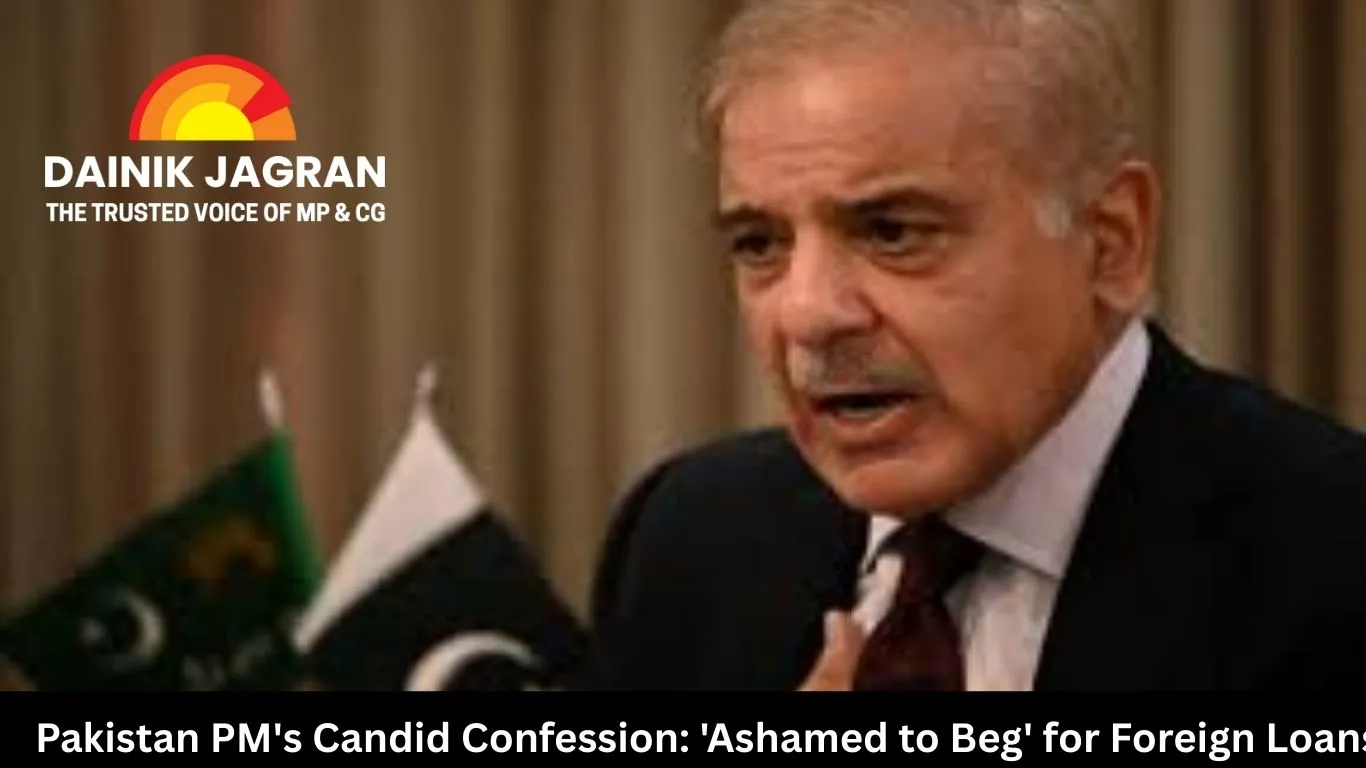
Prime Minister Shehbaz Sharif delivered an unusually blunt admission about Pakistan's deepening economic crisis, stating he and the country's army chief feel deep shame and humiliation when traveling the world to seek financial aid to keep the nation afloat.
In a stark address to business leaders in Islamabad, Sharif laid bare the personal and national cost of the country's severe debt dependency. He described a situation where accepting loans forces Pakistan to "bow" its head and compromise its self-respect, often agreeing to conditions that go against its national interest. His remarks underscore a sovereignty crisis where short-term survival comes at the price of long-term autonomy and dignity.
"Our Heads Bow Down in Shame"
The Prime Minister's language was strikingly raw. He revealed that both he and Chief of Army Staff Field Marshal Asim Munir have been forced to "quietly" visit foreign capitals to secure billions in loans. "We feel ashamed when Field Marshal Asim Munir and I go around the world begging for money," Sharif stated. He elaborated on the humiliating position this creates: "Taking loans is a huge burden on our self-respect... We cannot say no to many things they want us to do". This rare public acknowledgment from the nation's highest civilian and military leaders highlights the severity of the financial desperation.
A Country Running on Financial Life Support
Sharif's confession is grounded in grim economic realities. Pakistan's economy is surviving on constant external support and refinancing, not organic growth.
Mounting Debt: The country's total public debt is staggering, having nearly doubled in four years to over PKR 76 trillion (approximately $273 billion) as of March 2025. It is now on its 23rd program with the International Monetary Fund (IMF), a fact that underscores a cycle of borrowing rather than reform.
Human Cost: The economic fragility has dire social consequences. Estimates suggest up to 45% of Pakistan's population now lives below the poverty line, a figure that has nearly doubled since 2018. Unemployment stands at around 7.1%, leaving over eight million people jobless.
Superficial Stability: While foreign exchange reserves have improved and inflation has cooled from its peak, analysts note this stability is built on a shaky foundation of spending cuts, tax hikes, and import controls—not increased productivity or competitive exports. As one analysis starkly put it, "Pakistan has essentially stabilized by squeezing itself".
The "Friendly Countries" Keeping Pakistan Afloat
Despite his discomfort, Sharif acknowledged Pakistan's heavy reliance on a handful of allied nations for repeated bailouts. These relationships form the core of the country's financial survival strategy:
| Country | Form of Support |
| China | Called an "all-weather friend"; has rolled over billions in deposits, with an estimated $4 billion in support for 2024-25. Total CPEC investments exceed $60 billion. |
| Saudi Arabia | Has provided deposits, deferred oil payments, and pledged investments potentially worth up to $25 billion in sectors like mining and IT. |
| United Arab Emirates (UAE) | Rolled over loans and committed to multi-billion dollar investments in energy and infrastructure projects. |
| Qatar | Signed agreements for $3 billion in investments and remains a crucial supplier of liquefied natural gas (LNG). |
| International Monetary Fund (IMF) | Approved a $7 billion bailout in September 2024 and a further $1.4 billion climate resilience loan in 2025. |
This support, however, is a lifeline, not a cure. As noted by analysts, "These inflows keep Pakistan afloat. They do not make it swim".
A Structural Crisis with Shrinking Sovereignty
Sharif’s extraordinary public admission signals a recognition that Pakistan’s problems are structural, not cyclical. The country's export competitiveness has collapsed over decades, its investment climate is deteriorating with multinational corporations exiting, and relentless militant violence acts as a heavy tax on the economy. The result is a nation whose economic policy has become a "permanent refinancing exercise," severely limiting its strategic autonomy and regional influence.
While announcing relief measures like reduced electricity tariffs for industries at the same event, Sharif's overarching message was one of profound warning. His words paint a picture of a nation caught in a trap where borrowing to service old debt has replaced the hard work of building a sustainable, export-led economy. The Prime Minister’s shame may be personal, but it reflects a national crisis of sovereignty that Pakistan has yet to find a path out of.