


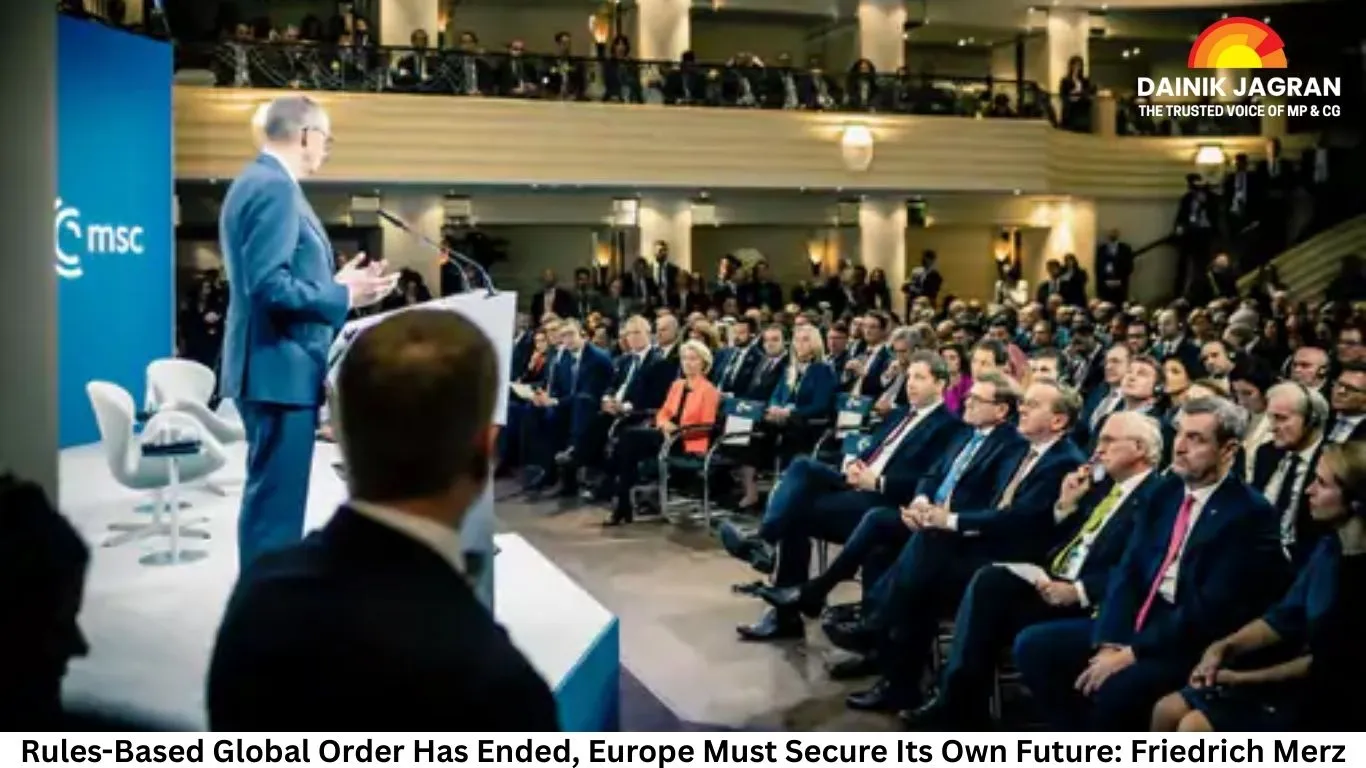
Rules-Based Global Order Has Ended, Europe Must Secure Its Own Future: Friedrich Merz
Digital Desk
Merz said the world is shifting toward competition among major powers rather than cooperation guided by shared rules. In such an environment, he argued, European nations must strengthen their militaries, economies and strategic coordination to protect their freedom. “Security can no longer be taken for granted,” he said, stressing that the continent faces a more uncertain geopolitical landscape.
His comments come amid visible strains in transatlantic ties with the United States. Merz noted that while alliances remain essential, no country—including Washington—can manage global challenges alone. He urged renewed cooperation among Western partners in defence, trade and technology, describing collective action as the only viable path to stability.
Addressing political differences, Merz also pushed back against recent statements by JD Vance, saying cultural debates tied to American domestic politics do not define Europe’s values. Europe, he said, remains committed to free expression but balances it with constitutional principles and human dignity.
Other leaders echoed concerns about shifting global dynamics. Emmanuel Macron called for Europe to evolve from an economic bloc into a geopolitical power capable of shaping international outcomes. He emphasised the need for stronger defence industries and technological independence. Meanwhile, officials from NATO said European governments are increasingly prepared to assume larger roles within the alliance.
The conference also brought together several heads of government, including Volodymyr Zelenskyy, highlighting the urgency of security discussions amid ongoing conflicts and strategic rivalries. Analysts view the meeting as a barometer of Western unity at a time when global power balances are shifting.
Founded in 1963 as a defence forum, the annual Munich gathering has evolved into one of the world’s most influential platforms for diplomacy and security dialogue, bringing together policymakers, military leaders and experts for closed-door negotiations as well as public debate.
Merz’s remarks signal a growing consensus among European leaders that the continent must adapt quickly to a less predictable world order—one defined less by shared norms and more by strategic competition. Observers say how Europe responds in the coming years could reshape global alliances and determine its influence in the emerging geopolitical era.
.jpg)




