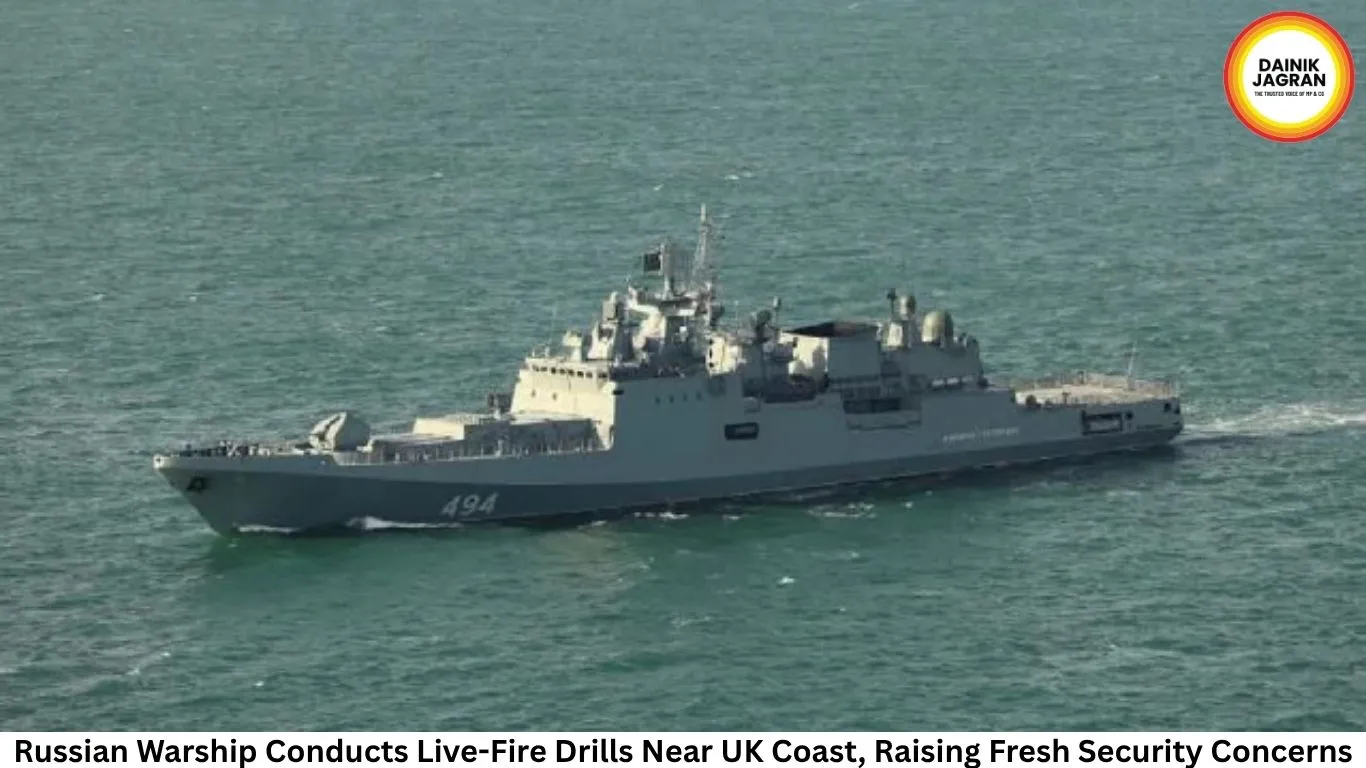
Russian Warship Conducts Live-Fire Drills Near UK Coast, Raising Fresh Security Concerns

Digital Desk

Russian Warship Conducts Live-Fire Drills Near UK Coast, Raising Fresh Security Concerns

Royal Navy monitored the exercise as Russian frigate carried out weapons drills in international waters, around 46 miles off southern England.

A Russian Navy warship conducted a live-fire military exercise approximately 46 miles off the southern coast of the United Kingdom, prompting close monitoring by the Royal Navy and renewed attention to growing military activity in European waters.

According to the UK Ministry of Defence (MoD), the Russian frigate Neustrashimy carried out the exercise in international waters about 40 nautical miles (46 miles) south of Plymouth. The live-fire drill reportedly lasted for around 30 minutes, with British naval forces tracking the vessel throughout the operation.

While the exercise was legally conducted in international waters, British defence officials said they remained vigilant and ready to safeguard the country's national security amid increasing Russian naval activity near UK waters.

Royal Navy Closely Monitored the Exercise

The Royal Navy deployed HMS Tyne to shadow the Russian warship during its passage through the English Channel.

According to the Ministry of Defence, the Russian vessel notified British authorities before beginning the exercise and requested HMS Tyne to reposition to a safer distance during the live-fire operation. The British patrol ship complied and continued observing the drills from a secure location.

A UK MoD spokesperson said the Royal Navy monitored the exercise throughout and continues to closely track the vessel's movements while remaining prepared to respond to any potential security concerns.

Although the incident has attracted significant attention, international maritime law permits military exercises in international waters provided they comply with established navigation and safety regulations.

Russian Warship Linked to Shadow Fleet Operations

Reports indicate that Neustrashimy is among the Russian naval vessels escorting so-called "shadow fleet" tankers, which transport Russian oil through European waters despite Western sanctions imposed following the Ukraine conflict.

The escort missions are believed to provide protection to oil tankers operating under complex ownership structures designed to evade sanctions.

Despite these naval escorts, European authorities have continued enforcement efforts against suspected sanctions violations.

Last month, Royal Marines reportedly boarded a Russian tanker in the English Channel as part of operations aimed at monitoring maritime activities linked to sanctioned Russian oil shipments.

Growing Maritime Tensions

The latest exercise comes amid a series of incidents involving Russian naval vessels operating close to European coastlines.

Reports also noted that another Russian warship, Admiral Grigorovich, was involved in a confrontation near the Isle of Wight last month after firing warning shots toward a British sailing yacht.

Russian authorities claimed the civilian vessel was approaching dangerously, while the British couple aboard the yacht rejected the allegation, stating they were not on a collision course.

Such incidents have heightened concerns among NATO members about increased Russian military activity around strategic maritime routes, particularly in the North Atlantic and the English Channel.

Part of a Wider Pattern

Military analysts say Russia and China have increasingly used naval deployments, military aircraft patrols, and live-fire exercises to demonstrate strategic presence in contested or strategically important regions.

Similar activities have frequently occurred in the South China Sea, the Indo-Pacific, the Baltic Sea, and waters surrounding Europe.

While these operations generally remain within international legal frameworks, defence experts warn they can increase the risk of miscalculation, especially when military vessels from rival nations operate in close proximity.

The UK Ministry of Defence has emphasized that the Royal Navy will continue monitoring Russian naval movements and maintain readiness to protect British territorial interests and maritime security.

With tensions between Russia and Western nations remaining high over the ongoing conflict in Ukraine and sanctions enforcement, military activity in European waters is expected to remain under close international scrutiny.
--------

๐Ÿšจ Beat the News Rush โ€“ Join Now!

Get breaking alerts, hot exclusives, and game-changing stories instantly on your phone. No delays, no fluff โ€“ just the edge you need. โšก

Tap to join:ย 

๐ŸŸข WhatsApp Channel: Dainik Jagran MP CG

Crave more?

๐Ÿ…• Facebook: Dainik Jagran MP CG English

๐Ÿ…ง Twitter (X): Dainik Jagran MP CG

๐Ÿ…˜ Instagram: Dainik Jagran MP CG

Share the fire โ€“ keep your crew ahead! ๐Ÿ—ž๏ธ๐Ÿ”ฅ

english.dainikjagranmpcg.com
21 Jul 2026 By Rishita

Russian Warship Conducts Live-Fire Drills Near UK Coast, Raising Fresh Security Concerns

Digital Desk

A Russian Navy warship conducted a live-fire military exercise approximately 46 miles off the southern coast of the United Kingdom, prompting close monitoring by the Royal Navy and renewed attention to growing military activity in European waters.

According to the UK Ministry of Defence (MoD), the Russian frigate Neustrashimy carried out the exercise in international waters about 40 nautical miles (46 miles) south of Plymouth. The live-fire drill reportedly lasted for around 30 minutes, with British naval forces tracking the vessel throughout the operation.

While the exercise was legally conducted in international waters, British defence officials said they remained vigilant and ready to safeguard the country's national security amid increasing Russian naval activity near UK waters.

Royal Navy Closely Monitored the Exercise

The Royal Navy deployed HMS Tyne to shadow the Russian warship during its passage through the English Channel.

According to the Ministry of Defence, the Russian vessel notified British authorities before beginning the exercise and requested HMS Tyne to reposition to a safer distance during the live-fire operation. The British patrol ship complied and continued observing the drills from a secure location.

A UK MoD spokesperson said the Royal Navy monitored the exercise throughout and continues to closely track the vessel's movements while remaining prepared to respond to any potential security concerns.

Although the incident has attracted significant attention, international maritime law permits military exercises in international waters provided they comply with established navigation and safety regulations.

Russian Warship Linked to Shadow Fleet Operations

Reports indicate that Neustrashimy is among the Russian naval vessels escorting so-called "shadow fleet" tankers, which transport Russian oil through European waters despite Western sanctions imposed following the Ukraine conflict.

The escort missions are believed to provide protection to oil tankers operating under complex ownership structures designed to evade sanctions.

Despite these naval escorts, European authorities have continued enforcement efforts against suspected sanctions violations.

Last month, Royal Marines reportedly boarded a Russian tanker in the English Channel as part of operations aimed at monitoring maritime activities linked to sanctioned Russian oil shipments.

Growing Maritime Tensions

The latest exercise comes amid a series of incidents involving Russian naval vessels operating close to European coastlines.

Reports also noted that another Russian warship, Admiral Grigorovich, was involved in a confrontation near the Isle of Wight last month after firing warning shots toward a British sailing yacht.

Russian authorities claimed the civilian vessel was approaching dangerously, while the British couple aboard the yacht rejected the allegation, stating they were not on a collision course.

Such incidents have heightened concerns among NATO members about increased Russian military activity around strategic maritime routes, particularly in the North Atlantic and the English Channel.

Part of a Wider Pattern

Military analysts say Russia and China have increasingly used naval deployments, military aircraft patrols, and live-fire exercises to demonstrate strategic presence in contested or strategically important regions.

Similar activities have frequently occurred in the South China Sea, the Indo-Pacific, the Baltic Sea, and waters surrounding Europe.

While these operations generally remain within international legal frameworks, defence experts warn they can increase the risk of miscalculation, especially when military vessels from rival nations operate in close proximity.

The UK Ministry of Defence has emphasized that the Royal Navy will continue monitoring Russian naval movements and maintain readiness to protect British territorial interests and maritime security.

With tensions between Russia and Western nations remaining high over the ongoing conflict in Ukraine and sanctions enforcement, military activity in European waters is expected to remain under close international scrutiny.
https://english.dainikjagranmpcg.com/international/russian-warship-conducts-live-fire-drills-near-uk-coast-raising-fresh/article-23013

Trending News