Why PM Modi Appointed Nandan Nilekani to Lead India's Exam Reforms Task Force

Digital Desk

Why PM Modi Appointed Nandan Nilekani to Lead India's Exam Reforms Task Force

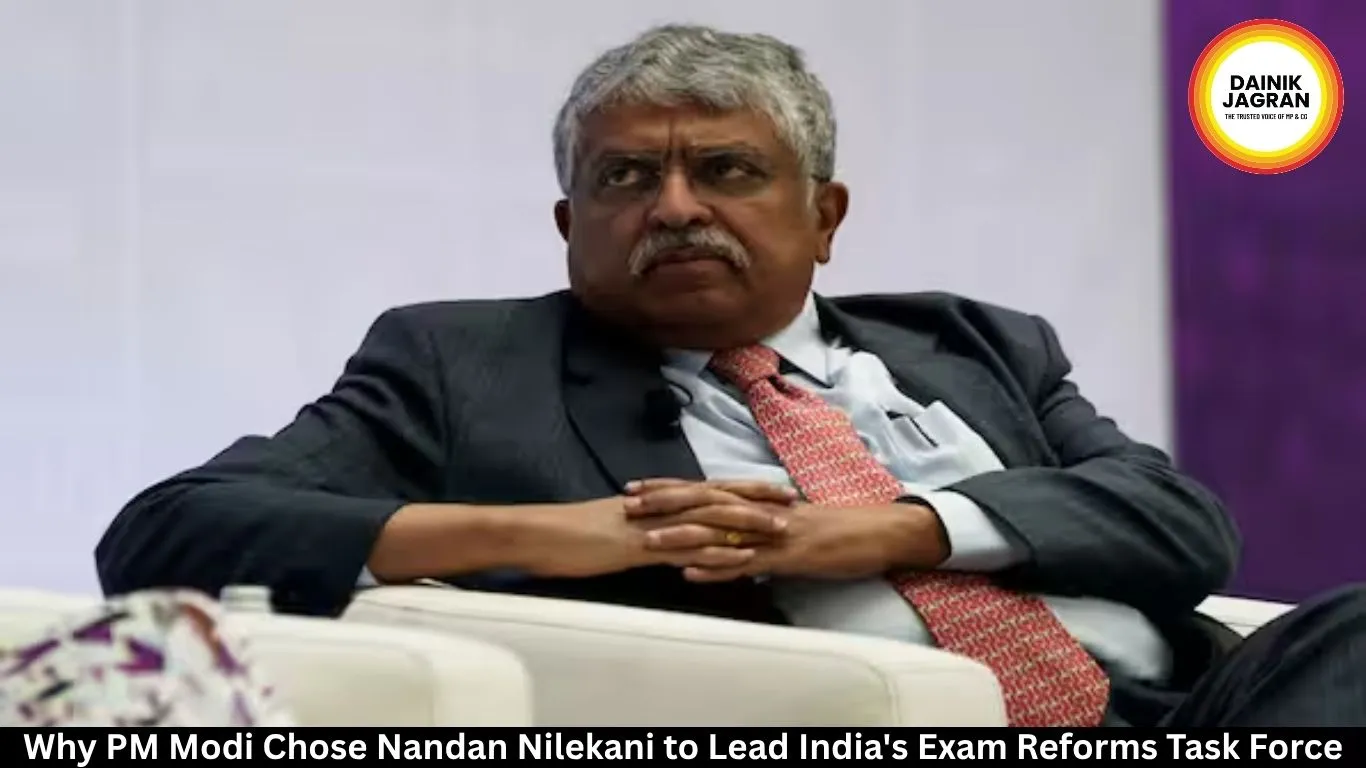
Prime Minister Narendra Modi has appointed Infosys co-founder Nandan Nilekani to head a high-powered task force on examination reforms aimed at making India's testing system transparent, secure and technology-driven.

Prime Minister Narendra Modi has appointed Infosys co-founder Nandan Nilekani to head a high-powered task force on examination reforms, entrusting one of India's foremost technology architects with the responsibility of rebuilding confidence in the country's testing system following recent controversies over examination irregularities.

The announcement came a day after Dharmendra Pradhan resigned as Union Education Minister, with the Centre signalling a major overhaul of the examination framework through greater use of technology and institutional reforms.

Sharing the decision, Prime Minister Modi said the government is committed to making India's examination system more reliable, transparent and technology-driven, adding that the committee's recommendations would be implemented at the earliest.

Who Is Nandan Nilekani?

Nandan Nilekani is widely regarded as one of India's leading technology entrepreneurs. After co-founding Infosys in 1981 alongside N.R. Narayana Murthy and other partners, he served as the company's Chief Executive Officer before moving into public policy.

In 2009, Nilekani became the founding Chairman of the Unique Identification Authority of India (UIDAI), where he led the creation and rollout of Aadhaar, now the world's largest digital identity programme.

Driving India's Digital Transformation

Beyond Aadhaar, Nilekani has played a central role in several landmark digital governance initiatives. He contributed to the framework that enabled the development of the Unified Payments Interface (UPI), chaired the Reserve Bank of India's Committee on Deepening Digital Payments, and has been associated with technology-driven reforms in taxation, governance and public service delivery.

He has also served on the G20 Task Force on Digital Public Infrastructure, the Supreme Court's Artificial Intelligence Committee, and the India Energy Stack Task Force, reflecting his long-standing involvement in public technology initiatives across successive governments.

Why He Was Selected

Government officials believe Nilekani's experience in implementing large-scale digital systems makes him well suited to address challenges facing India's examination ecosystem.

Unlike conventional administrative reforms, the proposed changes are expected to involve advanced technology, stronger accountability mechanisms, enhanced cybersecurity and secure digital infrastructure aimed at preventing paper leaks and examination malpractice.

Nilekani also brings prior experience in examination reforms. He previously served on a Supreme Court-appointed committee that examined irregularities in the Staff Selection Commission (SSC) CGL and CHSL examinations.

Expert Panel to Recommend Reforms

The task force includes several prominent experts alongside Nilekani, including former ISRO Chairman S. Somanath, former Intelligence Bureau Director Tapan Deka, IIT Madras Director V. Kamakoti, former Education Secretary Anita Karwal, and logistics expert Amrit Lal Meena.

According to the government, the panel will recommend immediate measures to secure upcoming examinations while preparing a long-term roadmap to make India's national examination system transparent, secure and resistant to leaks and malpractice.


 

--------

🚨 Beat the News Rush – Join Now!

Get breaking alerts, hot exclusives, and game-changing stories instantly on your phone. No delays, no fluff – just the edge you need. ⚡

Tap to join: 

🟢 WhatsApp Channel: Dainik Jagran MP CG

Crave more?

🅕 Facebook: Dainik Jagran MP CG English

🅧 Twitter (X): Dainik Jagran MP CG

🅘 Instagram: Dainik Jagran MP CG

Share the fire – keep your crew ahead! 🗞️🔥

english.dainikjagranmpcg.com
27 Jul 2026 By Abhishek Joshi

Why PM Modi Appointed Nandan Nilekani to Lead India's Exam Reforms Task Force

Digital Desk

Prime Minister Narendra Modi has appointed Infosys co-founder Nandan Nilekani to head a high-powered task force on examination reforms, entrusting one of India's foremost technology architects with the responsibility of rebuilding confidence in the country's testing system following recent controversies over examination irregularities.

The announcement came a day after Dharmendra Pradhan resigned as Union Education Minister, with the Centre signalling a major overhaul of the examination framework through greater use of technology and institutional reforms.

Sharing the decision, Prime Minister Modi said the government is committed to making India's examination system more reliable, transparent and technology-driven, adding that the committee's recommendations would be implemented at the earliest.

Who Is Nandan Nilekani?

Nandan Nilekani is widely regarded as one of India's leading technology entrepreneurs. After co-founding Infosys in 1981 alongside N.R. Narayana Murthy and other partners, he served as the company's Chief Executive Officer before moving into public policy.

In 2009, Nilekani became the founding Chairman of the Unique Identification Authority of India (UIDAI), where he led the creation and rollout of Aadhaar, now the world's largest digital identity programme.

Driving India's Digital Transformation

Beyond Aadhaar, Nilekani has played a central role in several landmark digital governance initiatives. He contributed to the framework that enabled the development of the Unified Payments Interface (UPI), chaired the Reserve Bank of India's Committee on Deepening Digital Payments, and has been associated with technology-driven reforms in taxation, governance and public service delivery.

He has also served on the G20 Task Force on Digital Public Infrastructure, the Supreme Court's Artificial Intelligence Committee, and the India Energy Stack Task Force, reflecting his long-standing involvement in public technology initiatives across successive governments.

Why He Was Selected

Government officials believe Nilekani's experience in implementing large-scale digital systems makes him well suited to address challenges facing India's examination ecosystem.

Unlike conventional administrative reforms, the proposed changes are expected to involve advanced technology, stronger accountability mechanisms, enhanced cybersecurity and secure digital infrastructure aimed at preventing paper leaks and examination malpractice.

Nilekani also brings prior experience in examination reforms. He previously served on a Supreme Court-appointed committee that examined irregularities in the Staff Selection Commission (SSC) CGL and CHSL examinations.

Expert Panel to Recommend Reforms

The task force includes several prominent experts alongside Nilekani, including former ISRO Chairman S. Somanath, former Intelligence Bureau Director Tapan Deka, IIT Madras Director V. Kamakoti, former Education Secretary Anita Karwal, and logistics expert Amrit Lal Meena.

According to the government, the panel will recommend immediate measures to secure upcoming examinations while preparing a long-term roadmap to make India's national examination system transparent, secure and resistant to leaks and malpractice.

 

https://english.dainikjagranmpcg.com/national/why-pm-modi-appointed-nandan-nilekani-to-lead-indias-exam/article-23750

Trending News