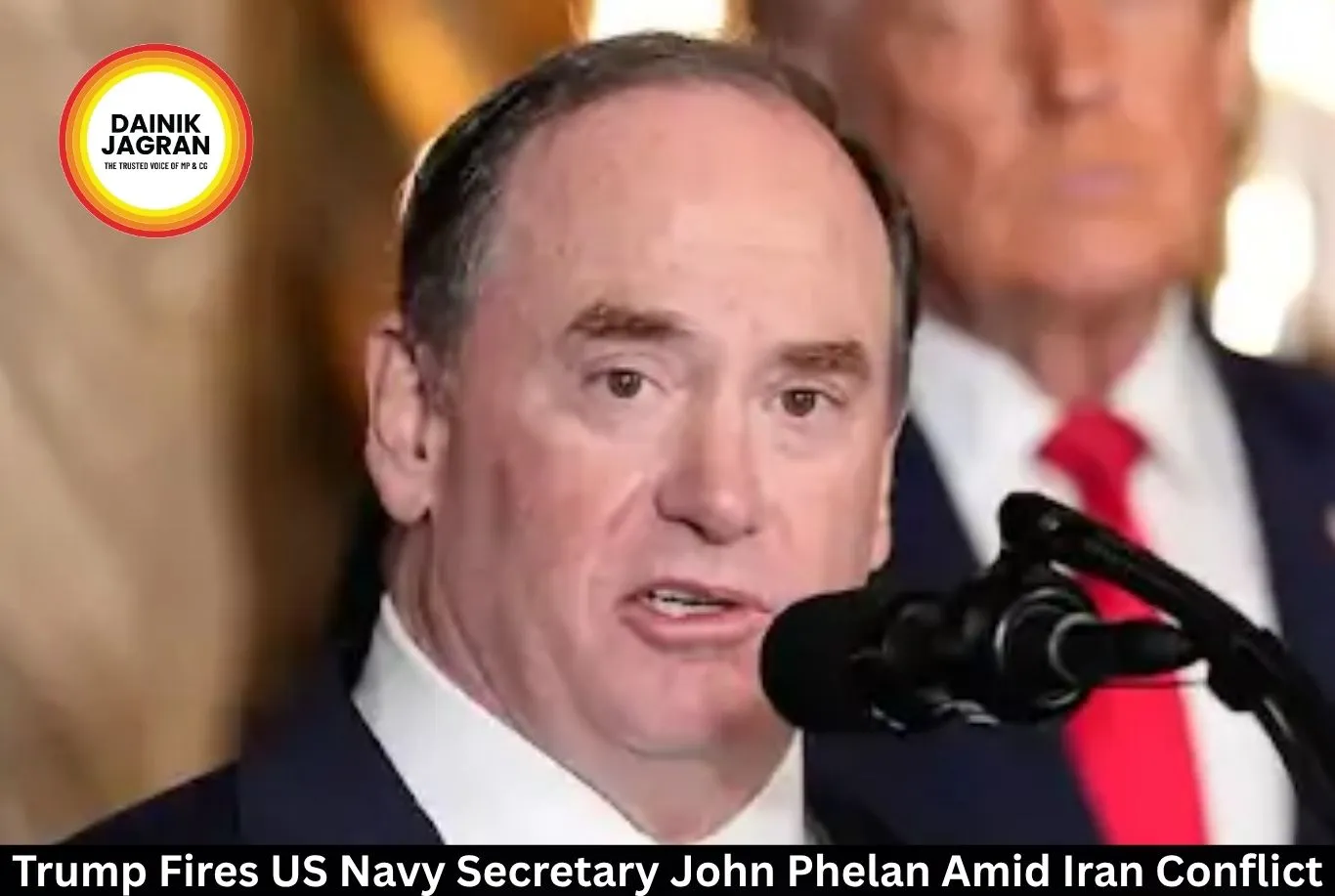
Trump Fires US Navy Secretary John Phelan Amid Iran Conflict
Digital Desk
President Trump dismisses Navy Secretary John Phelan as West Asia tensions peak. Top nuclear official Andrew Hugg suspended over alleged honey-trap scandal.
Trump fires Navy chief amid West Asia war: Top nuclear scientist also suspended over honey-trap scandal
Major military shake-up in Washington as President Trump dismisses Navy Secretary John Phelan and suspends nuclear official Andrew Hugg amid heightening Iran tensions.
In a move that has sent shockwaves through the global defense establishment, President Donald Trump has summarily dismissed US Navy Secretary John Phelan. The high-profile exit coincides with the suspension of Andrew Hugg, a senior nuclear department official, following a controversial "honey-trap" allegation involving the leak of classified information.
The twin developments come at a critical juncture for American national security. With the US Navy currently enforcing a high-stakes blockade in the Persian Gulf and the Strait of Hormuz, the sudden decapitation of naval leadership has raised urgent questions regarding military stability and the "warrior ethos" being pushed by the current administration.
Command friction at Pentagon
The Pentagon officially confirmed Phelan’s departure on Wednesday, stating he was "departing the administration, effective immediately." While the formal statement was brief, insiders suggest a deepening rift between Phelan and Defense Secretary Pete Hegseth.
The friction reportedly centered on Phelan’s perceived "slow pace" in implementing radical shipbuilding reforms. Sources indicated that the Navy’s "Golden Fleet" expansion project, aimed at rapidly modernising submarines and warships, has been plagued by budget overruns and timeline delays, leading to Hegseth’s loss of confidence in Phelan’s leadership.
Breaking the chain of command
Adding to the internal discord was Phelan’s alleged tendency to bypass official protocols. Reports suggest the Navy Secretary frequently engaged in direct communication with President Trump, effectively sidestepping the established chain of command involving the Defense Secretary.
This breach of military hierarchy reportedly angered Hegseth, who has been aggressively restructuring the Pentagon’s top brass. Hung Cao, a 25-year Navy veteran and former Senate candidate, has been named acting Navy Secretary, signaling a shift toward a leadership with deeper combat experience.
Nuclear official’s viral scandal
Simultaneously, the administration is grappling with a major security breach involving Andrew Hugg. A video recently surfaced on social media allegedly showing Hugg at a restaurant discussing sensitive matters related to America’s nuclear and chemical security with an unidentified woman.
The "honey-trap" scandal has raised alarms over the vulnerability of high-ranking officials. The leaked conversation reportedly touched upon "nerve agents" and specific chemical vulnerabilities within the US military, leading to Hugg's immediate suspension pending a full-scale federal investigation into the breach.
Purge of the old guard
This latest firing is part of a broader "purge" within the Department of Defense. On April 2, Army Chief of Staff General Randy George was removed more than a year before his term was set to expire. He was replaced by General Christopher LaNeve, a former assistant to Hegseth.
Critics and former defense officials have expressed concern over the "politicisation" of the military. Since taking office, the current administration has removed several senior officers, including those appointed during the Biden era, replacing them with loyalists who align with the President’s "America First" military doctrine.
Tensions peak in Hormuz
The leadership vacuum comes as the US is embroiled in its most significant military confrontation in decades. The Navy is currently maintaining a blockade of Iranian ports following a series of strikes earlier this year aimed at Tehran's nuclear program.
The Strait of Hormuz remains a flashpoint, with 20% of the world’s oil supply at risk. Military analysts warn that changing leadership during an active blockade is a high-risk maneuver that could embolden regional adversaries if not managed with absolute precision.
Future of US defense
As Hung Cao takes the reins of the Navy, the focus shifts to whether the "Trump-class" battleship program and other naval reforms will accelerate. The administration remains firm that these changes are necessary to "rebuild the modern battlefield" and restore American deterrence.
The global community is watching closely as the Pentagon undergoes its most radical transformation in modern history. With more dismissals expected, the "India News Update" continues to track these developments that hold significant implications for international trade and security.

--------
🚨 Beat the News Rush – Join Now!
Get breaking alerts, hot exclusives, and game-changing stories instantly on your phone. No delays, no fluff – just the edge you need. ⚡
Tap to join:
🟢 WhatsApp Channel: Dainik Jagran MP CG
Crave more?
🅕 Facebook: Dainik Jagran MP CG English
🅧 Twitter (X): Dainik Jagran MP CG
🅘 Instagram: Dainik Jagran MP CG
Share the fire – keep your crew ahead! 🗞️🔥
Trump Fires US Navy Secretary John Phelan Amid Iran Conflict
Digital Desk
Trump fires Navy chief amid West Asia war: Top nuclear scientist also suspended over honey-trap scandal
Major military shake-up in Washington as President Trump dismisses Navy Secretary John Phelan and suspends nuclear official Andrew Hugg amid heightening Iran tensions.
In a move that has sent shockwaves through the global defense establishment, President Donald Trump has summarily dismissed US Navy Secretary John Phelan. The high-profile exit coincides with the suspension of Andrew Hugg, a senior nuclear department official, following a controversial "honey-trap" allegation involving the leak of classified information.
The twin developments come at a critical juncture for American national security. With the US Navy currently enforcing a high-stakes blockade in the Persian Gulf and the Strait of Hormuz, the sudden decapitation of naval leadership has raised urgent questions regarding military stability and the "warrior ethos" being pushed by the current administration.
Command friction at Pentagon
The Pentagon officially confirmed Phelan’s departure on Wednesday, stating he was "departing the administration, effective immediately." While the formal statement was brief, insiders suggest a deepening rift between Phelan and Defense Secretary Pete Hegseth.
The friction reportedly centered on Phelan’s perceived "slow pace" in implementing radical shipbuilding reforms. Sources indicated that the Navy’s "Golden Fleet" expansion project, aimed at rapidly modernising submarines and warships, has been plagued by budget overruns and timeline delays, leading to Hegseth’s loss of confidence in Phelan’s leadership.
Breaking the chain of command
Adding to the internal discord was Phelan’s alleged tendency to bypass official protocols. Reports suggest the Navy Secretary frequently engaged in direct communication with President Trump, effectively sidestepping the established chain of command involving the Defense Secretary.
This breach of military hierarchy reportedly angered Hegseth, who has been aggressively restructuring the Pentagon’s top brass. Hung Cao, a 25-year Navy veteran and former Senate candidate, has been named acting Navy Secretary, signaling a shift toward a leadership with deeper combat experience.
Nuclear official’s viral scandal
Simultaneously, the administration is grappling with a major security breach involving Andrew Hugg. A video recently surfaced on social media allegedly showing Hugg at a restaurant discussing sensitive matters related to America’s nuclear and chemical security with an unidentified woman.
The "honey-trap" scandal has raised alarms over the vulnerability of high-ranking officials. The leaked conversation reportedly touched upon "nerve agents" and specific chemical vulnerabilities within the US military, leading to Hugg's immediate suspension pending a full-scale federal investigation into the breach.
Purge of the old guard
This latest firing is part of a broader "purge" within the Department of Defense. On April 2, Army Chief of Staff General Randy George was removed more than a year before his term was set to expire. He was replaced by General Christopher LaNeve, a former assistant to Hegseth.
Critics and former defense officials have expressed concern over the "politicisation" of the military. Since taking office, the current administration has removed several senior officers, including those appointed during the Biden era, replacing them with loyalists who align with the President’s "America First" military doctrine.
Tensions peak in Hormuz
The leadership vacuum comes as the US is embroiled in its most significant military confrontation in decades. The Navy is currently maintaining a blockade of Iranian ports following a series of strikes earlier this year aimed at Tehran's nuclear program.
The Strait of Hormuz remains a flashpoint, with 20% of the world’s oil supply at risk. Military analysts warn that changing leadership during an active blockade is a high-risk maneuver that could embolden regional adversaries if not managed with absolute precision.
Future of US defense
As Hung Cao takes the reins of the Navy, the focus shifts to whether the "Trump-class" battleship program and other naval reforms will accelerate. The administration remains firm that these changes are necessary to "rebuild the modern battlefield" and restore American deterrence.
The global community is watching closely as the Pentagon undergoes its most radical transformation in modern history. With more dismissals expected, the "India News Update" continues to track these developments that hold significant implications for international trade and security.