

Addressing a gathering of fewer than 20 participating nations, Trump claimed the Board of Peace had already begun functioning and was “running beautifully.” The initiative, according to officials familiar with the plan, envisages a $1 billion contribution for permanent membership and aims to address conflicts ranging from Gaza and Ukraine to broader geopolitical disputes.
The announcement followed Trump’s discussions in Davos with NATO Secretary General Mark Rutte, particularly on security issues related to Greenland and the Arctic region. Trump said the idea of the Board took shape amid those talks, even as his administration recently imposed a 10% tariff on eight European countries that opposed Washington’s stance on Greenland. He has warned of steeper tariffs if no agreement is reached.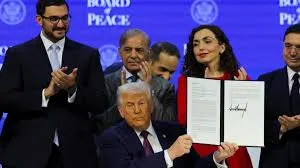
Despite Trump’s assertion that the Board seeks inclusive global peace, the absence of India, China, and leading European economies such as Germany, France and the United Kingdom underscored scepticism among major stakeholders. India’s decision to stay away was especially noted, given Trump’s claim that as many as 59 countries were involved in Middle East peace efforts linked to the initiative.
Representatives from around 20 countries signed the charter during the ceremony, including Pakistan, Saudi Arabia, Qatar, Turkey, Hungary, Indonesia, Argentina and several Central Asian and Balkan states. Pakistani Prime Minister Shehbaz Sharif was among the leaders present on stage with Trump. According to reports, another 35 countries have indicated they may sign the charter later.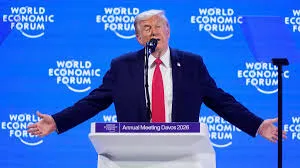
During his address, Trump reiterated claims that his administration had helped stop multiple wars and was working to end the conflict in Ukraine. He also outlined a controversial vision for Gaza’s reconstruction, describing the territory as “valuable real estate,” comments that drew quiet criticism in diplomatic circles attending Davos.
Russian state news agency TASS reported that President Vladimir Putin was prepared to contribute $1 billion to the Board of Peace, potentially using Russian assets frozen in the United States, a claim not independently confirmed by Washington.
The initiative also drew criticism for bypassing existing multilateral institutions. Trump openly derided the United Nations, saying his administration had ignored it to broker what he described as successful peace deals.
With the Board of Peace now formally launched, analysts say its credibility will depend on whether it can attract broader international participation and deliver tangible outcomes beyond political messaging.

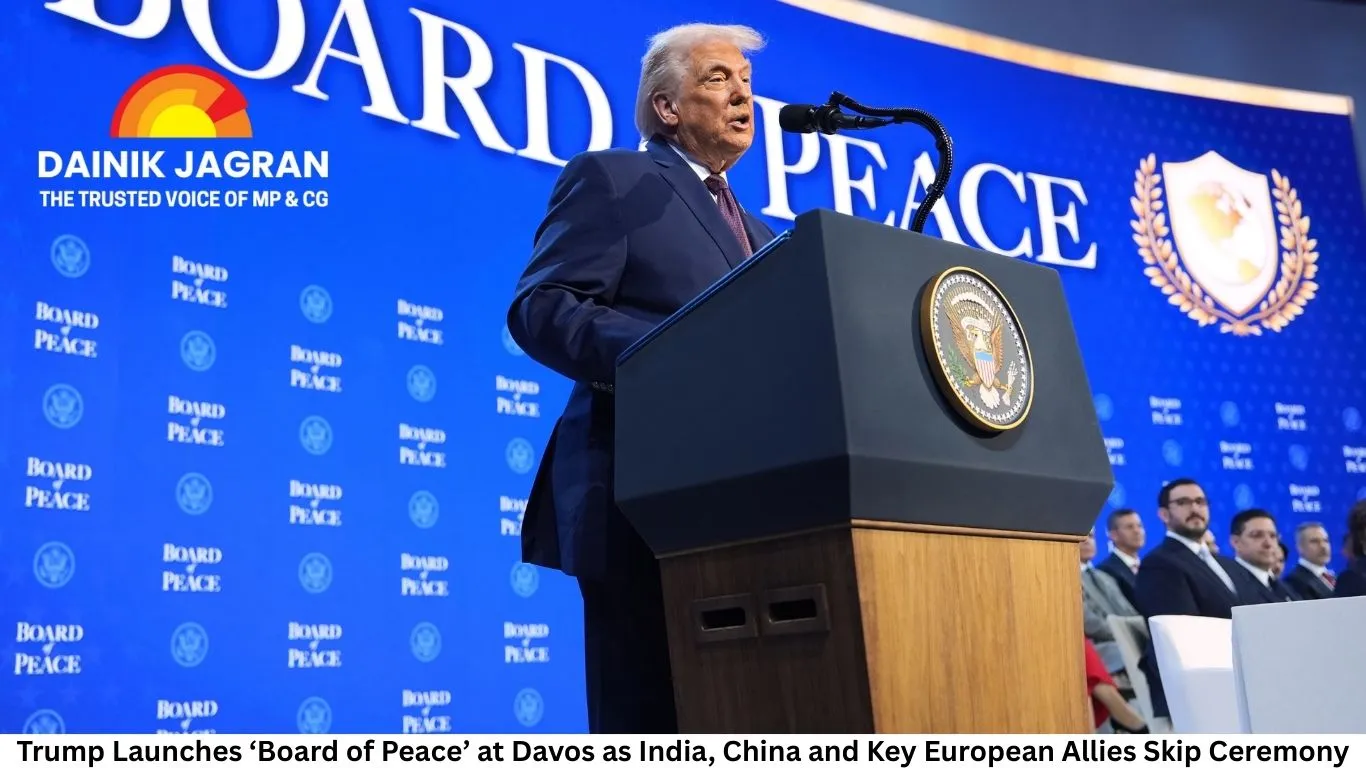
Trump Launches ‘Board of Peace’ at Davos as India, China and Key European Allies Skip Ceremony
Digital Desk
Addressing a gathering of fewer than 20 participating nations, Trump claimed the Board of Peace had already begun functioning and was “running beautifully.” The initiative, according to officials familiar with the plan, envisages a $1 billion contribution for permanent membership and aims to address conflicts ranging from Gaza and Ukraine to broader geopolitical disputes.
The announcement followed Trump’s discussions in Davos with NATO Secretary General Mark Rutte, particularly on security issues related to Greenland and the Arctic region. Trump said the idea of the Board took shape amid those talks, even as his administration recently imposed a 10% tariff on eight European countries that opposed Washington’s stance on Greenland. He has warned of steeper tariffs if no agreement is reached.
Despite Trump’s assertion that the Board seeks inclusive global peace, the absence of India, China, and leading European economies such as Germany, France and the United Kingdom underscored scepticism among major stakeholders. India’s decision to stay away was especially noted, given Trump’s claim that as many as 59 countries were involved in Middle East peace efforts linked to the initiative.
Representatives from around 20 countries signed the charter during the ceremony, including Pakistan, Saudi Arabia, Qatar, Turkey, Hungary, Indonesia, Argentina and several Central Asian and Balkan states. Pakistani Prime Minister Shehbaz Sharif was among the leaders present on stage with Trump. According to reports, another 35 countries have indicated they may sign the charter later.
During his address, Trump reiterated claims that his administration had helped stop multiple wars and was working to end the conflict in Ukraine. He also outlined a controversial vision for Gaza’s reconstruction, describing the territory as “valuable real estate,” comments that drew quiet criticism in diplomatic circles attending Davos.
Russian state news agency TASS reported that President Vladimir Putin was prepared to contribute $1 billion to the Board of Peace, potentially using Russian assets frozen in the United States, a claim not independently confirmed by Washington.
The initiative also drew criticism for bypassing existing multilateral institutions. Trump openly derided the United Nations, saying his administration had ignored it to broker what he described as successful peace deals.
With the Board of Peace now formally launched, analysts say its credibility will depend on whether it can attract broader international participation and deliver tangible outcomes beyond political messaging.
.jpg)




