Trump Orders Strait of Hormuz Blockade After Iran Talks Collapse
Digital Desk
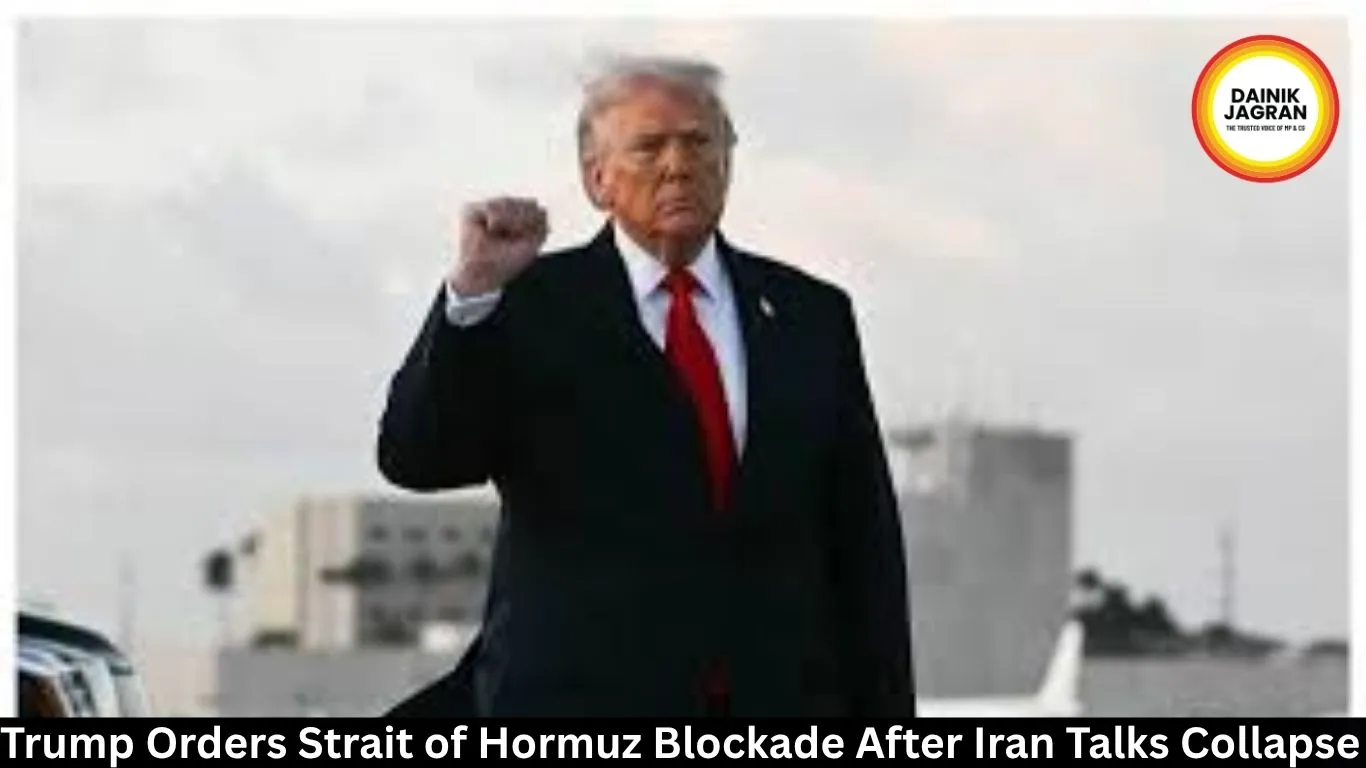
US President Donald Trump has announced a naval blockade of the Strait of Hormuz following the failure of peace talks with Iran in Islamabad, triggering fresh fears over global oil supplies and energy security for India.
Failed Talks Spark Crisis
US-Iran negotiations in Islamabad ended without agreement late on Sunday. President Trump blamed Tehran for the deadlock and immediately signalled a hardline response through two posts on Truth Social.
Blockade Begins Today
The US Navy will enforce the blockade from 10 am ET (7.30 pm IST) on Monday, April 13. Trump stated that American forces would interdict vessels in international waters that paid tolls to Iran for safe passage through the strait.
Hormuz Remains Vital Artery
The narrow waterway between the Persian Gulf and the Arabian Sea carries nearly 20 per cent of the world’s oil. Even partial disruption sends shockwaves through global energy markets.
Iran Hits Back Sharply
Tehran described the move as a “violation of ceasefire” and a threat to its sovereignty. State broadcaster IRIB quoted the spokesperson for Iran’s Khatam al-Anbiya Central Headquarters saying that defending territorial waters was a “natural and legal duty” of the Iranian armed forces.
Oil Prices Likely to Spike
Traders reacted swiftly. Brent crude surged past $100 a barrel in early Asian trade amid fears of restricted Iranian exports, which average nearly two million barrels per day through the strait.
India Faces Supply Risks
India imports nearly 80 per cent of its crude oil, with a large share routed through the Gulf. Any prolonged blockade could push up fuel prices, raise transport costs and feed into household inflation. Industry sources said refiners are already reviewing inventory levels and alternative sourcing plans.
New Delhi Steps Up Diplomacy
External Affairs Minister S Jaishankar held urgent talks with UAE leaders in recent days. New Delhi is also accelerating diversification away from traditional Gulf benchmarks such as Oman and Dubai grades. Officials indicated that strategic reserves are being monitored closely and that India continues to stress the need for unimpeded navigation in all international forums.
The Strait of Hormuz has long been a strategic flashpoint. While technically open, Iran has tightened oversight of passing vessels in recent weeks, imposing selective controls and fees it calls necessary for economic protection. Trump labelled these actions “extortion” and framed the blockade as a step to restore freedom of navigation.
US Central Command later clarified that the operation would focus on Iranian ports and coastal areas while allowing traffic between non-Iranian ports to continue. Trump described Iran as being in a “very bad shape” and “very desperate,” adding that other countries could join the effort, though he named none.
For India, the timing could not be more sensitive. With summer demand rising and the economy showing steady recovery, higher energy costs threaten to slow industrial output and strain the current account. Economists warn that even a short disruption could add upward pressure on retail fuel prices within days.
Analysts say the blockade appears designed as temporary leverage to bring Iran back to the table. Trump himself hinted that normal passage could resume once conditions stabilise. Yet the risk of miscalculation remains high in such a congested waterway.
New Delhi has so far avoided public comment on the latest escalation but is expected to reiterate its position on free and secure sea lanes. Sources indicated that contingency planning is under way across ministries to shield consumers and key sectors from volatility.
As the blockade takes effect, the world is watching closely. For India, the coming hours and days will test both its energy resilience and its diplomatic agility in an increasingly uncertain global landscape.
--------
🚨 Beat the News Rush – Join Now!
Get breaking alerts, hot exclusives, and game-changing stories instantly on your phone. No delays, no fluff – just the edge you need. ⚡
Tap to join:
🟢 WhatsApp Channel: Dainik Jagran MP CG
Crave more?
🅕 Facebook: Dainik Jagran MP CG English
🅧 Twitter (X): Dainik Jagran MP CG
🅘 Instagram: Dainik Jagran MP CG
Share the fire – keep your crew ahead! 🗞️🔥
Trump Orders Strait of Hormuz Blockade After Iran Talks Collapse
Digital Desk
Failed Talks Spark Crisis
US-Iran negotiations in Islamabad ended without agreement late on Sunday. President Trump blamed Tehran for the deadlock and immediately signalled a hardline response through two posts on Truth Social.
Blockade Begins Today
The US Navy will enforce the blockade from 10 am ET (7.30 pm IST) on Monday, April 13. Trump stated that American forces would interdict vessels in international waters that paid tolls to Iran for safe passage through the strait.
Hormuz Remains Vital Artery
The narrow waterway between the Persian Gulf and the Arabian Sea carries nearly 20 per cent of the world’s oil. Even partial disruption sends shockwaves through global energy markets.
Iran Hits Back Sharply
Tehran described the move as a “violation of ceasefire” and a threat to its sovereignty. State broadcaster IRIB quoted the spokesperson for Iran’s Khatam al-Anbiya Central Headquarters saying that defending territorial waters was a “natural and legal duty” of the Iranian armed forces.
Oil Prices Likely to Spike
Traders reacted swiftly. Brent crude surged past $100 a barrel in early Asian trade amid fears of restricted Iranian exports, which average nearly two million barrels per day through the strait.
India Faces Supply Risks
India imports nearly 80 per cent of its crude oil, with a large share routed through the Gulf. Any prolonged blockade could push up fuel prices, raise transport costs and feed into household inflation. Industry sources said refiners are already reviewing inventory levels and alternative sourcing plans.
New Delhi Steps Up Diplomacy
External Affairs Minister S Jaishankar held urgent talks with UAE leaders in recent days. New Delhi is also accelerating diversification away from traditional Gulf benchmarks such as Oman and Dubai grades. Officials indicated that strategic reserves are being monitored closely and that India continues to stress the need for unimpeded navigation in all international forums.
The Strait of Hormuz has long been a strategic flashpoint. While technically open, Iran has tightened oversight of passing vessels in recent weeks, imposing selective controls and fees it calls necessary for economic protection. Trump labelled these actions “extortion” and framed the blockade as a step to restore freedom of navigation.
US Central Command later clarified that the operation would focus on Iranian ports and coastal areas while allowing traffic between non-Iranian ports to continue. Trump described Iran as being in a “very bad shape” and “very desperate,” adding that other countries could join the effort, though he named none.
For India, the timing could not be more sensitive. With summer demand rising and the economy showing steady recovery, higher energy costs threaten to slow industrial output and strain the current account. Economists warn that even a short disruption could add upward pressure on retail fuel prices within days.
Analysts say the blockade appears designed as temporary leverage to bring Iran back to the table. Trump himself hinted that normal passage could resume once conditions stabilise. Yet the risk of miscalculation remains high in such a congested waterway.
New Delhi has so far avoided public comment on the latest escalation but is expected to reiterate its position on free and secure sea lanes. Sources indicated that contingency planning is under way across ministries to shield consumers and key sectors from volatility.
As the blockade takes effect, the world is watching closely. For India, the coming hours and days will test both its energy resilience and its diplomatic agility in an increasingly uncertain global landscape.