


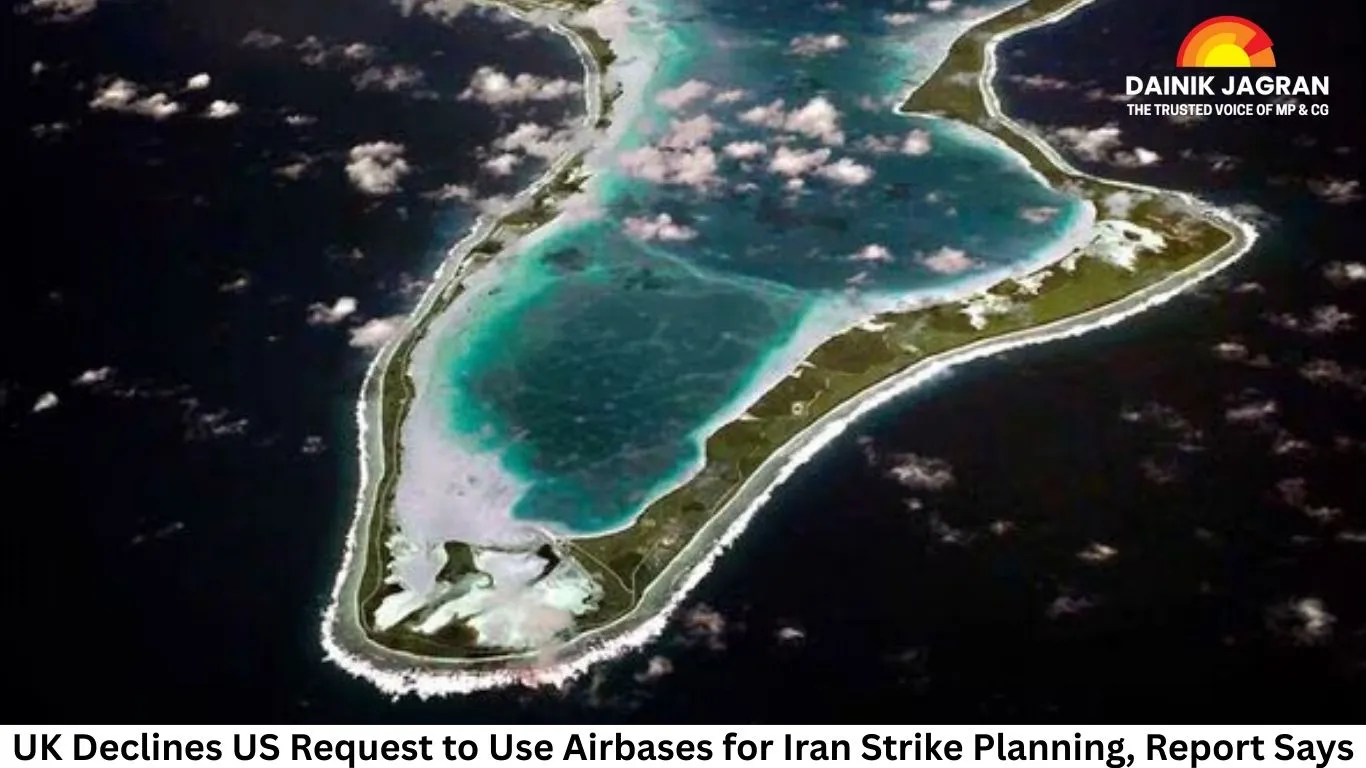
UK Declines US Request to Use Airbases for Iran Strike Planning, Report Says
Digital Desk
The report, published by Daily Mail, states that Washington had sought access to both Diego Garcia in the Chagos Archipelago and RAF Fairford for contingency planning. British rules require prime ministerial approval before national bases can be used for offensive operations, and officials signalled reluctance to grant such authorisation without legal clarity or international backing.
The reported refusal comes amid separate diplomatic strains tied to London’s negotiations with Mauritius over sovereignty of the Chagos Islands. Trump criticised the proposed arrangement on Truth Social, calling it a strategic error and warning that relinquishing control could weaken Western security posture in the region. British Prime Minister Keir Starmer has argued that a settlement would resolve legal disputes while preserving defence cooperation.
Strategically, Diego Garcia is one of the most significant overseas military facilities available to Western forces. Located roughly 3,800 kilometres from Tehran, it has a runway capable of handling long-range bombers and refuelling aircraft, along with a deep-water port for naval vessels. The base has supported previous operations in the Middle East, Afghanistan and parts of Africa, making it a critical logistics hub.
The territorial dispute underlying the issue dates back decades. Britain separated the islands from Mauritius in 1965 before Mauritian independence, creating the British Indian Ocean Territory. In 2019, the International Court of Justice concluded that the decolonisation of Mauritius had not been lawfully completed and called for Britain to end its administration of the archipelago. Talks intensified under former prime minister Rishi Sunak, with multiple negotiation rounds held before Britain’s 2024 election.
Diplomatic analysts say the episode reflects subtle shifts in the so-called “special relationship,” historically anchored in joint defence efforts and alliances such as NATO. Britain has increasingly emphasised legal frameworks and multilateral approval for military action, while Washington has signalled readiness to act swiftly when it perceives security threats.
Neither government has officially confirmed the reported request or refusal. However, the dispute underscores how strategic, legal and geopolitical considerations are reshaping cooperation between two countries long viewed as inseparable partners on global security.
.jpg)




