US Buries 250-Year Time Capsule with AI Predictions and Historic Artefacts

Digital Desk

US Buries 250-Year Time Capsule with AI Predictions and Historic Artefacts

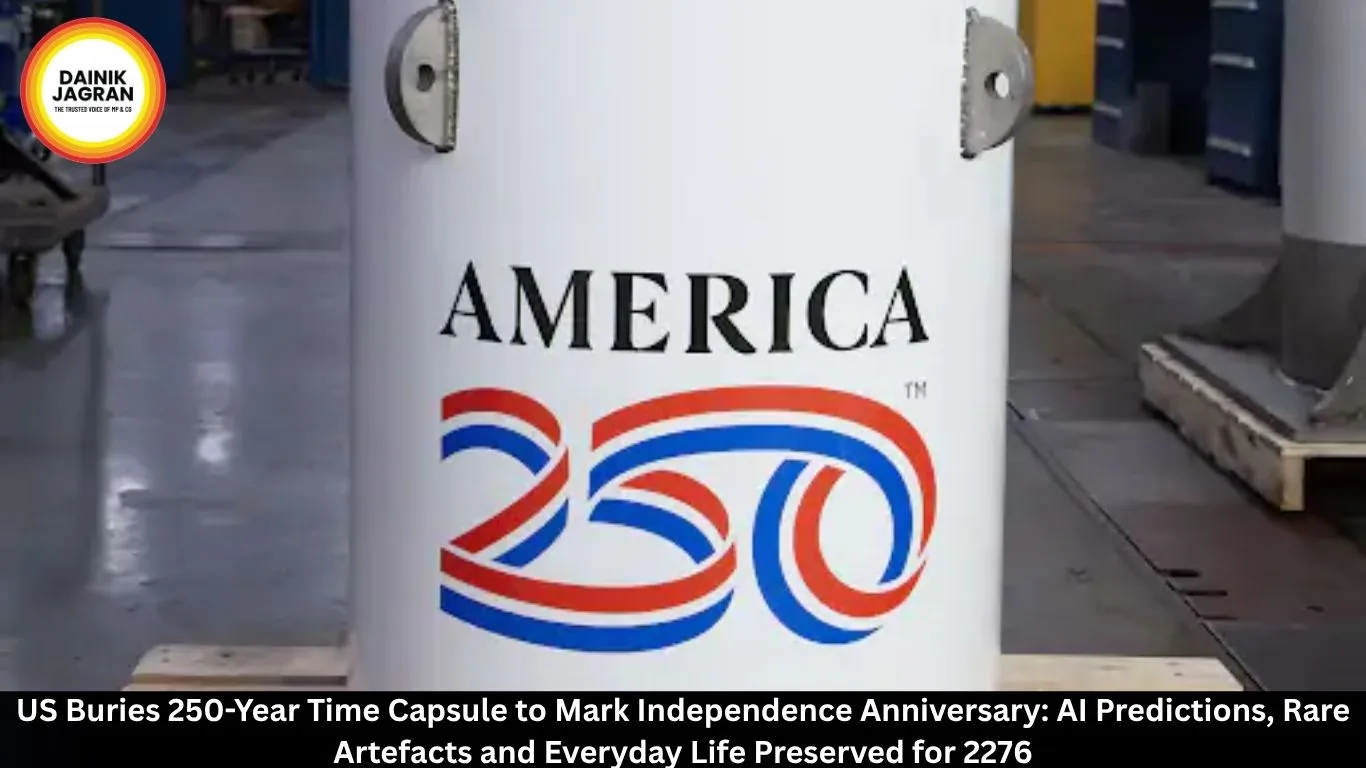
As the United States celebrates 250 years of independence, it is burying a 408-kg time capsule in Philadelphia containing AI predictions, rare artefacts, historical documents and cultural items to be opened in 2276.

US to Preserve 2026 for Future Generations with 250-Year Time Capsule Buried in Philadelphia

As the United States celebrates the 250th anniversary of its independence, the country is undertaking one of its most ambitious historical preservation projects—a specially engineered time capsule designed to remain sealed for the next 250 years.

The 408-kilogram capsule will be buried on July 4 at Independence National Historical Park in Philadelphia, the city where the Declaration of Independence was adopted in 1776. Scheduled to be opened in 2276, the capsule aims to provide future generations with an authentic glimpse into American life, technology, culture and society as it existed in 2026.

The project has been officially documented by the National Park Service, ensuring that its exact location and intended opening date are preserved for centuries to come.

Why Philadelphia Was Chosen

Philadelphia holds a unique place in American history as the birthplace of the nation's independence.

It was here on July 4, 1776, that the Continental Congress adopted the Declaration of Independence, laying the foundation for the United States. Choosing Philadelphia for the burial of the time capsule symbolically connects America's past with its future as the nation commemorates its 250-year milestone.

A Snapshot of America in 2026

The capsule contains carefully selected objects representing all 50 US states, capturing different aspects of modern American life.

Among the most unusual items included are a whale bone, sand collected from the world's largest gypsum desert, fabric linked to the Wright brothers' pioneering aircraft, historical documents, cultural artefacts and written predictions generated using artificial intelligence about what the future might look like.

The collection is intended to preserve not only physical objects but also the ideas, scientific achievements and technological advancements that define contemporary America.

Built to Survive for Two and a Half Centuries

Designing a container capable of surviving underground for 250 years required advanced engineering.

The capsule has been constructed using precision-milled stainless steel, a material chosen for its exceptional resistance to corrosion and environmental damage. Engineers opted for a cylindrical shape because it distributes pressure more evenly and reduces the risk of structural failure or water leakage compared to square containers.

To create an airtight seal, the capsule has been closed using indium, a soft metal capable of filling microscopic gaps that ordinary seals might leave behind.

Scientists have also maintained an internal humidity level of approximately 35 percent, considered ideal for preserving delicate materials such as paper, textiles and historical documents over extended periods.

Double Protection Underground

The capsule will be buried nearly 10 feet below the surface, where underground temperatures remain relatively stable throughout the year.

To provide additional protection, it will be enclosed inside a second steel cylinder, creating an insulating air gap that helps guard against groundwater intrusion and flooding.

Project lead scientist Michael Berilla explained that if floodwaters ever reached the capsule itself, it would likely indicate that much of Philadelphia had already been submerged, reflecting an extreme environmental event rather than a failure of the capsule's design.

More Than a Museum Exhibit

Unlike museum collections, which may be relocated, restored or reorganised over time, a time capsule remains untouched until its predetermined opening date.

Organisers say the project is intended to leave an unaltered message for people living in 2276, allowing them to experience an authentic record of the nation's everyday life, technological progress and cultural identity exactly as it existed during America's 250th year of independence.

Part of a Long Tradition

The United States has a rich history of creating long-term time capsules.

Among the most famous is the Crypt of Civilization at Oglethorpe University in Georgia, which is scheduled to remain sealed until the year 8113. Another well-known example is the Westinghouse Time Capsule, buried at the 1939 New York World's Fair and intended to be opened in 6939.

India also experimented with a similar project when the Kalpatra time capsule was buried near Delhi's Red Fort in 1973 during Prime Minister Indira Gandhi's tenure. However, it was excavated just four years later following a change in government amid political controversy over its contents.

As America marks a historic milestone, the Philadelphia time capsule serves not only as a celebration of the nation's past but also as a message of curiosity, innovation and hope for generations that will inherit its future two and a half centuries from now.


--------

🚨 Beat the News Rush – Join Now!

Get breaking alerts, hot exclusives, and game-changing stories instantly on your phone. No delays, no fluff – just the edge you need. ⚡

Tap to join: 

🟢 WhatsApp Channel: Dainik Jagran MP CG

Crave more?

🅕 Facebook: Dainik Jagran MP CG English

🅧 Twitter (X): Dainik Jagran MP CG

🅘 Instagram: Dainik Jagran MP CG

Share the fire – keep your crew ahead! 🗞️🔥

english.dainikjagranmpcg.com
04 Jul 2026 By Abhishek Joshi

US Buries 250-Year Time Capsule with AI Predictions and Historic Artefacts

Digital Desk

US to Preserve 2026 for Future Generations with 250-Year Time Capsule Buried in Philadelphia

As the United States celebrates the 250th anniversary of its independence, the country is undertaking one of its most ambitious historical preservation projects—a specially engineered time capsule designed to remain sealed for the next 250 years.

The 408-kilogram capsule will be buried on July 4 at Independence National Historical Park in Philadelphia, the city where the Declaration of Independence was adopted in 1776. Scheduled to be opened in 2276, the capsule aims to provide future generations with an authentic glimpse into American life, technology, culture and society as it existed in 2026.

The project has been officially documented by the National Park Service, ensuring that its exact location and intended opening date are preserved for centuries to come.

Why Philadelphia Was Chosen

Philadelphia holds a unique place in American history as the birthplace of the nation's independence.

It was here on July 4, 1776, that the Continental Congress adopted the Declaration of Independence, laying the foundation for the United States. Choosing Philadelphia for the burial of the time capsule symbolically connects America's past with its future as the nation commemorates its 250-year milestone.

A Snapshot of America in 2026

The capsule contains carefully selected objects representing all 50 US states, capturing different aspects of modern American life.

Among the most unusual items included are a whale bone, sand collected from the world's largest gypsum desert, fabric linked to the Wright brothers' pioneering aircraft, historical documents, cultural artefacts and written predictions generated using artificial intelligence about what the future might look like.

The collection is intended to preserve not only physical objects but also the ideas, scientific achievements and technological advancements that define contemporary America.

Built to Survive for Two and a Half Centuries

Designing a container capable of surviving underground for 250 years required advanced engineering.

The capsule has been constructed using precision-milled stainless steel, a material chosen for its exceptional resistance to corrosion and environmental damage. Engineers opted for a cylindrical shape because it distributes pressure more evenly and reduces the risk of structural failure or water leakage compared to square containers.

To create an airtight seal, the capsule has been closed using indium, a soft metal capable of filling microscopic gaps that ordinary seals might leave behind.

Scientists have also maintained an internal humidity level of approximately 35 percent, considered ideal for preserving delicate materials such as paper, textiles and historical documents over extended periods.

Double Protection Underground

The capsule will be buried nearly 10 feet below the surface, where underground temperatures remain relatively stable throughout the year.

To provide additional protection, it will be enclosed inside a second steel cylinder, creating an insulating air gap that helps guard against groundwater intrusion and flooding.

Project lead scientist Michael Berilla explained that if floodwaters ever reached the capsule itself, it would likely indicate that much of Philadelphia had already been submerged, reflecting an extreme environmental event rather than a failure of the capsule's design.

More Than a Museum Exhibit

Unlike museum collections, which may be relocated, restored or reorganised over time, a time capsule remains untouched until its predetermined opening date.

Organisers say the project is intended to leave an unaltered message for people living in 2276, allowing them to experience an authentic record of the nation's everyday life, technological progress and cultural identity exactly as it existed during America's 250th year of independence.

Part of a Long Tradition

The United States has a rich history of creating long-term time capsules.

Among the most famous is the Crypt of Civilization at Oglethorpe University in Georgia, which is scheduled to remain sealed until the year 8113. Another well-known example is the Westinghouse Time Capsule, buried at the 1939 New York World's Fair and intended to be opened in 6939.

India also experimented with a similar project when the Kalpatra time capsule was buried near Delhi's Red Fort in 1973 during Prime Minister Indira Gandhi's tenure. However, it was excavated just four years later following a change in government amid political controversy over its contents.

As America marks a historic milestone, the Philadelphia time capsule serves not only as a celebration of the nation's past but also as a message of curiosity, innovation and hope for generations that will inherit its future two and a half centuries from now.

https://english.dainikjagranmpcg.com/special-news/us-buries-250-year-time-capsule-with-ai-predictions-and-historic/article-21009

Latest News