US-Iran Deal Signals Easing Middle East Tensions, Hormuz Route Set to Reopen

Digital Desk

US-Iran Deal Signals Easing Middle East Tensions, Hormuz Route Set to Reopen

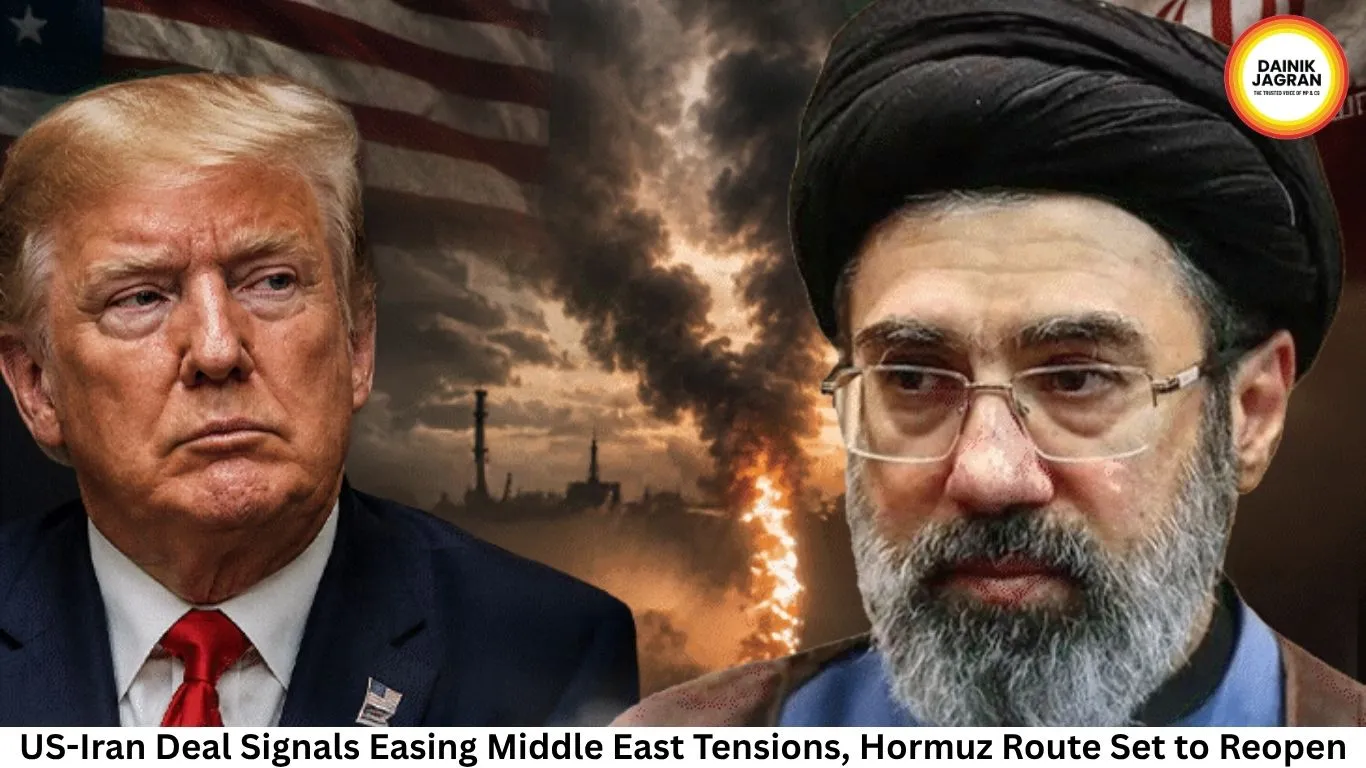
A potential breakthrough in Middle East diplomacy has emerged after the United States and Iran moved closer to formalizing a peace agreement aimed at ending months of regional conflict. The development has raised hopes of restoring shipping through the Strait of Hormuz and easing pressure on global energy markets.

The proposed agreement between Washington and Tehran generated significant international attention on Tuesday, with officials from both countries signaling progress ahead of a formal signing ceremony expected later this week. US President Donald Trump said the understanding would help prevent Iran from obtaining a nuclear weapon while creating conditions for greater regional stability. Meanwhile, Iranian officials announced that the process of lifting the US naval blockade had already begun.

Speaking on the sidelines of the G7 summit, Trump also commented on Israel’s ongoing military operations in Lebanon. He said Israeli Prime Minister Benjamin Netanyahu must be “more responsible” regarding Lebanon and stressed that the United States remains Israel’s strongest ally. Trump further stated that he did not support an Israeli strike on Beirut that reportedly occurred shortly before the agreement was finalized.

According to Iranian Deputy Foreign Minister Majid Takht-Ravanchi, restrictions on Iranian maritime activity are being eased ahead of the formal signing. Iranian state media reported that three oil tankers and two cargo vessels have already resumed movement toward Iranian ports through regional waterways.

The agreement is expected to address several key issues, including freedom of navigation in the Strait of Hormuz, regional security concerns, sanctions relief, and future discussions regarding Iran’s nuclear program.

Impact on Global Oil Markets

Financial markets reacted immediately to reports of progress between the two countries. International benchmark Brent crude fell by more than 5 percent, dropping to around $79 per barrel, while US West Texas Intermediate (WTI) crude declined to approximately $76 per barrel.

Market analysts believe expectations of increased Iranian oil exports and the reopening of critical shipping lanes have reduced fears of supply disruptions. Several major investment banks have already lowered their oil price forecasts, anticipating improved market stability if the agreement moves forward as planned.

The Strait of Hormuz remains one of the world's most important energy corridors, carrying a significant share of global oil and liquefied natural gas shipments. Any improvement in maritime access through the route could benefit both energy producers and importing nations.

Lebanon Remains a Key Concern

Despite diplomatic progress between Washington and Tehran, tensions continue in Lebanon. Reports indicate that Israeli military strikes in southern Lebanon have resulted in casualties, while Hezbollah and Iranian officials have continued to demand a complete Israeli withdrawal from Lebanese territory.

Iranian Foreign Minister Abbas Araghchi stated that lasting peace requires an end to hostilities across all fronts, including Lebanon. He warned that any future escalation could undermine the broader framework of the agreement.

Regional stakeholders, including Qatar, Oman, Saudi Arabia, and European leaders, have welcomed efforts to restore stability and secure unrestricted navigation through the Strait of Hormuz. Several governments have described the reopening of the waterway as essential for global economic security.

According to diplomatic sources, the formal signing of the memorandum of understanding is expected to take place in Switzerland on June 19. Negotiations are then likely to continue in phases, focusing first on regional security arrangements and maritime access, followed by discussions on sanctions and Iran’s nuclear activities.

The outcome of these talks is being closely watched worldwide. A successful agreement could reshape Middle East diplomacy, stabilize energy markets, and reduce risks to global trade. For countries such as India, which rely heavily on imported crude oil, developments surrounding the US-Iran Deal and the Strait of Hormuz remain particularly significant.


--------

🚨 Beat the News Rush – Join Now!

Get breaking alerts, hot exclusives, and game-changing stories instantly on your phone. No delays, no fluff – just the edge you need. ⚡

Tap to join: 

🟢 WhatsApp Channel: Dainik Jagran MP CG

Crave more?

🅕 Facebook: Dainik Jagran MP CG English

🅧 Twitter (X): Dainik Jagran MP CG

🅘 Instagram: Dainik Jagran MP CG

Share the fire – keep your crew ahead! 🗞️🔥

english.dainikjagranmpcg.com
17 Jun 2026 By Rishita

US-Iran Deal Signals Easing Middle East Tensions, Hormuz Route Set to Reopen

Digital Desk

The proposed agreement between Washington and Tehran generated significant international attention on Tuesday, with officials from both countries signaling progress ahead of a formal signing ceremony expected later this week. US President Donald Trump said the understanding would help prevent Iran from obtaining a nuclear weapon while creating conditions for greater regional stability. Meanwhile, Iranian officials announced that the process of lifting the US naval blockade had already begun.

Speaking on the sidelines of the G7 summit, Trump also commented on Israel’s ongoing military operations in Lebanon. He said Israeli Prime Minister Benjamin Netanyahu must be “more responsible” regarding Lebanon and stressed that the United States remains Israel’s strongest ally. Trump further stated that he did not support an Israeli strike on Beirut that reportedly occurred shortly before the agreement was finalized.

According to Iranian Deputy Foreign Minister Majid Takht-Ravanchi, restrictions on Iranian maritime activity are being eased ahead of the formal signing. Iranian state media reported that three oil tankers and two cargo vessels have already resumed movement toward Iranian ports through regional waterways.

The agreement is expected to address several key issues, including freedom of navigation in the Strait of Hormuz, regional security concerns, sanctions relief, and future discussions regarding Iran’s nuclear program.

Impact on Global Oil Markets

Financial markets reacted immediately to reports of progress between the two countries. International benchmark Brent crude fell by more than 5 percent, dropping to around $79 per barrel, while US West Texas Intermediate (WTI) crude declined to approximately $76 per barrel.

Market analysts believe expectations of increased Iranian oil exports and the reopening of critical shipping lanes have reduced fears of supply disruptions. Several major investment banks have already lowered their oil price forecasts, anticipating improved market stability if the agreement moves forward as planned.

The Strait of Hormuz remains one of the world's most important energy corridors, carrying a significant share of global oil and liquefied natural gas shipments. Any improvement in maritime access through the route could benefit both energy producers and importing nations.

Lebanon Remains a Key Concern

Despite diplomatic progress between Washington and Tehran, tensions continue in Lebanon. Reports indicate that Israeli military strikes in southern Lebanon have resulted in casualties, while Hezbollah and Iranian officials have continued to demand a complete Israeli withdrawal from Lebanese territory.

Iranian Foreign Minister Abbas Araghchi stated that lasting peace requires an end to hostilities across all fronts, including Lebanon. He warned that any future escalation could undermine the broader framework of the agreement.

Regional stakeholders, including Qatar, Oman, Saudi Arabia, and European leaders, have welcomed efforts to restore stability and secure unrestricted navigation through the Strait of Hormuz. Several governments have described the reopening of the waterway as essential for global economic security.

According to diplomatic sources, the formal signing of the memorandum of understanding is expected to take place in Switzerland on June 19. Negotiations are then likely to continue in phases, focusing first on regional security arrangements and maritime access, followed by discussions on sanctions and Iran’s nuclear activities.

The outcome of these talks is being closely watched worldwide. A successful agreement could reshape Middle East diplomacy, stabilize energy markets, and reduce risks to global trade. For countries such as India, which rely heavily on imported crude oil, developments surrounding the US-Iran Deal and the Strait of Hormuz remain particularly significant.

https://english.dainikjagranmpcg.com/international/us-iran-deal-signals-easing-middle-east-tensions-hormuz-route-set/article-20261

Related Posts

Latest News