US Senate Passes Resolution to Halt Iran War; Rubio in Gulf

Digital Desk

US Senate Passes Resolution to Halt Iran War; Rubio in Gulf

US Senate narrowly passed a resolution urging President Trump to end military action against Iran as Secretary of State Marco Rubio visits Gulf allies to address concerns over the new US-Iran agreement.

In a rare bipartisan rebuke, the US Senate on Wednesday passed a resolution calling on President Donald Trump to stop further military action against Iran, marking the first such congressional intervention under the 1973 War Powers Act.

The measure cleared the Senate by a narrow 50-48 vote, with four Republican senators joining Democrats in support. It had already received approval in the House of Representatives earlier. The resolution seeks to require congressional approval for any additional military operations against Iran.

This development comes amid ongoing diplomatic efforts following the recent US-Iran agreement. The White House, however, quickly dismissed the resolution's impact, stating it has no legal binding and that major military operations related to the conflict have already concluded. Administration officials asserted that the President retains broad authority on national security matters.

The vote highlighted deepening divisions within the Republican Party during Trump's second term, with the support from four GOP lawmakers seen as the first major internal break on a key foreign policy issue.

Rubio in Gulf for Damage Control

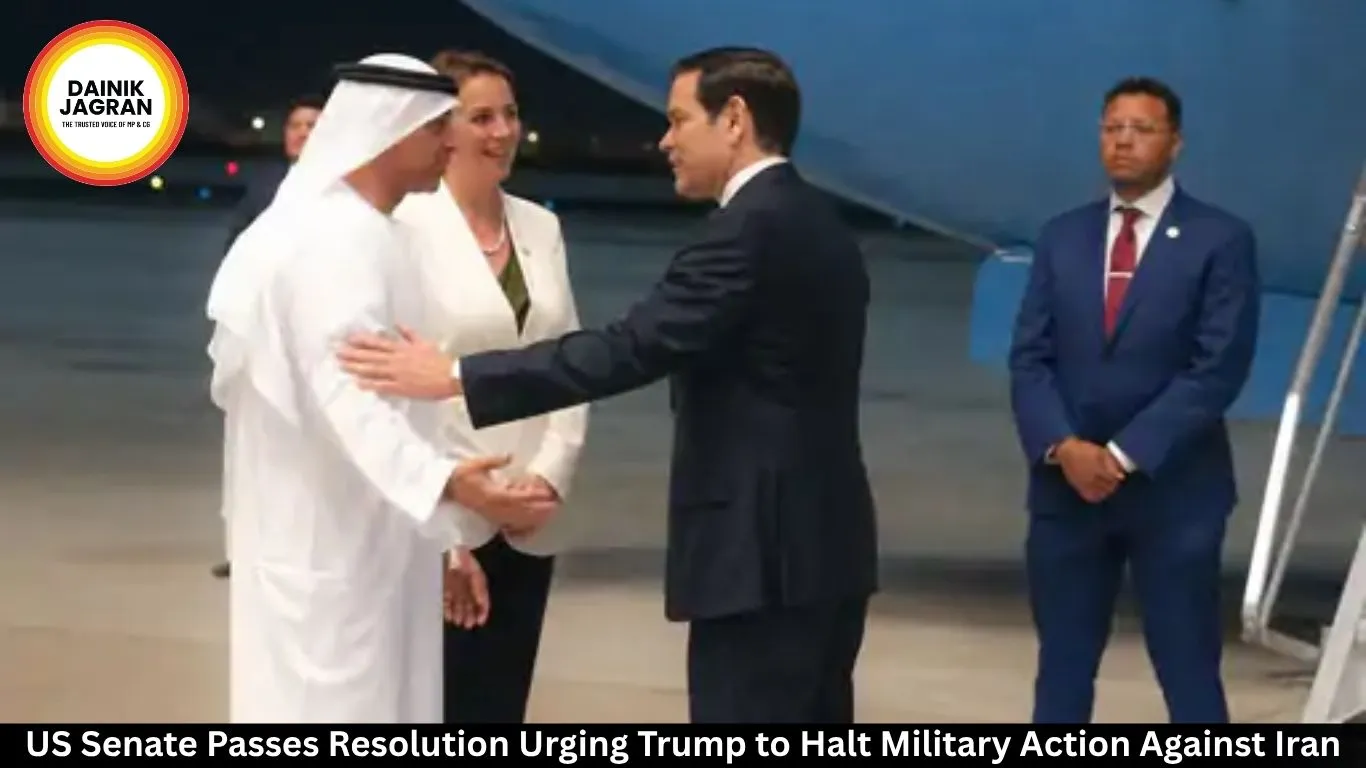
Meanwhile, US Secretary of State Marco Rubio is in the United Arab Emirates as part of a regional tour that also includes Bahrain and Kuwait. The visit aims to reassure Gulf allies worried about the implications of the US-Iran deal, particularly its potential to boost Iran's regional influence around the Strait of Hormuz.

Gulf partners have expressed concerns over the absence of firm restrictions on Iran's missile programme and reports of a possible $300 billion reconstruction package for Tehran. Rubio, received by the US Ambassador to the UAE in Abu Dhabi, is expected to address these issues directly and seek broader backing for the agreement.

Shipping activity through the Strait of Hormuz has shown signs of recovery, with vessel crossings nearly tripling week-on-week. Several Indian-linked ships have successfully transited the waterway since the June 17 agreement, while crude oil prices eased slightly on hopes of normalised energy flows.

Trump's Mixed Signals

President Trump, meanwhile, continued to strike a tough tone. He warned Iran against violating the agreement and claimed Tehran has agreed to international inspections of its nuclear sites. "If they back down, I will cancel the conversation now," Trump said during remarks in Pennsylvania. He also suggested the US could "finish the job" in less than a week if Iran is not "reasonable."

On the other hand, Iranian President Masoud Pezeshkian ruled out including the missile programme in any future talks, calling it a key pillar of national security. He made the remarks during a visit to Pakistan, where Russian President Vladimir Putin was also present for discussions on regional security.

Broader Regional Ripples

The Senate vote comes as other developments continue to unfold. A UN commission of inquiry released a report alleging that Israeli actions against Palestinian children in Gaza may amount to genocide and war crimes, prompting strong reactions from Palestinian authorities. Separately, Syrians pushed back against suggestions of involving their country in confronting Hezbollah in Lebanon.

In the energy sector, Qatar said LNG production would resume within weeks after earlier disruptions.

The Senate resolution, though largely symbolic according to the White House, is being watched closely for its political message. It reflects growing congressional unease over potential escalation in West Asia even as diplomacy takes centre stage.

As trading and diplomatic engagements continue, further clarity is expected on how the US administration balances domestic political pushback with its strategic goals in the region. Market participants and regional players will be tracking the next steps closely.
 

--------

🚨 Beat the News Rush – Join Now!

Get breaking alerts, hot exclusives, and game-changing stories instantly on your phone. No delays, no fluff – just the edge you need. ⚡

Tap to join: 

🟢 WhatsApp Channel: Dainik Jagran MP CG

Crave more?

🅕 Facebook: Dainik Jagran MP CG English

🅧 Twitter (X): Dainik Jagran MP CG

🅘 Instagram: Dainik Jagran MP CG

Share the fire – keep your crew ahead! 🗞️🔥

english.dainikjagranmpcg.com
24 Jun 2026 By Abhishek Joshi

US Senate Passes Resolution to Halt Iran War; Rubio in Gulf

Digital Desk

In a rare bipartisan rebuke, the US Senate on Wednesday passed a resolution calling on President Donald Trump to stop further military action against Iran, marking the first such congressional intervention under the 1973 War Powers Act.

The measure cleared the Senate by a narrow 50-48 vote, with four Republican senators joining Democrats in support. It had already received approval in the House of Representatives earlier. The resolution seeks to require congressional approval for any additional military operations against Iran.

This development comes amid ongoing diplomatic efforts following the recent US-Iran agreement. The White House, however, quickly dismissed the resolution's impact, stating it has no legal binding and that major military operations related to the conflict have already concluded. Administration officials asserted that the President retains broad authority on national security matters.

The vote highlighted deepening divisions within the Republican Party during Trump's second term, with the support from four GOP lawmakers seen as the first major internal break on a key foreign policy issue.

Rubio in Gulf for Damage Control

Meanwhile, US Secretary of State Marco Rubio is in the United Arab Emirates as part of a regional tour that also includes Bahrain and Kuwait. The visit aims to reassure Gulf allies worried about the implications of the US-Iran deal, particularly its potential to boost Iran's regional influence around the Strait of Hormuz.

Gulf partners have expressed concerns over the absence of firm restrictions on Iran's missile programme and reports of a possible $300 billion reconstruction package for Tehran. Rubio, received by the US Ambassador to the UAE in Abu Dhabi, is expected to address these issues directly and seek broader backing for the agreement.

Shipping activity through the Strait of Hormuz has shown signs of recovery, with vessel crossings nearly tripling week-on-week. Several Indian-linked ships have successfully transited the waterway since the June 17 agreement, while crude oil prices eased slightly on hopes of normalised energy flows.

Trump's Mixed Signals

President Trump, meanwhile, continued to strike a tough tone. He warned Iran against violating the agreement and claimed Tehran has agreed to international inspections of its nuclear sites. "If they back down, I will cancel the conversation now," Trump said during remarks in Pennsylvania. He also suggested the US could "finish the job" in less than a week if Iran is not "reasonable."

On the other hand, Iranian President Masoud Pezeshkian ruled out including the missile programme in any future talks, calling it a key pillar of national security. He made the remarks during a visit to Pakistan, where Russian President Vladimir Putin was also present for discussions on regional security.

Broader Regional Ripples

The Senate vote comes as other developments continue to unfold. A UN commission of inquiry released a report alleging that Israeli actions against Palestinian children in Gaza may amount to genocide and war crimes, prompting strong reactions from Palestinian authorities. Separately, Syrians pushed back against suggestions of involving their country in confronting Hezbollah in Lebanon.

In the energy sector, Qatar said LNG production would resume within weeks after earlier disruptions.

The Senate resolution, though largely symbolic according to the White House, is being watched closely for its political message. It reflects growing congressional unease over potential escalation in West Asia even as diplomacy takes centre stage.

As trading and diplomatic engagements continue, further clarity is expected on how the US administration balances domestic political pushback with its strategic goals in the region. Market participants and regional players will be tracking the next steps closely.
 

https://english.dainikjagranmpcg.com/special-news/us-senate-passes-resolution-to-halt-iran-war-rubio-in/article-20535

Latest News