US-Iran 14-Point Deal Signed: Nuclear Curbs, Hormuz Reopening and Sanctions Relief Framework Agreed
Digital Desk
The interim agreement seeks to prevent renewed conflict, reopen global shipping routes, and launch negotiations on Iran’s nuclear programme, though several major issues remain unresolved.
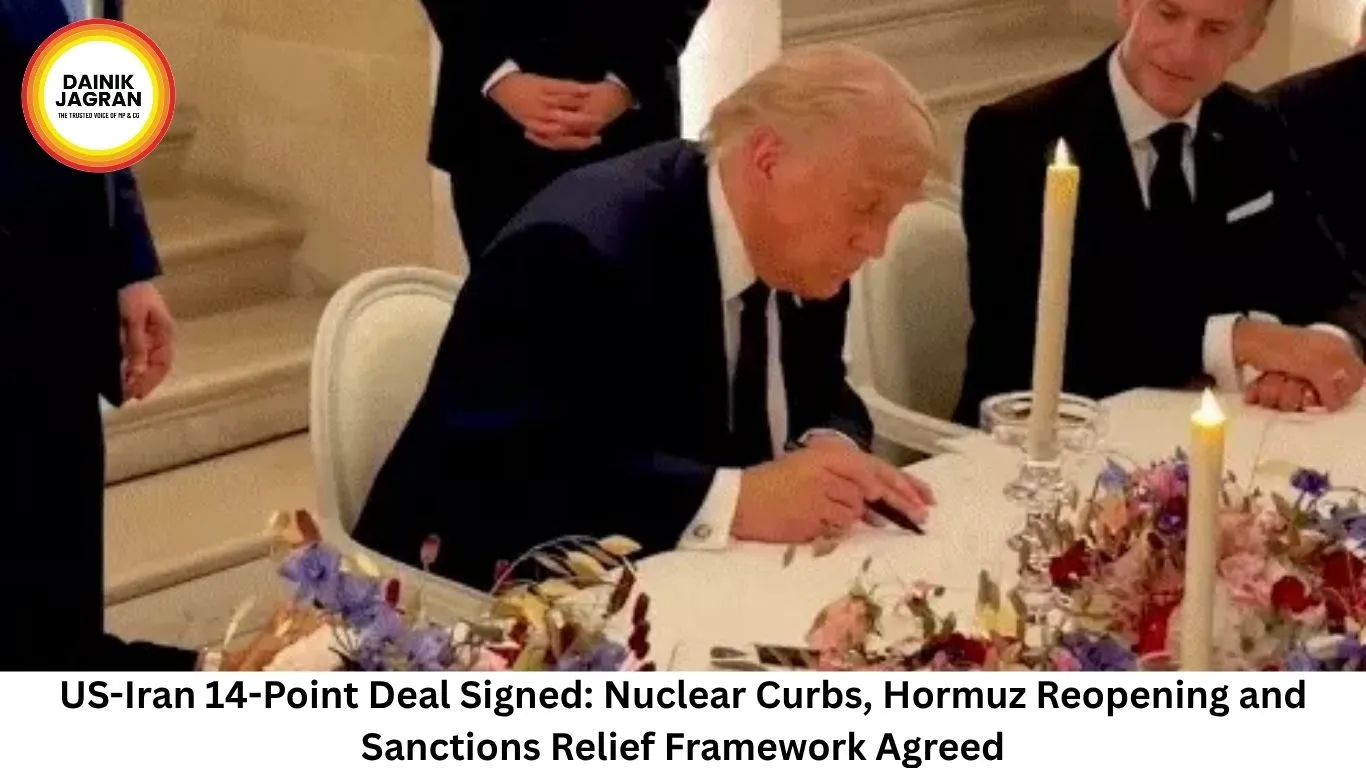
A significant diplomatic breakthrough has emerged in the Middle East after the United States and Iran signed a 14-point Memorandum of Understanding (MoU) aimed at extending the ceasefire between the two countries and creating a pathway toward a comprehensive settlement. The agreement, signed by US President Donald Trump and Iranian President Masoud Pezeshkian, establishes a 60-day framework for negotiations on critical issues including sanctions relief, nuclear restrictions, regional security, and economic reconstruction.
The deal comes after months of tensions that disrupted shipping through the Strait of Hormuz, affected global energy markets, and heightened concerns over Iran’s nuclear programme. While both sides have described the agreement as a major step forward, officials have also acknowledged that the memorandum serves as a framework for future negotiations rather than a final settlement.
Under the agreement, military operations between the two sides are to cease immediately, and both countries have pledged to respect each other’s sovereignty and refrain from interference in domestic affairs. A formal negotiation process has now begun, with a target of reaching a final agreement within 60 days, although the timeline can be extended by mutual consent.
Strait of Hormuz Reopening
One of the most consequential elements of the deal concerns the reopening of the Strait of Hormuz, a critical maritime route through which a substantial share of global oil exports passes.
Iran has committed to facilitating safe passage for commercial vessels, while the United States has agreed to begin lifting restrictions affecting Iranian ports and maritime traffic. Shipping activity is expected to resume gradually as security and logistical measures are implemented.
The agreement also envisages future cooperation between Iran, Oman, and other Gulf nations on managing maritime security in the region.
Nuclear Commitments
A central feature of the memorandum is Iran’s commitment not to acquire nuclear weapons. Both sides have agreed to address Iran’s stockpile of enriched uranium under the supervision of the International Atomic Energy Agency (IAEA).
According to officials familiar with the negotiations, the current proposal involves downblending enriched uranium rather than destroying it outright. However, the precise technical arrangements remain subject to further talks.
The agreement also requires both countries to maintain the current status of Iran’s nuclear programme while negotiations continue. During this period, Washington has pledged not to impose new sanctions and to provide limited waivers related to oil exports and associated financial services.
Economic Relief and Reconstruction
The memorandum includes provisions for sanctions relief and economic recovery. The United States has agreed in principle to remove economic sanctions, although the timing and sequencing will be negotiated during the next phase of talks.
Another notable provision is a proposed reconstruction and economic development framework worth at least $300 billion. US officials have clarified that Washington is not necessarily committing direct funding but may facilitate investments from regional partners and international stakeholders.
The deal also opens the possibility of releasing frozen Iranian assets, with access tied to compliance and future agreements between the two sides.
Major Issues Still Unresolved
Despite the breakthrough, several difficult questions remain unanswered. Negotiators have yet to finalize the mechanism for handling Iran’s enriched uranium reserves, determine the exact timetable for sanctions removal, and establish how the proposed reconstruction fund will operate.
Regional security concerns also remain contentious. Iran’s relationships with groups such as Hezbollah, its missile programme, and broader regional influence were not fully resolved in the interim agreement. Analysts note that these issues could prove to be the most challenging parts of the upcoming negotiations.
--------
🚨 Beat the News Rush – Join Now!
Get breaking alerts, hot exclusives, and game-changing stories instantly on your phone. No delays, no fluff – just the edge you need. ⚡
Tap to join:
🟢 WhatsApp Channel: Dainik Jagran MP CG
Crave more?
🅕 Facebook: Dainik Jagran MP CG English
🅧 Twitter (X): Dainik Jagran MP CG
🅘 Instagram: Dainik Jagran MP CG
Share the fire – keep your crew ahead! 🗞️🔥
US-Iran 14-Point Deal Signed: Nuclear Curbs, Hormuz Reopening and Sanctions Relief Framework Agreed
Digital Desk
A significant diplomatic breakthrough has emerged in the Middle East after the United States and Iran signed a 14-point Memorandum of Understanding (MoU) aimed at extending the ceasefire between the two countries and creating a pathway toward a comprehensive settlement. The agreement, signed by US President Donald Trump and Iranian President Masoud Pezeshkian, establishes a 60-day framework for negotiations on critical issues including sanctions relief, nuclear restrictions, regional security, and economic reconstruction.
The deal comes after months of tensions that disrupted shipping through the Strait of Hormuz, affected global energy markets, and heightened concerns over Iran’s nuclear programme. While both sides have described the agreement as a major step forward, officials have also acknowledged that the memorandum serves as a framework for future negotiations rather than a final settlement.
Under the agreement, military operations between the two sides are to cease immediately, and both countries have pledged to respect each other’s sovereignty and refrain from interference in domestic affairs. A formal negotiation process has now begun, with a target of reaching a final agreement within 60 days, although the timeline can be extended by mutual consent.
Strait of Hormuz Reopening
One of the most consequential elements of the deal concerns the reopening of the Strait of Hormuz, a critical maritime route through which a substantial share of global oil exports passes.
Iran has committed to facilitating safe passage for commercial vessels, while the United States has agreed to begin lifting restrictions affecting Iranian ports and maritime traffic. Shipping activity is expected to resume gradually as security and logistical measures are implemented.
The agreement also envisages future cooperation between Iran, Oman, and other Gulf nations on managing maritime security in the region.
Nuclear Commitments
A central feature of the memorandum is Iran’s commitment not to acquire nuclear weapons. Both sides have agreed to address Iran’s stockpile of enriched uranium under the supervision of the International Atomic Energy Agency (IAEA).
According to officials familiar with the negotiations, the current proposal involves downblending enriched uranium rather than destroying it outright. However, the precise technical arrangements remain subject to further talks.
The agreement also requires both countries to maintain the current status of Iran’s nuclear programme while negotiations continue. During this period, Washington has pledged not to impose new sanctions and to provide limited waivers related to oil exports and associated financial services.
Economic Relief and Reconstruction
The memorandum includes provisions for sanctions relief and economic recovery. The United States has agreed in principle to remove economic sanctions, although the timing and sequencing will be negotiated during the next phase of talks.
Another notable provision is a proposed reconstruction and economic development framework worth at least $300 billion. US officials have clarified that Washington is not necessarily committing direct funding but may facilitate investments from regional partners and international stakeholders.
The deal also opens the possibility of releasing frozen Iranian assets, with access tied to compliance and future agreements between the two sides.
Major Issues Still Unresolved
Despite the breakthrough, several difficult questions remain unanswered. Negotiators have yet to finalize the mechanism for handling Iran’s enriched uranium reserves, determine the exact timetable for sanctions removal, and establish how the proposed reconstruction fund will operate.
Regional security concerns also remain contentious. Iran’s relationships with groups such as Hezbollah, its missile programme, and broader regional influence were not fully resolved in the interim agreement. Analysts note that these issues could prove to be the most challenging parts of the upcoming negotiations.