The move comes hours after Iran briefly closed its airspace, prompting concerns over a potential escalation. While US officials have not formally confirmed the carrier’s destination, tracking data and defence sources indicate the strike group is en route to waters closer to Iran. If confirmed, it would mark the first deployment of a US carrier strike group to the Middle East in months.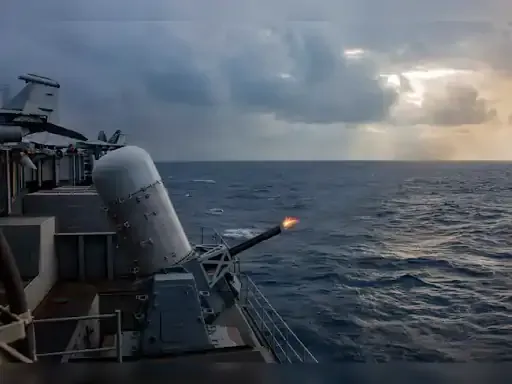
The USS Abraham Lincoln is one of the world’s most powerful warships, capable of carrying more than 60 aircraft and supporting a force of nearly 8,000 personnel when operating with its full strike group. Until recently, it was conducting routine patrols and live-fire exercises in the South China Sea, primarily focused on monitoring Chinese military activity.
According to reports, the carrier strike group includes several guided-missile destroyers, one or two nuclear-powered attack submarines, and logistics support vessels. Such a deployment suggests preparation for sustained operations rather than a limited or symbolic show of force, defence analysts say.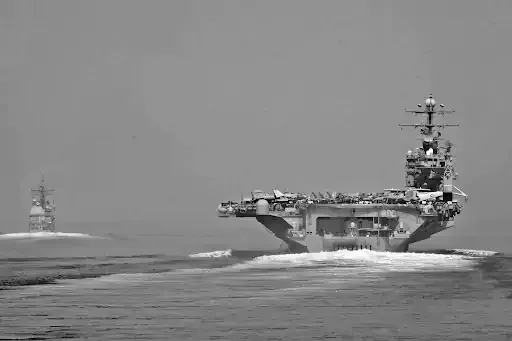
The naval movement coincides with other US precautionary steps in the region. Reuters reported that American personnel have begun a partial drawdown from Al Udeid Air Base in Qatar, the largest US military facility in the Middle East. A US official described the move as a “posture change” rather than a full evacuation, without specifying the exact trigger.
Iran has been gripped by widespread protests for 19 days, with demonstrations reported in multiple cities. The unrest, coupled with Tehran’s temporary airspace closure and sharp rhetoric toward Washington, has heightened fears of miscalculation.
Currently, an estimated 30,000 to 40,000 US troops are deployed across the CENTCOM region, supported by several naval vessels in the Persian Gulf and nearby waters. Military experts note that redeploying a carrier from the Indo-Pacific represents a significant strategic decision, given competing US priorities in Asia.
Observers have also drawn parallels with earlier US military build-ups, including deployments ahead of operations against Venezuela, when carrier strike groups were moved closer to the region weeks before direct action.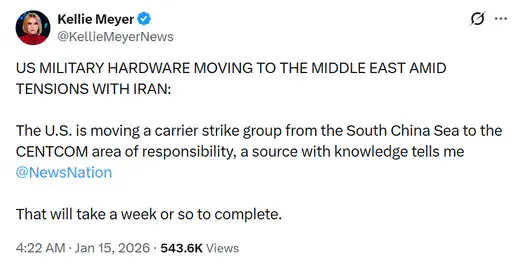
Neither Washington nor Tehran has indicated an imminent military confrontation. However, the convergence of mass protests in Iran, naval movements, and regional force adjustments underscores a rapidly evolving security environment, with the USS Abraham Lincoln now at the centre of close international scrutiny.


---copy5.jpg)