

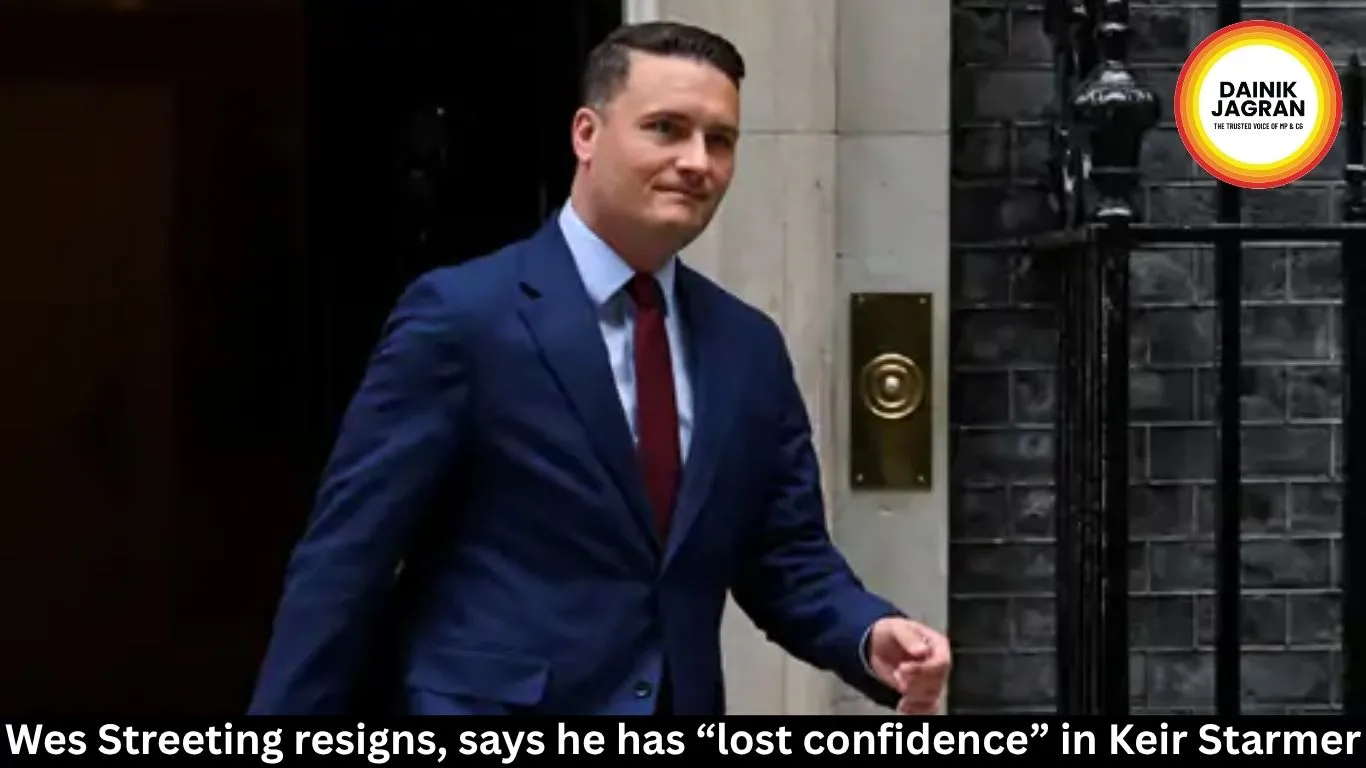
Wes Streeting resigns, says he has “lost confidence” in Keir Starmer
Digital Desk
Health Secretary Wes Streeting resigns, citing loss of confidence in Keir Starmer after local election losses; Labour faces mounting leadership pressure.
Wes Streeting quits cabinet, says he has “lost confidence” in Keir Starmer
Health Secretary Wes Streeting resigned from the UK government on Thursday, saying he had “lost confidence” in Prime Minister Keir Starmer and adding fresh momentum to a growing leadership crisis within Labour after the party’s poor showing in last week’s local and regional elections. The resignation, posted on X in a letter to Starmer, is the second by a minister in as many days and fuels speculation about whether a formal leadership contest could follow.
Resignation published online
Streeting, 43, published a short letter on his social feed in the late afternoon saying it was “now clear that you will not lead the Labour Party into the next general election.” He urged a broader discussion about Labour’s future and signalled he might consider standing himself, though he did not confirm whether he had the backing of the 81 MPs needed to trigger a formal contest under party rules.
Officials and sources familiar with the situation said Streeting’s move reflects wider unease among centrist and centre-left figures who worry the government has failed to respond to last week’s electoral setback quickly enough. Initial reports indicate Streeting informed a small number of colleagues before going public.
Second high-profile departure
The resignation follows that of Miatta Fahnbulleh, who on Wednesday became the first serving minister to publicly step down over concerns about Starmer’s leadership. Fahnbulleh, a backbencher-turned-junior minister who entered Parliament in 2024, said the government had not delivered the “vision, pace and ambition” it had promised and called for an orderly transition. Her letter was widely read inside Westminster as a major escalation.
In recent days four junior ministers have resigned, and media outlets report more than 80 Labour MPs have privately urged Starmer to consider his position. At the same time, more than 100 Labour lawmakers have publicly rallied to the prime minister’s defence, creating a sharply divided parliamentary party.
Starmer resists pressure
Keir Starmer, who led Labour to victory in the 2024 general election and ended 14 years of Conservative rule, has publicly said he will remain in office. According to Downing Street briefings, he spoke to senior colleagues on Thursday evening and reiterated his intent to press on with the government’s agenda. A spokesman said Starmer thanked Streeting for his service and acknowledged the “right of colleagues to express their views.”
Labour aides say the prime minister is betting that a clear programme of government — set out at the upcoming King’s Speech — and progress on key diplomacy, notably the planned UK-EU summit, can steady nerves in the parliamentary party.
Parliamentary arithmetic and rules
Under Labour’s rules, a leadership contest can be triggered if 20 per cent of Labour MPs (currently 81) back a challenger. Streeting stopped short of saying he had reached that threshold and has so far avoided an explicit call for Starmer to step down immediately. Sources close to him said discussions are ongoing and that other senior figures are weighing whether to join a potential leadership bid.
Political impact and public reaction
The flurry of resignations and public expressions of doubt have unsettled markets and drawn fresh media attention to Labour’s internal tensions. On the streets of central London on Thursday evening, voters and party activists interviewed by local reporters described confusion and frustration — some blaming last week’s local losses on broken promises, others urging unity to avoid handing an advantage back to the Conservatives.
Analysts warn the party risks prolonged paralysis if contestation drags into a prolonged internal fight. “Labour needs to show it can govern coherently,” said one political commentator. “If the King’s Speech and the summit don’t restore confidence, the pressure will only grow.”
What comes next
Key dates now carry extra weight. The King’s Speech — the first major parliamentary statement since the local elections — will be treated as a test of Labour’s policy clarity and political direction. The UK-EU summit scheduled shortly afterwards is another opportunity for the government to score a tangible win, particularly on trade or mobility arrangements.
For now, Starmer remains defiant and has broad public backing in some polls; inside Westminster, however, the calculus is shifting. If more ministers follow Streeting and Fahnbulleh out the door, or if the 81-MP threshold is met, a formal contest could be unavoidable. Until then, the party faces a tense period of jockeying and uncertainty.
--------
🚨 Beat the News Rush – Join Now!
Get breaking alerts, hot exclusives, and game-changing stories instantly on your phone. No delays, no fluff – just the edge you need. ⚡
Tap to join:
🟢 WhatsApp Channel: Dainik Jagran MP CG
Crave more?
🅕 Facebook: Dainik Jagran MP CG English
🅧 Twitter (X): Dainik Jagran MP CG
🅘 Instagram: Dainik Jagran MP CG
Share the fire – keep your crew ahead! 🗞️🔥
Wes Streeting resigns, says he has “lost confidence” in Keir Starmer
Digital Desk
Wes Streeting quits cabinet, says he has “lost confidence” in Keir Starmer
Health Secretary Wes Streeting resigned from the UK government on Thursday, saying he had “lost confidence” in Prime Minister Keir Starmer and adding fresh momentum to a growing leadership crisis within Labour after the party’s poor showing in last week’s local and regional elections. The resignation, posted on X in a letter to Starmer, is the second by a minister in as many days and fuels speculation about whether a formal leadership contest could follow.
Resignation published online
Streeting, 43, published a short letter on his social feed in the late afternoon saying it was “now clear that you will not lead the Labour Party into the next general election.” He urged a broader discussion about Labour’s future and signalled he might consider standing himself, though he did not confirm whether he had the backing of the 81 MPs needed to trigger a formal contest under party rules.
Officials and sources familiar with the situation said Streeting’s move reflects wider unease among centrist and centre-left figures who worry the government has failed to respond to last week’s electoral setback quickly enough. Initial reports indicate Streeting informed a small number of colleagues before going public.
Second high-profile departure
The resignation follows that of Miatta Fahnbulleh, who on Wednesday became the first serving minister to publicly step down over concerns about Starmer’s leadership. Fahnbulleh, a backbencher-turned-junior minister who entered Parliament in 2024, said the government had not delivered the “vision, pace and ambition” it had promised and called for an orderly transition. Her letter was widely read inside Westminster as a major escalation.
In recent days four junior ministers have resigned, and media outlets report more than 80 Labour MPs have privately urged Starmer to consider his position. At the same time, more than 100 Labour lawmakers have publicly rallied to the prime minister’s defence, creating a sharply divided parliamentary party.
Starmer resists pressure
Keir Starmer, who led Labour to victory in the 2024 general election and ended 14 years of Conservative rule, has publicly said he will remain in office. According to Downing Street briefings, he spoke to senior colleagues on Thursday evening and reiterated his intent to press on with the government’s agenda. A spokesman said Starmer thanked Streeting for his service and acknowledged the “right of colleagues to express their views.”
Labour aides say the prime minister is betting that a clear programme of government — set out at the upcoming King’s Speech — and progress on key diplomacy, notably the planned UK-EU summit, can steady nerves in the parliamentary party.
Parliamentary arithmetic and rules
Under Labour’s rules, a leadership contest can be triggered if 20 per cent of Labour MPs (currently 81) back a challenger. Streeting stopped short of saying he had reached that threshold and has so far avoided an explicit call for Starmer to step down immediately. Sources close to him said discussions are ongoing and that other senior figures are weighing whether to join a potential leadership bid.
Political impact and public reaction
The flurry of resignations and public expressions of doubt have unsettled markets and drawn fresh media attention to Labour’s internal tensions. On the streets of central London on Thursday evening, voters and party activists interviewed by local reporters described confusion and frustration — some blaming last week’s local losses on broken promises, others urging unity to avoid handing an advantage back to the Conservatives.
Analysts warn the party risks prolonged paralysis if contestation drags into a prolonged internal fight. “Labour needs to show it can govern coherently,” said one political commentator. “If the King’s Speech and the summit don’t restore confidence, the pressure will only grow.”
What comes next
Key dates now carry extra weight. The King’s Speech — the first major parliamentary statement since the local elections — will be treated as a test of Labour’s policy clarity and political direction. The UK-EU summit scheduled shortly afterwards is another opportunity for the government to score a tangible win, particularly on trade or mobility arrangements.
For now, Starmer remains defiant and has broad public backing in some polls; inside Westminster, however, the calculus is shifting. If more ministers follow Streeting and Fahnbulleh out the door, or if the 81-MP threshold is met, a formal contest could be unavoidable. Until then, the party faces a tense period of jockeying and uncertainty.


