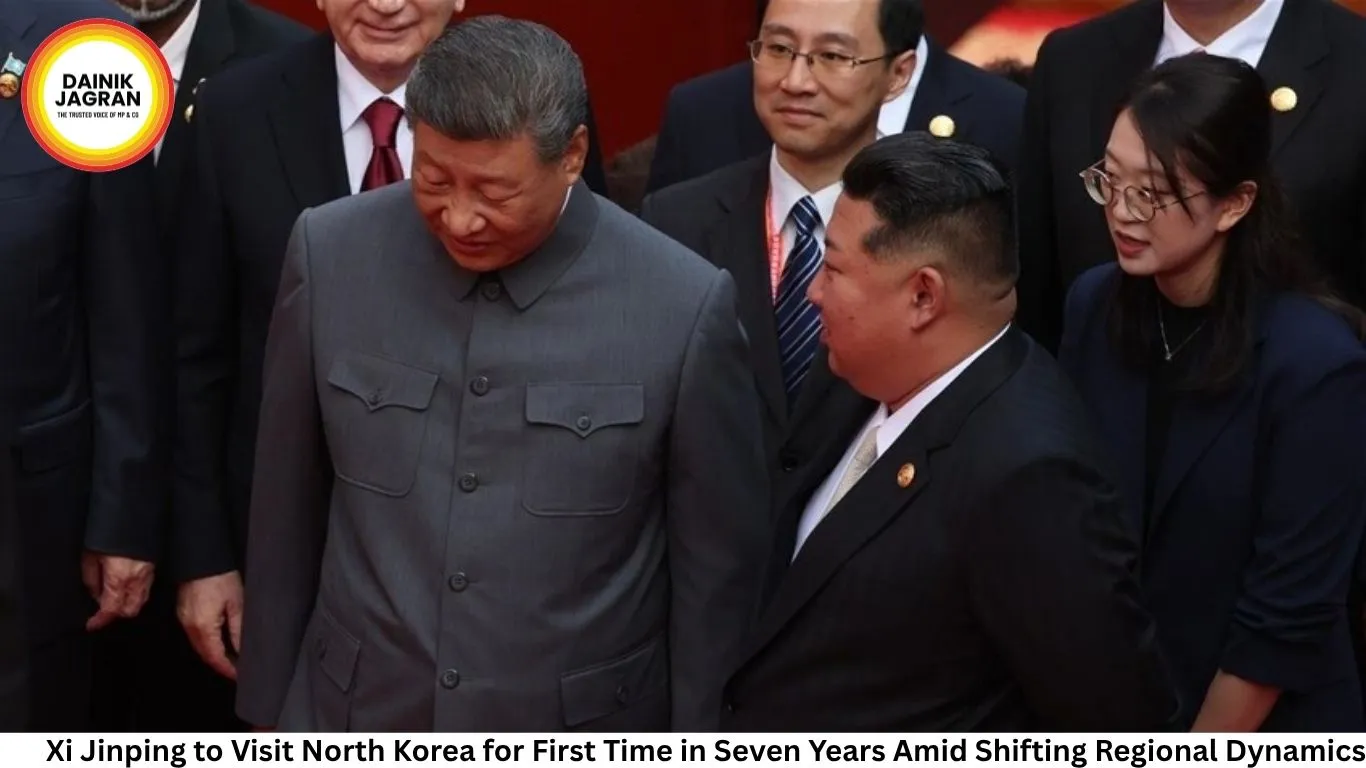
Xi Jinping to Visit North Korea for First Time in Seven Years Amid Shifting Regional Dynamics
Digital Desk
Chinese President Xi Jinping’s two-day trip to Pyongyang comes as North Korea deepens ties with Russia and seeks economic support amid international sanctions.
Chinese President Xi Jinping is set to arrive in North Korea on Monday for a two-day state visit aimed at reinforcing ties with leader Kim Jong Un and strengthening Beijing’s influence over its long-time ally. The visit, Xi’s first to Pyongyang since 2019, comes amid changing geopolitical realities in Northeast Asia, including North Korea’s expanding nuclear programme and its growing military and economic partnership with Russia.
Officials and analysts view the summit as an important opportunity for both countries to reaffirm their strategic relationship. For Beijing, the visit offers a chance to maintain its influence in Pyongyang at a time when North Korea has cultivated closer ties with Moscow. For Kim Jong Un, the high-profile engagement with China provides diplomatic backing as his government continues to face international sanctions over its nuclear activities.
Since Xi’s previous trip seven years ago, North Korea has accelerated weapons development and largely stepped away from diplomacy with the United States. At the same time, Pyongyang has strengthened cooperation with Russia, including support linked to Moscow’s war in Ukraine, giving the country greater room to maneuver and reducing its dependence on China.
Ahead of Xi’s arrival, North Korea underscored its military ambitions by announcing plans to develop a 10,000-ton naval destroyer and reiterating its position as a nuclear-armed state. Analysts interpreted the moves as a signal of confidence before the summit.
Economic Cooperation Takes Centre Stage
While security concerns are expected to remain part of the discussions, economic cooperation is likely to dominate the formal agenda. North Korea is implementing a five-year development plan focused on infrastructure, housing and tourism, sectors where Chinese investment and trade could play a crucial role.
Before the COVID-19 pandemic, Chinese tourists accounted for most foreign visitors to North Korea. Tourism has historically been one of Pyongyang’s key sources of foreign currency, and a gradual reopening of cross-border travel could provide fresh momentum to the country's economy.
Trade links between the two countries have also shown signs of recovery after years of pandemic-related restrictions. Analysts believe Beijing is likely to support economic projects that help stabilize North Korea while avoiding actions that could trigger additional international tensions.
Strategic Balancing Act
Despite expanding economic cooperation, North Korea has continued to prioritize its nuclear and missile programmes. Recent statements from Pyongyang have emphasized strengthening its nuclear deterrence capabilities and increasing weapons production.
The summit between Xi and Kim is expected to reflect the changing strategic landscape in East Asia, where China, Russia and North Korea are increasingly coordinating their interests amid broader competition with the United States and its allies.
Observers say the meeting will not only underscore the importance of China-North Korea ties but also highlight Beijing’s efforts to maintain its diplomatic influence in the region. The outcome of the talks could shape future economic engagement and regional security dynamics at a time of heightened geopolitical uncertainty.

--------
🚨 Beat the News Rush – Join Now!
Get breaking alerts, hot exclusives, and game-changing stories instantly on your phone. No delays, no fluff – just the edge you need. ⚡
Tap to join:
🟢 WhatsApp Channel: Dainik Jagran MP CG
Crave more?
🅕 Facebook: Dainik Jagran MP CG English
🅧 Twitter (X): Dainik Jagran MP CG
🅘 Instagram: Dainik Jagran MP CG
Share the fire – keep your crew ahead! 🗞️🔥
Xi Jinping to Visit North Korea for First Time in Seven Years Amid Shifting Regional Dynamics
Digital Desk
Chinese President Xi Jinping is set to arrive in North Korea on Monday for a two-day state visit aimed at reinforcing ties with leader Kim Jong Un and strengthening Beijing’s influence over its long-time ally. The visit, Xi’s first to Pyongyang since 2019, comes amid changing geopolitical realities in Northeast Asia, including North Korea’s expanding nuclear programme and its growing military and economic partnership with Russia.
Officials and analysts view the summit as an important opportunity for both countries to reaffirm their strategic relationship. For Beijing, the visit offers a chance to maintain its influence in Pyongyang at a time when North Korea has cultivated closer ties with Moscow. For Kim Jong Un, the high-profile engagement with China provides diplomatic backing as his government continues to face international sanctions over its nuclear activities.
Since Xi’s previous trip seven years ago, North Korea has accelerated weapons development and largely stepped away from diplomacy with the United States. At the same time, Pyongyang has strengthened cooperation with Russia, including support linked to Moscow’s war in Ukraine, giving the country greater room to maneuver and reducing its dependence on China.
Ahead of Xi’s arrival, North Korea underscored its military ambitions by announcing plans to develop a 10,000-ton naval destroyer and reiterating its position as a nuclear-armed state. Analysts interpreted the moves as a signal of confidence before the summit.
Economic Cooperation Takes Centre Stage
While security concerns are expected to remain part of the discussions, economic cooperation is likely to dominate the formal agenda. North Korea is implementing a five-year development plan focused on infrastructure, housing and tourism, sectors where Chinese investment and trade could play a crucial role.
Before the COVID-19 pandemic, Chinese tourists accounted for most foreign visitors to North Korea. Tourism has historically been one of Pyongyang’s key sources of foreign currency, and a gradual reopening of cross-border travel could provide fresh momentum to the country's economy.
Trade links between the two countries have also shown signs of recovery after years of pandemic-related restrictions. Analysts believe Beijing is likely to support economic projects that help stabilize North Korea while avoiding actions that could trigger additional international tensions.
Strategic Balancing Act
Despite expanding economic cooperation, North Korea has continued to prioritize its nuclear and missile programmes. Recent statements from Pyongyang have emphasized strengthening its nuclear deterrence capabilities and increasing weapons production.
The summit between Xi and Kim is expected to reflect the changing strategic landscape in East Asia, where China, Russia and North Korea are increasingly coordinating their interests amid broader competition with the United States and its allies.
Observers say the meeting will not only underscore the importance of China-North Korea ties but also highlight Beijing’s efforts to maintain its diplomatic influence in the region. The outcome of the talks could shape future economic engagement and regional security dynamics at a time of heightened geopolitical uncertainty.