Digital Detox Retreats Gain Popularity Among Gen Z as Young Adults Seek Relief From Constant Connectivity
Digital desk
A growing number of young people are voluntarily switching off their phones, logging out of social media platforms and spending days without internet access in a trend that is rapidly gaining momentum across the wellness industry.
Known as digital detox retreats, these programmes are attracting members of Generation Z who are increasingly looking for ways to escape the pressures of constant online engagement. What was once considered unusual has now become a growing lifestyle movement, driven by concerns over screen fatigue, social media anxiety and mental well-being.
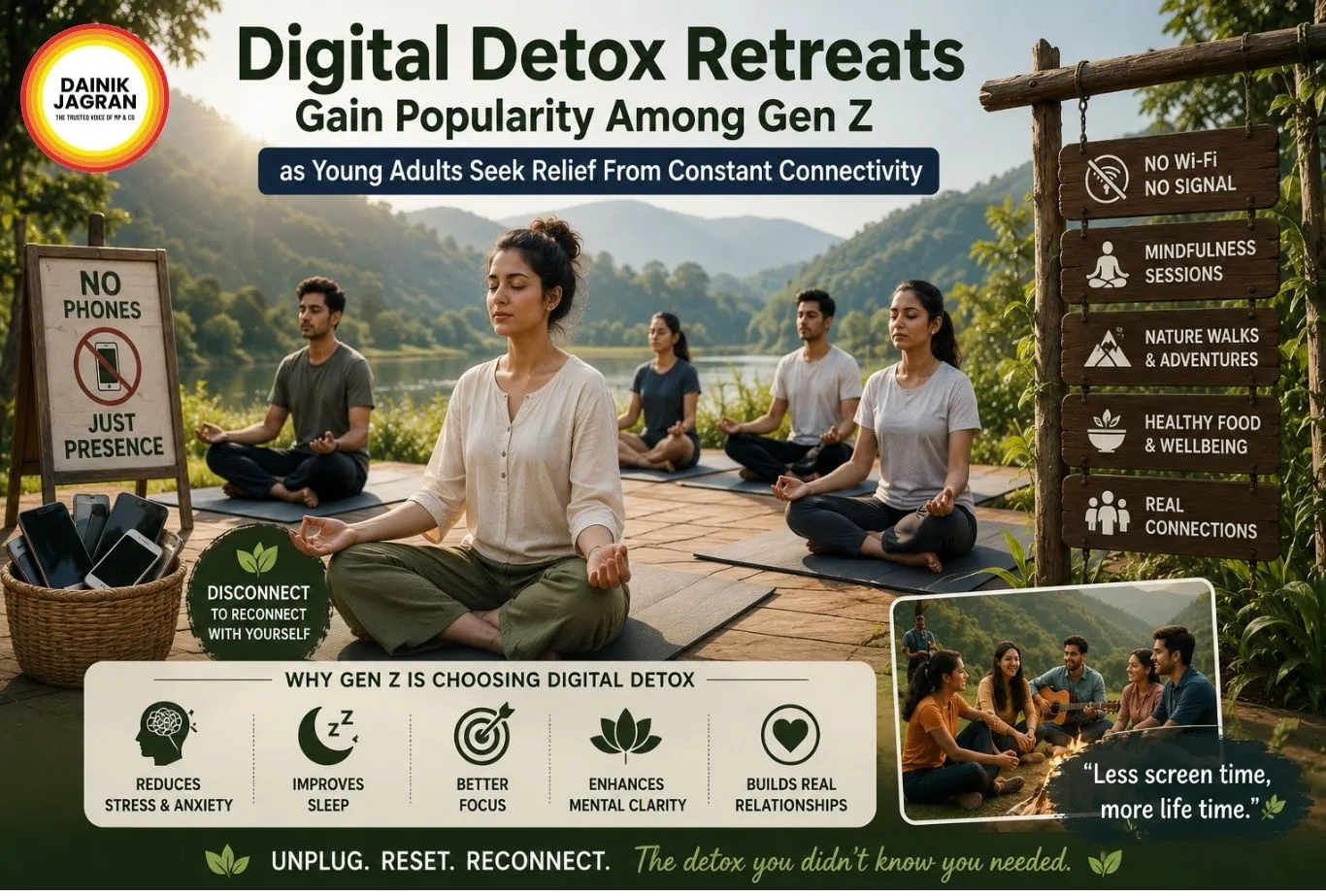
Across India and several other countries, wellness centres, resorts and travel companies are introducing packages that encourage participants to disconnect from smartphones and digital platforms. Many of these retreats require visitors to surrender their devices upon arrival and spend time engaging in outdoor activities, mindfulness exercises, fitness programmes and face-to-face interactions.
Mental health experts say the trend reflects a broader awareness among young adults about the impact of excessive screen usage.
Several studies in recent years have linked prolonged social media consumption to stress, anxiety, sleep disruption and reduced attention spans. While digital platforms offer connectivity and entertainment, many users report feeling overwhelmed by the continuous flow of notifications, content and online comparisons.
For Gen Z, the challenge is particularly significant.
Having grown up in an era dominated by smartphones and social networking platforms, many young adults spend several hours each day online. Digital interactions often extend beyond personal communication into education, work, entertainment and shopping, making it increasingly difficult to separate online and offline life.
The appeal of digital detox experiences lies in simplicity.
Participants are encouraged to replace screen time with activities such as hiking, yoga, meditation, reading, art workshops and group discussions. Organisers say many visitors initially struggle with the absence of their devices but gradually become more comfortable as they adjust to a slower pace of life.
Travel companies have also identified a growing market opportunity.
Digital detox tourism has emerged as a niche segment within the wellness travel industry. Resorts located in remote destinations are promoting limited-connectivity experiences as a key attraction, offering guests an environment where digital distractions are intentionally minimized.
Industry observers note that younger travellers are increasingly prioritising experiences that support mental wellness rather than traditional leisure-focused vacations. As a result, many hospitality providers are expanding programmes centred around mindfulness, nature immersion and technology-free living.
The trend has also sparked discussions about work-life balance.
Some participants report that stepping away from screens helps improve focus, sleep quality and interpersonal relationships. Others describe feeling more productive and less anxious after spending time away from social media platforms.
However, experts caution that digital detox programmes are not a universal solution.
Psychologists argue that technology itself is not inherently harmful and that the key challenge lies in developing healthier usage habits. They suggest that individuals focus on creating balanced relationships with digital tools rather than attempting to eliminate them entirely.
Despite this, demand for technology-free experiences continues to rise.
Many retreat organisers report growing interest from students, young professionals and content creators who feel exhausted by the pressures of maintaining a constant online presence. Some programmes have waiting lists, particularly during holiday periods when participants seek opportunities to recharge away from digital distractions.
Social media companies themselves have introduced tools aimed at encouraging healthier usage patterns, including screen-time monitoring features and notification management options. Yet many users continue to seek structured environments that physically separate them from their devices.
The popularity of digital detox retreats highlights a changing attitude toward technology among younger generations. While Gen Z remains one of the most digitally connected demographics in the world, an increasing number of young adults are recognizing the value of occasionally stepping away from screens.
As awareness about mental health and digital well-being continues to grow, experts believe the demand for offline experiences is likely to expand further. For many participants, the goal is not to abandon technology altogether but to create moments of disconnection that help restore balance in an increasingly connected world.

--------
🚨 Beat the News Rush – Join Now!
Get breaking alerts, hot exclusives, and game-changing stories instantly on your phone. No delays, no fluff – just the edge you need. ⚡
Tap to join:
🟢 WhatsApp Channel: Dainik Jagran MP CG
Crave more?
🅕 Facebook: Dainik Jagran MP CG English
🅧 Twitter (X): Dainik Jagran MP CG
🅘 Instagram: Dainik Jagran MP CG
Share the fire – keep your crew ahead! 🗞️🔥
Digital Detox Retreats Gain Popularity Among Gen Z as Young Adults Seek Relief From Constant Connectivity
Digital desk
Known as digital detox retreats, these programmes are attracting members of Generation Z who are increasingly looking for ways to escape the pressures of constant online engagement. What was once considered unusual has now become a growing lifestyle movement, driven by concerns over screen fatigue, social media anxiety and mental well-being.
Across India and several other countries, wellness centres, resorts and travel companies are introducing packages that encourage participants to disconnect from smartphones and digital platforms. Many of these retreats require visitors to surrender their devices upon arrival and spend time engaging in outdoor activities, mindfulness exercises, fitness programmes and face-to-face interactions.
Mental health experts say the trend reflects a broader awareness among young adults about the impact of excessive screen usage.
Several studies in recent years have linked prolonged social media consumption to stress, anxiety, sleep disruption and reduced attention spans. While digital platforms offer connectivity and entertainment, many users report feeling overwhelmed by the continuous flow of notifications, content and online comparisons.
For Gen Z, the challenge is particularly significant.
Having grown up in an era dominated by smartphones and social networking platforms, many young adults spend several hours each day online. Digital interactions often extend beyond personal communication into education, work, entertainment and shopping, making it increasingly difficult to separate online and offline life.
The appeal of digital detox experiences lies in simplicity.
Participants are encouraged to replace screen time with activities such as hiking, yoga, meditation, reading, art workshops and group discussions. Organisers say many visitors initially struggle with the absence of their devices but gradually become more comfortable as they adjust to a slower pace of life.
Travel companies have also identified a growing market opportunity.
Digital detox tourism has emerged as a niche segment within the wellness travel industry. Resorts located in remote destinations are promoting limited-connectivity experiences as a key attraction, offering guests an environment where digital distractions are intentionally minimized.
Industry observers note that younger travellers are increasingly prioritising experiences that support mental wellness rather than traditional leisure-focused vacations. As a result, many hospitality providers are expanding programmes centred around mindfulness, nature immersion and technology-free living.
The trend has also sparked discussions about work-life balance.
Some participants report that stepping away from screens helps improve focus, sleep quality and interpersonal relationships. Others describe feeling more productive and less anxious after spending time away from social media platforms.
However, experts caution that digital detox programmes are not a universal solution.
Psychologists argue that technology itself is not inherently harmful and that the key challenge lies in developing healthier usage habits. They suggest that individuals focus on creating balanced relationships with digital tools rather than attempting to eliminate them entirely.
Despite this, demand for technology-free experiences continues to rise.
Many retreat organisers report growing interest from students, young professionals and content creators who feel exhausted by the pressures of maintaining a constant online presence. Some programmes have waiting lists, particularly during holiday periods when participants seek opportunities to recharge away from digital distractions.
Social media companies themselves have introduced tools aimed at encouraging healthier usage patterns, including screen-time monitoring features and notification management options. Yet many users continue to seek structured environments that physically separate them from their devices.
The popularity of digital detox retreats highlights a changing attitude toward technology among younger generations. While Gen Z remains one of the most digitally connected demographics in the world, an increasing number of young adults are recognizing the value of occasionally stepping away from screens.
As awareness about mental health and digital well-being continues to grow, experts believe the demand for offline experiences is likely to expand further. For many participants, the goal is not to abandon technology altogether but to create moments of disconnection that help restore balance in an increasingly connected world.