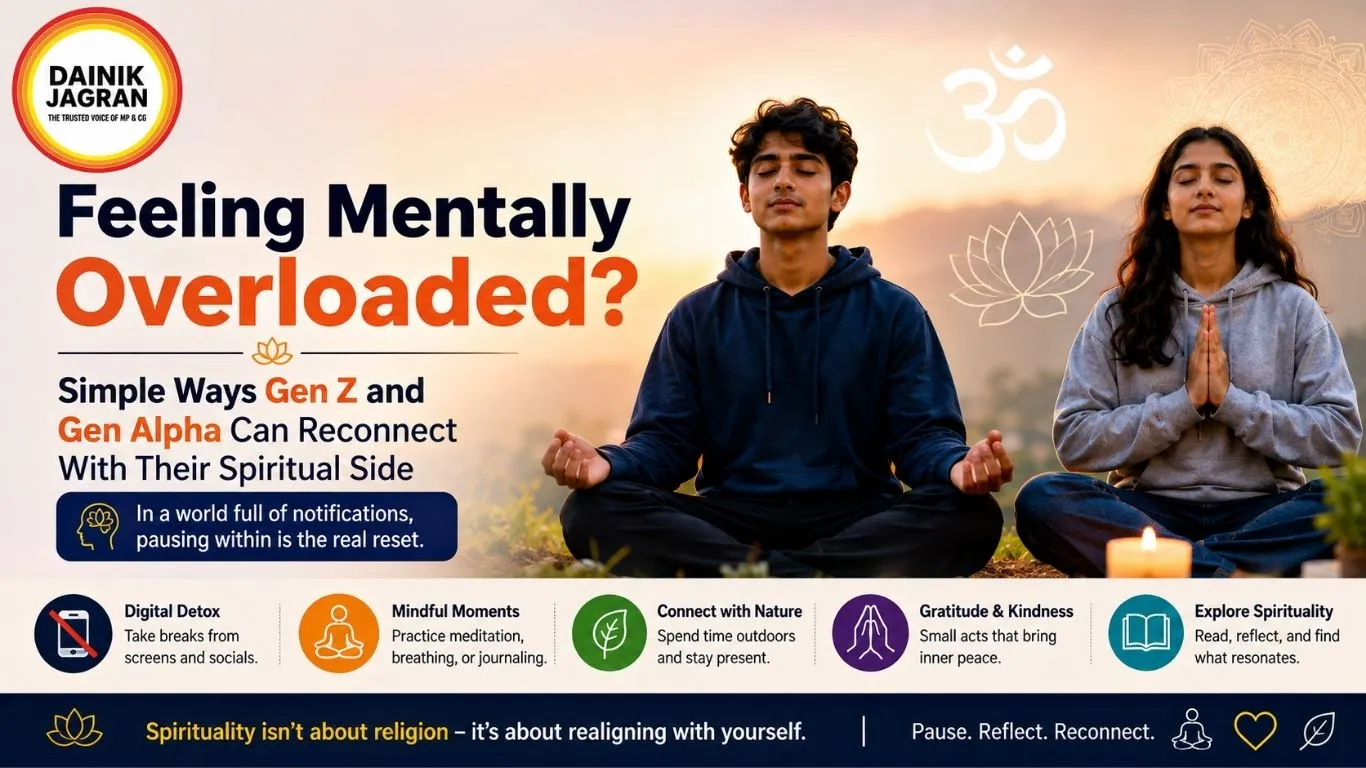
Feeling Mentally Overloaded? Simple Ways Gen Z and Gen Alpha Can Reconnect With Their Spiritual Side
Digital Desk
From meditation and prayer to digital detox, gratitude and spending time in nature, these simple spiritual habits can help Gen Z and Gen Alpha build a calmer daily routine.
Notifications, short-form videos, constant messages, academic pressure and the pressure to “keep up” can make everyday life feel permanently switched on. For Gen Z and Gen Alpha, finding a few quiet moments away from screens may offer something increasingly valuable: a sense of calm, purpose and connection.
Spirituality does not necessarily mean following a complicated routine or spending hours in religious practice. For young people, it can simply mean creating time to understand themselves, connect with their values and develop a sense of meaning beyond social media, marks, money and online validation.
Here are some simple ways young people can bring spirituality into everyday life without turning it into another stressful task.
Start With Five Quiet Minutes
The easiest place to begin is with silence.
Instead of reaching for the phone immediately after waking up, spend five minutes sitting quietly. Take a few slow breaths and notice how you feel.
There is no need to force the mind to become completely empty. The idea is simply to begin the day without immediately filling it with notifications and information.
Over time, these few minutes can become a personal reset before school, college or work.
Try Prayer or Meditation
For religious young people, prayer can provide a structured way to express gratitude, seek guidance or reflect on personal struggles.
Those who do not follow a particular religion can try meditation, breathing exercises or quiet reflection.
The goal is not to become “perfectly spiritual”. It is to create a regular pause in a busy day.
Even 5–10 minutes can become a meaningful personal habit.
Take a Break From Constant Scrolling
Spiritual connection can be difficult when every quiet moment is immediately replaced by a screen.
A short digital break can therefore become part of a spiritual routine.
Try keeping the phone away while eating, walking, studying or spending time with family. A longer screen-free period once a week can also provide an opportunity to reconnect with hobbies, nature and real-world relationships.
The objective is not to abandon social media but to make sure social media does not control every free moment.
Spend Time in Nature
A walk in a park, sitting under a tree or watching the rain without recording it for Instagram can be surprisingly refreshing.
Nature can create space for reflection and help young people step away from the constant demand to respond, perform and compare.
Even a short morning or evening walk can become a simple opportunity to slow down and observe what is happening around you.
Keep a Gratitude Journal
Young people are constantly exposed to other people's achievements online. This can make it easy to focus on what is missing from their own lives.
Writing down two or three things they are grateful for each day can shift attention towards what is already present.
It could be something as simple as a good conversation, a favourite meal, a supportive friend, good health or completing a difficult assignment.
The practice does not require pretending that everything is perfect. It is simply about recognising positive moments alongside life's difficulties.
Know Your Values
Spirituality is not only about prayer or meditation. It can also involve understanding what kind of person you want to become.
Young people can ask themselves simple questions:
What matters to me? What kind of friend do I want to be? What principles do I refuse to compromise? What do I want my life to stand for?
These questions can help build a stronger sense of identity at a time when social media can constantly influence how people see themselves.
Practice Kindness Without Posting It
Not every good action needs to become content.
Helping a classmate, checking on a friend, feeding an animal, assisting parents or simply listening to someone who is struggling can become meaningful forms of everyday spirituality.
Doing something kind without expecting likes, followers or recognition can also help young people separate genuine fulfilment from online validation.
Create a Personal Spiritual Corner
Young people who follow a religion can create a small, peaceful space at home for prayer or reflection.
It could contain a religious symbol, a book, photographs of inspirational people or simply a comfortable place to sit quietly.
For others, the space could contain books, plants, candles or anything that creates a feeling of peace.
It does not have to look “aesthetic”. It only needs to feel personal.
Don't Turn Spirituality Into Another Competition
One of the biggest mistakes is treating spirituality like another social-media challenge.
There is no requirement to meditate for an hour, wake up at 4 am or follow an elaborate routine to be “spiritual”.
A five-minute prayer, a quiet walk, helping someone or simply spending time reflecting can be meaningful.
Spirituality is personal, and different people may connect with it through religion, meditation, nature, service, music, art or self-reflection.
A Smoother Life Starts With Small Habits
Spirituality cannot remove every problem from life. Exams will still be stressful, friendships can still change and career decisions can still feel confusing.
What a consistent spiritual or reflective practice can potentially provide is a regular opportunity to pause before reacting.
For Gen Z and Gen Alpha, that pause may be more valuable than ever.
In a world where everything is designed to demand attention immediately, learning to sit quietly, understand yourself, appreciate what you have and act according to your values can be a powerful form of self-care.
The aim isn't to escape modern life. It is to stay connected to yourself while living in it.

Feeling Mentally Overloaded? Simple Ways Gen Z and Gen Alpha Can Reconnect With Their Spiritual Side
Digital Desk
Notifications, short-form videos, constant messages, academic pressure and the pressure to “keep up” can make everyday life feel permanently switched on. For Gen Z and Gen Alpha, finding a few quiet moments away from screens may offer something increasingly valuable: a sense of calm, purpose and connection.
Spirituality does not necessarily mean following a complicated routine or spending hours in religious practice. For young people, it can simply mean creating time to understand themselves, connect with their values and develop a sense of meaning beyond social media, marks, money and online validation.
Here are some simple ways young people can bring spirituality into everyday life without turning it into another stressful task.
Start With Five Quiet Minutes
The easiest place to begin is with silence.
Instead of reaching for the phone immediately after waking up, spend five minutes sitting quietly. Take a few slow breaths and notice how you feel.
There is no need to force the mind to become completely empty. The idea is simply to begin the day without immediately filling it with notifications and information.
Over time, these few minutes can become a personal reset before school, college or work.
Try Prayer or Meditation
For religious young people, prayer can provide a structured way to express gratitude, seek guidance or reflect on personal struggles.
Those who do not follow a particular religion can try meditation, breathing exercises or quiet reflection.
The goal is not to become “perfectly spiritual”. It is to create a regular pause in a busy day.
Even 5–10 minutes can become a meaningful personal habit.
Take a Break From Constant Scrolling
Spiritual connection can be difficult when every quiet moment is immediately replaced by a screen.
A short digital break can therefore become part of a spiritual routine.
Try keeping the phone away while eating, walking, studying or spending time with family. A longer screen-free period once a week can also provide an opportunity to reconnect with hobbies, nature and real-world relationships.
The objective is not to abandon social media but to make sure social media does not control every free moment.
Spend Time in Nature
A walk in a park, sitting under a tree or watching the rain without recording it for Instagram can be surprisingly refreshing.
Nature can create space for reflection and help young people step away from the constant demand to respond, perform and compare.
Even a short morning or evening walk can become a simple opportunity to slow down and observe what is happening around you.
Keep a Gratitude Journal
Young people are constantly exposed to other people's achievements online. This can make it easy to focus on what is missing from their own lives.
Writing down two or three things they are grateful for each day can shift attention towards what is already present.
It could be something as simple as a good conversation, a favourite meal, a supportive friend, good health or completing a difficult assignment.
The practice does not require pretending that everything is perfect. It is simply about recognising positive moments alongside life's difficulties.
Know Your Values
Spirituality is not only about prayer or meditation. It can also involve understanding what kind of person you want to become.
Young people can ask themselves simple questions:
What matters to me? What kind of friend do I want to be? What principles do I refuse to compromise? What do I want my life to stand for?
These questions can help build a stronger sense of identity at a time when social media can constantly influence how people see themselves.
Practice Kindness Without Posting It
Not every good action needs to become content.
Helping a classmate, checking on a friend, feeding an animal, assisting parents or simply listening to someone who is struggling can become meaningful forms of everyday spirituality.
Doing something kind without expecting likes, followers or recognition can also help young people separate genuine fulfilment from online validation.
Create a Personal Spiritual Corner
Young people who follow a religion can create a small, peaceful space at home for prayer or reflection.
It could contain a religious symbol, a book, photographs of inspirational people or simply a comfortable place to sit quietly.
For others, the space could contain books, plants, candles or anything that creates a feeling of peace.
It does not have to look “aesthetic”. It only needs to feel personal.
Don't Turn Spirituality Into Another Competition
One of the biggest mistakes is treating spirituality like another social-media challenge.
There is no requirement to meditate for an hour, wake up at 4 am or follow an elaborate routine to be “spiritual”.
A five-minute prayer, a quiet walk, helping someone or simply spending time reflecting can be meaningful.
Spirituality is personal, and different people may connect with it through religion, meditation, nature, service, music, art or self-reflection.
A Smoother Life Starts With Small Habits
Spirituality cannot remove every problem from life. Exams will still be stressful, friendships can still change and career decisions can still feel confusing.
What a consistent spiritual or reflective practice can potentially provide is a regular opportunity to pause before reacting.
For Gen Z and Gen Alpha, that pause may be more valuable than ever.
In a world where everything is designed to demand attention immediately, learning to sit quietly, understand yourself, appreciate what you have and act according to your values can be a powerful form of self-care.
The aim isn't to escape modern life. It is to stay connected to yourself while living in it.
Recommended For You
--------
🚨 Beat the News Rush – Join Now!
Get breaking alerts, hot exclusives, and game-changing stories instantly on your phone. No delays, no fluff – just the edge you need. ⚡
Tap to join:
🟢 WhatsApp Channel: Dainik Jagran MP CG
Crave more?
🅕 Facebook: Dainik Jagran MP CG English
🅧 Twitter (X): Dainik Jagran MP CG
🅘 Instagram: Dainik Jagran MP CG
Share the fire – keep your crew ahead! 🗞️🔥