

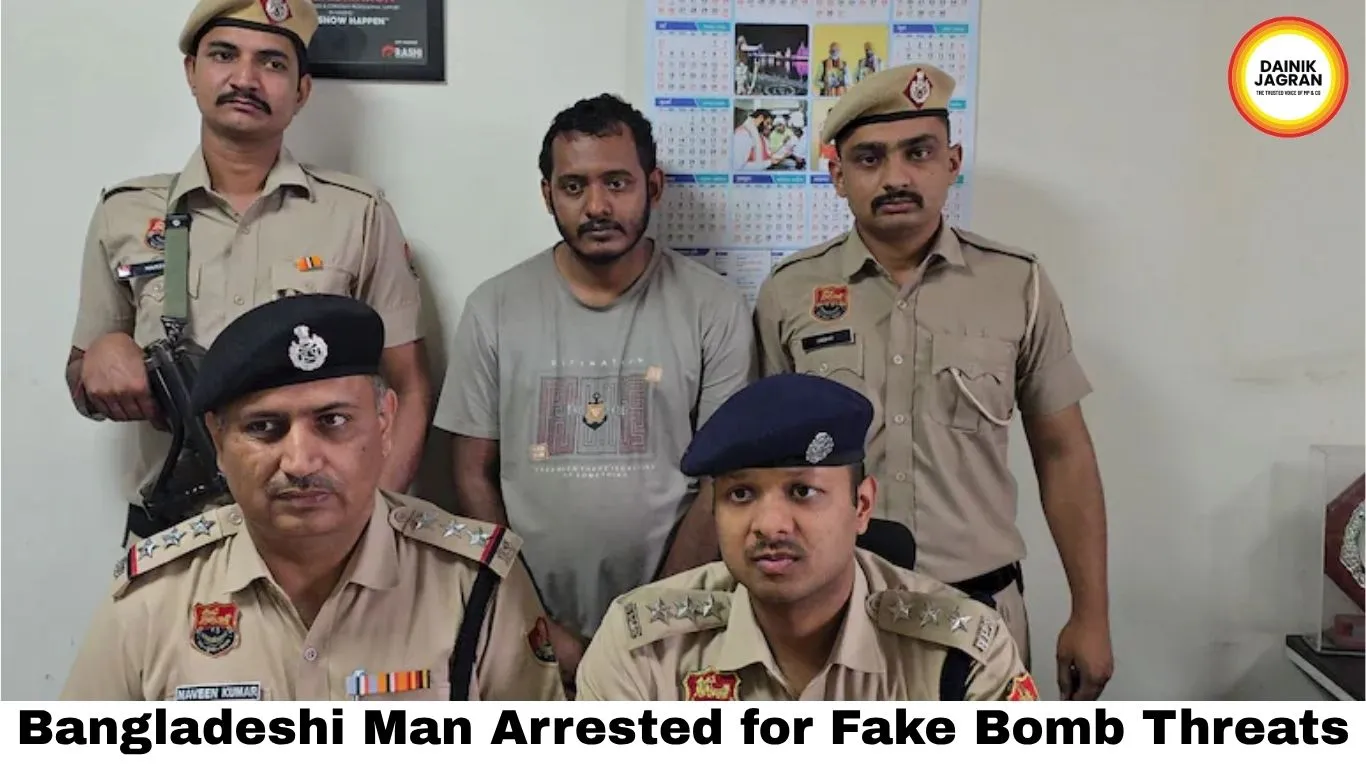
Bangladeshi Man Arrested for Fake Bomb Threats to Gurugram Schools: How Saurabh Biswas Terrorised 26 Schools From Across the Border

Digital Desk

Bangladeshi Man Arrested for Fake Bomb Threats to Gurugram Schools: How Saurabh Biswas Terrorised 26 Schools From Across the Border

Bangladeshi national Saurabh Biswas, 30, arrested for sending fake bomb threat emails to 26 Gurugram schools on January 28, 2026. Full investigation story here.

Twenty-six schools. Hundreds of children evacuated. Board exams disrupted. A city paralysed. And the man behind it all — a 30-year-old Bangladeshi national sitting far from the chaos he created.

The mystery behind the wave of bomb threat emails that sent shockwaves across Gurugram on the morning of January 28, 2026 has finally been solved. Police have arrested Saurabh Biswas, 30, a Bangladeshi national, in connection with the coordinated fake bomb threat emails sent to at least 26 prominent private schools in the city on that day. The arrest, confirmed by Gurugram Police, brings to a close nearly two months of investigation into one of the most disruptive cyber-threat incidents targeting schools in North India in recent memory.

What Happened on January 28 — The Morning That Changed Everything

At approximately 7:00 to 7:10 AM on January 28, 2026 — just as school buses were pulling into driveways and the morning shift was beginning — identical bomb threat emails began arriving at the inboxes of Gurugram's most prominent private schools. The list included Kunskapsskolan in DLF Phase 1, Lancers International in Sector 53, Pathways World School near Badshahpur, Heritage Xperiential Learning School in Sector 64, Shiv Nadar School, and Shri Ram Aravali School — among others. In total, 26 schools received the threats. Source — PTI, The Tribune, Discountwalas, January 28, 2026.

The emails claimed explosive devices had been planted inside school buildings. Within minutes, panic spread across the city. Parents' WhatsApp groups exploded with messages. School administrations triggered emergency protocols. Students were evacuated from classrooms, corridors swept, buses halted mid-route and sent back. The State Disaster Response Force, bomb disposal squads, sniffer dogs, civil defence teams and the fire department were all deployed simultaneously across multiple campuses in a massive coordinated response. Board exams scheduled for that day at several schools were postponed. Source — ACP Vikas Kaushik, Gurugram Police statement, January 28, 2026.

After several hours of exhaustive searches across all 26 campuses — nothing was found. Every single threat was a hoax. But the damage — to the school day, to the children, to parents' nerves and to the education system — was very real.

How Saurabh Biswas Was Caught

Gurugram Police registered an FIR immediately after the January 28 incidents and launched a cyber investigation. Investigators traced the IP addresses from which the threat emails were sent and worked backwards through the digital trail. Technical surveillance, cyber forensics and inter-agency coordination ultimately led them to Saurabh Biswas, a 30-year-old Bangladeshi national. The exact location from which he was arrested and the specific method he used to send the emails are part of the ongoing investigation. Source — Madhyamam, NDTV, March 2026.

A Pattern That Goes Beyond One City

The Gurugram arrests are part of a deeply troubling national pattern. In the weeks and months surrounding the January 28 incident, schools across North India received similar fake bomb threat emails in a relentless wave. On March 10, 2026 — just ten days before this arrest — five more schools in Gurugram were evacuated after fresh bomb threat emails arrived. On the same day, ten schools in Ludhiana received identical threats, and journalists in the city were also emailed warnings. Source — The Tribune, PTC News, March 10, 2026.

In Jalandhar, two schools including one inside the Punjab Armed Police campus received threats in early March. In Chandigarh, similar incidents were reported through February. Every single one of these threats turned out to be a hoax. But every single one also triggered a full-scale security response — bomb squads, evacuations, police deployments — at enormous cost to public resources, parental trust and children's education.

India's Growing School Threat Problem — And Who Is Behind It

The arrest of a Bangladeshi national in the Gurugram case adds a cross-border dimension to what has become a national crisis of fake school bomb threats in India. In December 2024, over 40 Delhi schools received bomb threat emails demanding a ransom of 30,000 US dollars — those threats were eventually traced to Budapest, Hungary. In May 2024, a 17-year-old school dropout was arrested for targeting four flights with fake bomb threats via a fake social media account. Source — Wikipedia 2024 Indian Bomb Hoaxes compilation.

The motivations vary — extortion, disruption, testing emergency response systems, or simply the thrill of causing chaos. But the consequences are identical every time — children traumatised, parents terrified, schools disrupted and an enormous deployment of police and emergency resources chasing a lie.

What Must Change

The frequency and geographic spread of these fake bomb threats — from Gurugram to Ludhiana, from Chandigarh to Jalandhar — demand a systematic national response rather than case-by-case police investigations after the fact. Cybercrime units need faster IP tracing capabilities. Schools need better digital filtering systems for incoming communications. And the punishment for sending fake bomb threats — which causes mass public panic, disrupts essential services and wastes crores of rupees in emergency response — must be made severe enough to deter anyone who thinks this is an easy crime to commit from far away.

Saurabh Biswas is in custody. But the emails are still going out — across India, from unknown sources, targeting the one place no parent should ever have to worry about — their child's school.

english.dainikjagranmpcg.com
20 Mar 2026 By Jiya.S

Bangladeshi Man Arrested for Fake Bomb Threats to Gurugram Schools: How Saurabh Biswas Terrorised 26 Schools From Across the Border

Digital Desk

Twenty-six schools. Hundreds of children evacuated. Board exams disrupted. A city paralysed. And the man behind it all — a 30-year-old Bangladeshi national sitting far from the chaos he created.

The mystery behind the wave of bomb threat emails that sent shockwaves across Gurugram on the morning of January 28, 2026 has finally been solved. Police have arrested Saurabh Biswas, 30, a Bangladeshi national, in connection with the coordinated fake bomb threat emails sent to at least 26 prominent private schools in the city on that day. The arrest, confirmed by Gurugram Police, brings to a close nearly two months of investigation into one of the most disruptive cyber-threat incidents targeting schools in North India in recent memory.

What Happened on January 28 — The Morning That Changed Everything

At approximately 7:00 to 7:10 AM on January 28, 2026 — just as school buses were pulling into driveways and the morning shift was beginning — identical bomb threat emails began arriving at the inboxes of Gurugram's most prominent private schools. The list included Kunskapsskolan in DLF Phase 1, Lancers International in Sector 53, Pathways World School near Badshahpur, Heritage Xperiential Learning School in Sector 64, Shiv Nadar School, and Shri Ram Aravali School — among others. In total, 26 schools received the threats. Source — PTI, The Tribune, Discountwalas, January 28, 2026.

The emails claimed explosive devices had been planted inside school buildings. Within minutes, panic spread across the city. Parents' WhatsApp groups exploded with messages. School administrations triggered emergency protocols. Students were evacuated from classrooms, corridors swept, buses halted mid-route and sent back. The State Disaster Response Force, bomb disposal squads, sniffer dogs, civil defence teams and the fire department were all deployed simultaneously across multiple campuses in a massive coordinated response. Board exams scheduled for that day at several schools were postponed. Source — ACP Vikas Kaushik, Gurugram Police statement, January 28, 2026.

After several hours of exhaustive searches across all 26 campuses — nothing was found. Every single threat was a hoax. But the damage — to the school day, to the children, to parents' nerves and to the education system — was very real.

How Saurabh Biswas Was Caught

Gurugram Police registered an FIR immediately after the January 28 incidents and launched a cyber investigation. Investigators traced the IP addresses from which the threat emails were sent and worked backwards through the digital trail. Technical surveillance, cyber forensics and inter-agency coordination ultimately led them to Saurabh Biswas, a 30-year-old Bangladeshi national. The exact location from which he was arrested and the specific method he used to send the emails are part of the ongoing investigation. Source — Madhyamam, NDTV, March 2026.

A Pattern That Goes Beyond One City

The Gurugram arrests are part of a deeply troubling national pattern. In the weeks and months surrounding the January 28 incident, schools across North India received similar fake bomb threat emails in a relentless wave. On March 10, 2026 — just ten days before this arrest — five more schools in Gurugram were evacuated after fresh bomb threat emails arrived. On the same day, ten schools in Ludhiana received identical threats, and journalists in the city were also emailed warnings. Source — The Tribune, PTC News, March 10, 2026.

In Jalandhar, two schools including one inside the Punjab Armed Police campus received threats in early March. In Chandigarh, similar incidents were reported through February. Every single one of these threats turned out to be a hoax. But every single one also triggered a full-scale security response — bomb squads, evacuations, police deployments — at enormous cost to public resources, parental trust and children's education.

India's Growing School Threat Problem — And Who Is Behind It

The arrest of a Bangladeshi national in the Gurugram case adds a cross-border dimension to what has become a national crisis of fake school bomb threats in India. In December 2024, over 40 Delhi schools received bomb threat emails demanding a ransom of 30,000 US dollars — those threats were eventually traced to Budapest, Hungary. In May 2024, a 17-year-old school dropout was arrested for targeting four flights with fake bomb threats via a fake social media account. Source — Wikipedia 2024 Indian Bomb Hoaxes compilation.

The motivations vary — extortion, disruption, testing emergency response systems, or simply the thrill of causing chaos. But the consequences are identical every time — children traumatised, parents terrified, schools disrupted and an enormous deployment of police and emergency resources chasing a lie.

What Must Change

The frequency and geographic spread of these fake bomb threats — from Gurugram to Ludhiana, from Chandigarh to Jalandhar — demand a systematic national response rather than case-by-case police investigations after the fact. Cybercrime units need faster IP tracing capabilities. Schools need better digital filtering systems for incoming communications. And the punishment for sending fake bomb threats — which causes mass public panic, disrupts essential services and wastes crores of rupees in emergency response — must be made severe enough to deter anyone who thinks this is an easy crime to commit from far away.

Saurabh Biswas is in custody. But the emails are still going out — across India, from unknown sources, targeting the one place no parent should ever have to worry about — their child's school.

https://english.dainikjagranmpcg.com/national/bangladeshi-man-arrested-for-fake-bomb-threats-to-gurugram-schools/article-15711

Related Posts

Advertisement

Latest News


