


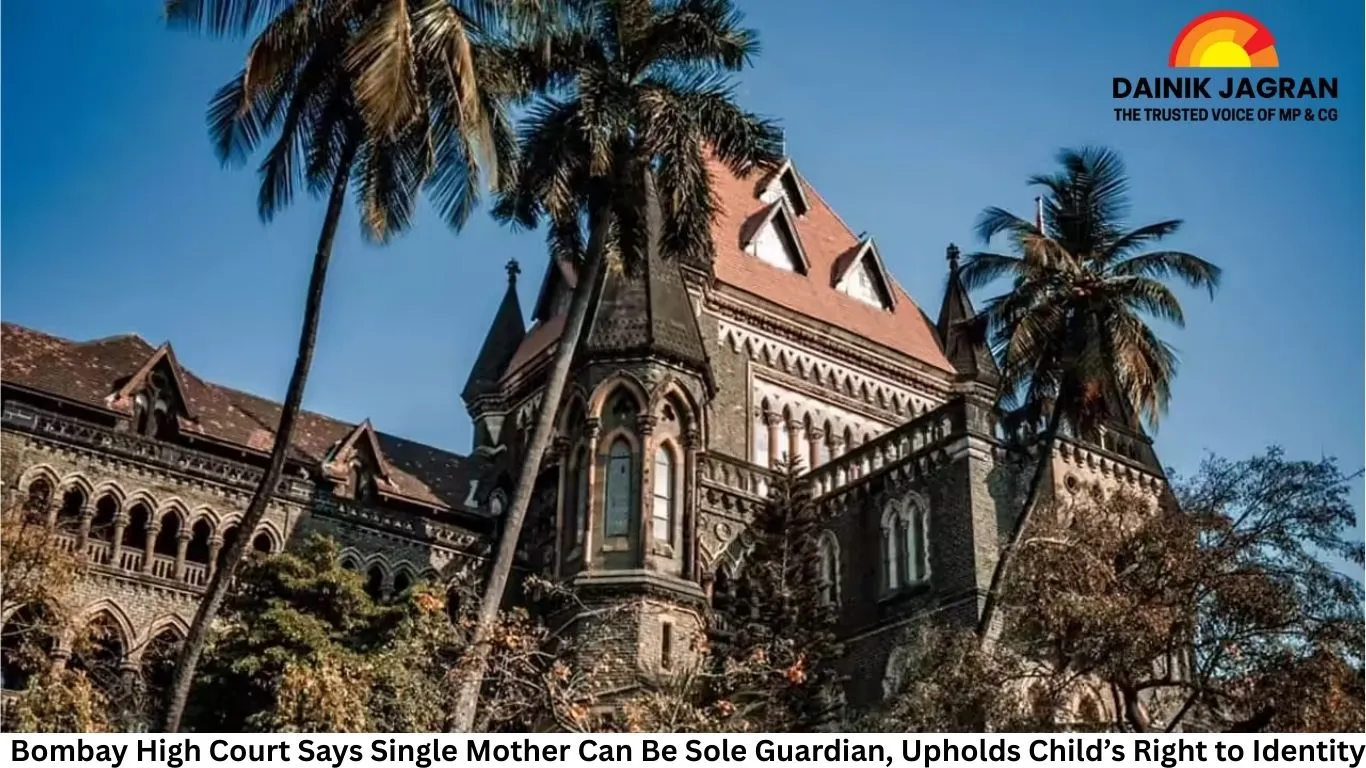
Bombay High Court Says Single Mother Can Be Sole Guardian, Upholds Child’s Right to Identity
Digital Desk
The case arose after a rape survivor petitioned the court seeking removal of the biological father’s name from her daughter’s school records. A DNA test had established paternity, but the man had no relationship with the child and chose to remain absent. Despite this, his name appeared on official documents, and the school refused to amend the entries, prompting the mother and daughter to seek judicial intervention.
Delivering its judgment, the bench observed that recognising a single mother as the sole guardian “is not charity but a constitutional duty.” The court stressed that identity forms a core component of dignity protected under Article 21, and that forcing a child to carry the name of an uninvolved parent undermines that right. It further noted that administrative practices requiring a father’s name as mandatory reflect patriarchal assumptions rather than neutral procedures.
The judges clarified that school records are public documents used throughout a person’s academic and professional life, making accuracy essential. Insisting on including a father’s name merely because of a standard format, the court said, perpetuates inequality. It ruled that in exceptional circumstances, authorities must permit corrections that reflect the child’s actual social reality.
On the issue of caste, the bench stated that schools are not competent authorities to determine caste status and that it cannot be altered arbitrarily. However, it added that when a child is raised solely by a mother belonging to a Scheduled Caste, authorities cannot rigidly impose paternal caste identity if it does not reflect lived circumstances. Any correction, the court said, must balance procedural integrity with the child’s welfare.
Legal experts say the ruling could influence administrative policies nationwide by affirming that documentation standards must adapt to diverse family structures. The judgment underscores a broader judicial trend toward recognising individual dignity and equality over rigid social conventions.
.jpg)




