Cabinet Approves ₹14,447 Crore Ganga Elevated Corridor in Varanasi to Reduce Traffic

Digital Desk

Cabinet Approves ₹14,447 Crore Ganga Elevated Corridor in Varanasi to Reduce Traffic

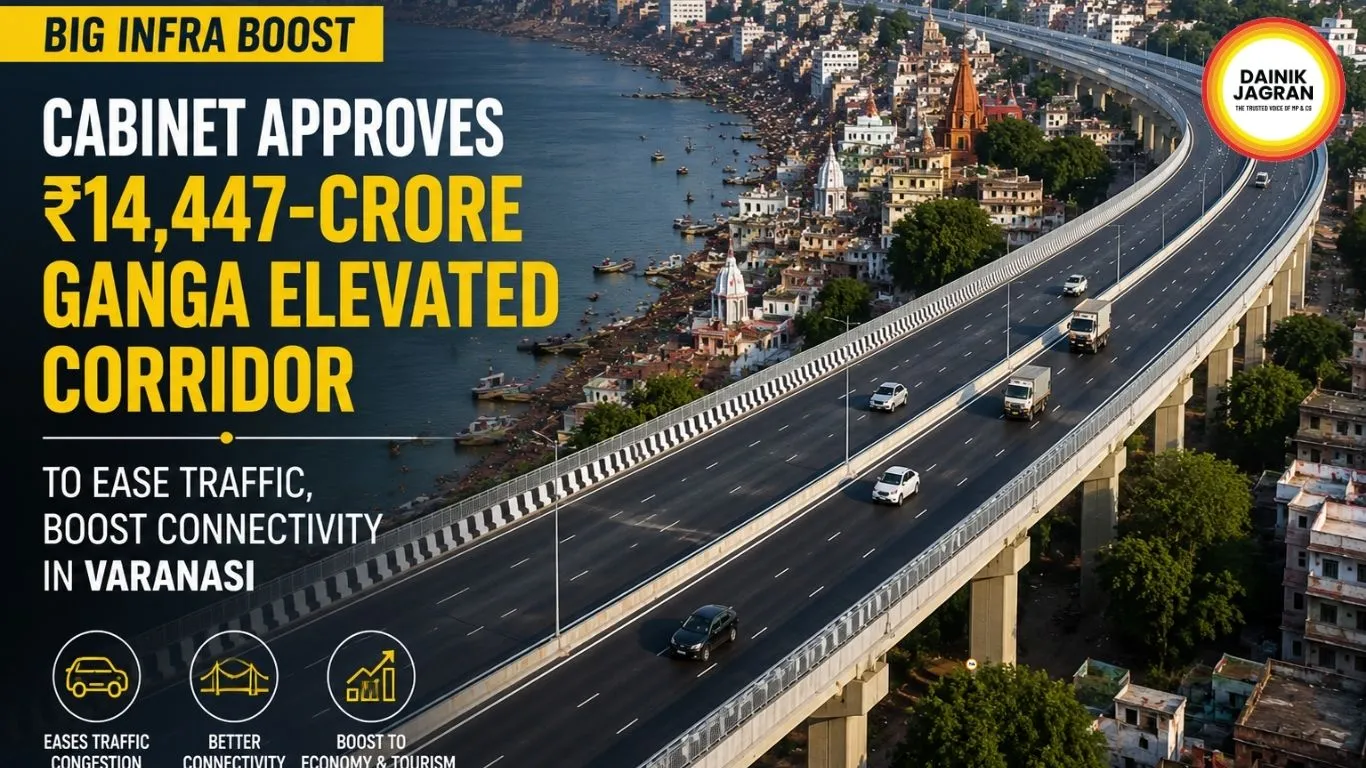
The Union Cabinet has approved a ₹14,447.64-crore six-lane Ganga Elevated Corridor in Varanasi to reduce congestion, improve connectivity, strengthen tourism and enhance multimodal transport infrastructure.


The Union Cabinet has approved the construction of a six-lane Greenfield Elevated Corridor along the Ganga River in Varanasi, a major infrastructure project aimed at reducing urban congestion, improving regional connectivity and strengthening multimodal transport links in one of India's busiest pilgrimage and cultural cities.

The project, approved by the Cabinet Committee on Economic Affairs (CCEA) chaired by Prime Minister Narendra Modi, will be developed under the National Highways (Original) [NH(O)] programme using the Hybrid Annuity Model (HAM). The total capital investment for the project has been pegged at ₹14,447.64 crore.

The proposed 46.039-kilometre corridor will connect National Highway-19 with the Varanasi Ring Road, providing a high-speed, access-controlled route along the Ganga riverfront. The project will feature a six-lane elevated main carriageway, ramps, loops, service roads, a landmark cable-stayed bridge, and an extradosed foot-over bridge equipped with travelators.

Designed to Cut Travel Time

According to the government, the corridor has been designed for operating speeds of 80–100 kmph, significantly reducing travel time across the city.

The average travel duration on the affected stretch is expected to decline from nearly 60 minutes to around 20 minutes, representing a reduction of about 67 percent. Travel between NH-19 and Kashi Railway Station is also expected to become considerably faster, with journey time falling from nearly 50 minutes to 25 minutes.

Officials said the project will help divert through traffic away from congested urban roads, improving daily commuting conditions while reducing vehicle operating costs, fuel consumption and emissions.

Boost to Pilgrimage and Tourism

Varanasi attracts more than 15 million tourists and pilgrims annually, making efficient transport infrastructure increasingly important for the city's economy and visitor experience.

The elevated corridor will improve access to several prominent religious, educational and cultural destinations, including Kashi Vishwanath Temple, Banaras Hindu University (BHU), Namo Ghat, Ramnagar Fort, and the historic ghats along the Ganga.

The project also includes an elevated spur between BHU/Lanka and Samne Ghat, intended to ease congestion at the busy Lanka intersection, one of the city's major traffic bottlenecks.

Strengthening Multimodal Connectivity

The government said the corridor aligns with the PM Gati Shakti National Master Plan, enhancing seamless connectivity between highways, railway stations, airports and inland waterways.

The project will provide improved access to major transport hubs including Lal Bahadur Shastri International Airport, Kashi Railway Station, Banaras Railway Station, Varanasi City Railway Station, Pandit Deen Dayal Upadhyay Junction, and the Ramnagar Inland Waterways Port.

It will also strengthen connectivity to the Chandauli Special Economic Zone (SEZ), an aspirational district, and multiple logistics centres, supporting freight movement and regional economic development across eastern Uttar Pradesh.

Advanced Engineering Features

The corridor incorporates several high-end engineering components intended to improve both functionality and urban aesthetics.

Among its key features is a 910-metre cable-stayed bridge across the Ganga River and a 1.32-kilometre foot-over bridge-cum-major bridge fitted with travelators to facilitate pedestrian access towards the Kashi Vishwanath Temple area.

The project also includes a rail overbridge over the existing and proposed Malviya Bridge alignment, emergency parking facilities, sound barriers, architectural lighting, and design elements inspired by Varanasi's cultural heritage.

The government said these features are expected to transform the city's skyline while improving transport efficiency and reinforcing Varanasi's position as a major religious and cultural destination.

Supporting Long-Term Urban Growth

Officials believe the project will play a significant role in easing traffic congestion, improving road safety and facilitating smoother passenger and freight movement. By integrating multiple transport modes and supporting tourism, pilgrimage and commerce, the corridor is expected to contribute to sustainable urban development in eastern Uttar Pradesh.

The approval marks another major investment in Varanasi's transport infrastructure as the city continues to witness rapid expansion in road, rail and public infrastructure projects under the government's broader connectivity agenda.


--------

🚨 Beat the News Rush – Join Now!

Get breaking alerts, hot exclusives, and game-changing stories instantly on your phone. No delays, no fluff – just the edge you need. ⚡

Tap to join: 

🟢 WhatsApp Channel: Dainik Jagran MP CG

Crave more?

🅕 Facebook: Dainik Jagran MP CG English

🅧 Twitter (X): Dainik Jagran MP CG

🅘 Instagram: Dainik Jagran MP CG

Share the fire – keep your crew ahead! 🗞️🔥

english.dainikjagranmpcg.com
16 Jul 2026 By Abhishek Joshi

Cabinet Approves ₹14,447 Crore Ganga Elevated Corridor in Varanasi to Reduce Traffic

Digital Desk

The Union Cabinet has approved the construction of a six-lane Greenfield Elevated Corridor along the Ganga River in Varanasi, a major infrastructure project aimed at reducing urban congestion, improving regional connectivity and strengthening multimodal transport links in one of India's busiest pilgrimage and cultural cities.

The project, approved by the Cabinet Committee on Economic Affairs (CCEA) chaired by Prime Minister Narendra Modi, will be developed under the National Highways (Original) programme using the Hybrid Annuity Model (HAM). The total capital investment for the project has been pegged at ₹14,447.64 crore.

The proposed 46.039-kilometre corridor will connect National Highway-19 with the Varanasi Ring Road, providing a high-speed, access-controlled route along the Ganga riverfront. The project will feature a six-lane elevated main carriageway, ramps, loops, service roads, a landmark cable-stayed bridge, and an extradosed foot-over bridge equipped with travelators.

Designed to Cut Travel Time

According to the government, the corridor has been designed for operating speeds of 80–100 kmph, significantly reducing travel time across the city.

The average travel duration on the affected stretch is expected to decline from nearly 60 minutes to around 20 minutes, representing a reduction of about 67 percent. Travel between NH-19 and Kashi Railway Station is also expected to become considerably faster, with journey time falling from nearly 50 minutes to 25 minutes.

Officials said the project will help divert through traffic away from congested urban roads, improving daily commuting conditions while reducing vehicle operating costs, fuel consumption and emissions.

Boost to Pilgrimage and Tourism

Varanasi attracts more than 15 million tourists and pilgrims annually, making efficient transport infrastructure increasingly important for the city's economy and visitor experience.

The elevated corridor will improve access to several prominent religious, educational and cultural destinations, including Kashi Vishwanath Temple, Banaras Hindu University (BHU), Namo Ghat, Ramnagar Fort, and the historic ghats along the Ganga.

The project also includes an elevated spur between BHU/Lanka and Samne Ghat, intended to ease congestion at the busy Lanka intersection, one of the city's major traffic bottlenecks.

Strengthening Multimodal Connectivity

The government said the corridor aligns with the PM Gati Shakti National Master Plan, enhancing seamless connectivity between highways, railway stations, airports and inland waterways.

The project will provide improved access to major transport hubs including Lal Bahadur Shastri International Airport, Kashi Railway Station, Banaras Railway Station, Varanasi City Railway Station, Pandit Deen Dayal Upadhyay Junction, and the Ramnagar Inland Waterways Port.

It will also strengthen connectivity to the Chandauli Special Economic Zone (SEZ), an aspirational district, and multiple logistics centres, supporting freight movement and regional economic development across eastern Uttar Pradesh.

Advanced Engineering Features

The corridor incorporates several high-end engineering components intended to improve both functionality and urban aesthetics.

Among its key features is a 910-metre cable-stayed bridge across the Ganga River and a 1.32-kilometre foot-over bridge-cum-major bridge fitted with travelators to facilitate pedestrian access towards the Kashi Vishwanath Temple area.

The project also includes a rail overbridge over the existing and proposed Malviya Bridge alignment, emergency parking facilities, sound barriers, architectural lighting, and design elements inspired by Varanasi's cultural heritage.

The government said these features are expected to transform the city's skyline while improving transport efficiency and reinforcing Varanasi's position as a major religious and cultural destination.

Supporting Long-Term Urban Growth

Officials believe the project will play a significant role in easing traffic congestion, improving road safety and facilitating smoother passenger and freight movement. By integrating multiple transport modes and supporting tourism, pilgrimage and commerce, the corridor is expected to contribute to sustainable urban development in eastern Uttar Pradesh.

The approval marks another major investment in Varanasi's transport infrastructure as the city continues to witness rapid expansion in road, rail and public infrastructure projects under the government's broader connectivity agenda.

 

https://english.dainikjagranmpcg.com/national/cabinet-approves-%E2%82%B914447-crore-ganga-elevated-corridor-in-varanasi-to/article-22365

Trending News