


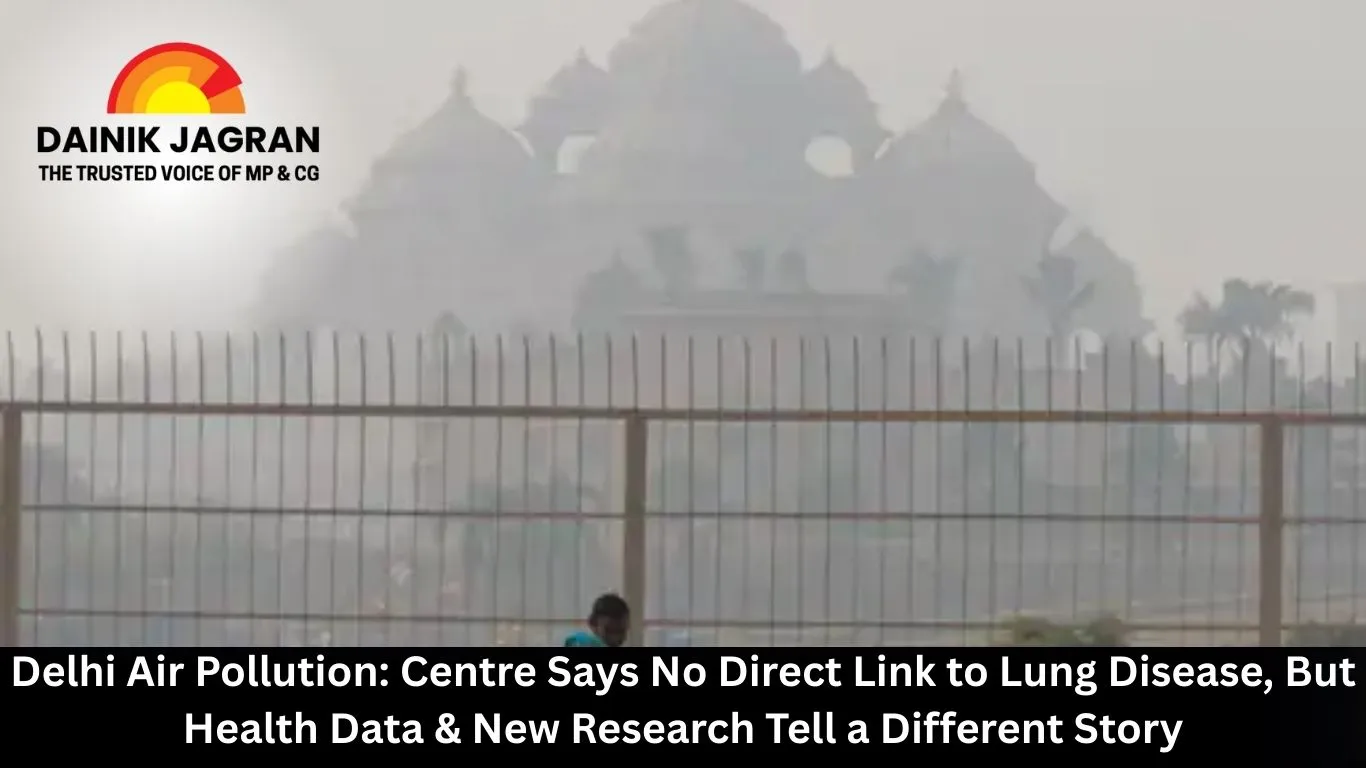
Delhi Air Pollution: Centre Says No Direct Link to Lung Disease, But Health Data & New Research Tell a Different Story
Digital Desk
Delhi Air Pollution: Centre Says No Direct Link to Lung Disease, But Health Data & New Research Tell a Different Story
In a response that has sparked concern amid the capital's toxic winter smog, the central government has stated there is "no concrete scientific evidence" directly linking high Air Quality Index (AQI) levels to lung diseases.
This claim, however, stands in stark contrast to burgeoning hospital admissions and new medical research highlighting a severe public health emergency.
The statement was made by Minister of State for Environment, Kirti Vardhan Singh, in a written reply to the Rajya Sabha.
It came in response to a query on whether prolonged exposure to hazardous air in Delhi-NCR is reducing lung capacity, with pollution acknowledged only as a "contributing factor" to respiratory illnesses.
Government Stance vs. Ground Reality
The official stance emerges as Delhi continues to grapple with 'Poor' to 'Severe' AQI levels, a seasonal crisis that dominates headlines and public health discourse.
Notably, the Winter Session of Parliament was adjourned indefinitely without any discussion on the pollution menace.
Contradicting the Centre's downplayed assessment, the Union Health Ministry's own data, revealed just days earlier, paints a grim picture. It reported that over 200,000 cases of breathing-related issues were recorded at six major Delhi hospitals between 2022 and 2024, with 35,000 requiring hospitalization—a crisis officials attributed largely to air pollution.
New Research Points to Lung Function Deterioration
Adding scientific weight to the health crisis, a study published in the Medical Journal of Advanced Research India claims that polluted air is actively impairing lung function.
The research, conducted on young adults aged 15-29 in the Delhi-NCR region, suggests that the region's toxic air is causing measurable physiological damage, potentially impacting the health of a generation.
“When research on young, typically healthy populations shows diminished lung function, it’s a massive red flag,” commented a simulated pulmonology expert. “It indicates chronic exposure is causing harm long before traditional ‘disease’ is diagnosed, challenging any narrative that minimizes the direct health impact.”
Enforcement Drive in Full Swing
On the ground, Delhi authorities are undertaking a massive enforcement campaign. Environment Minister Manjinder Singh Sirsa reported that over 11,700 fines were issued in a 24-hour pollution control drive. Actions included:
Diverting 542 trucks from city borders.
Mechanically sweeping over 2,068 km of roads.
Deploying 160 anti-smog guns at construction sites.
Bio-mining approximately 30,000 metric tonnes of legacy waste daily.
Minister Sirsa appealed for public cooperation, emphasizing a "collective responsibility" to maintain any gains in air quality.
Why This Matters Now
This disconnect between official statements and on-ground data highlights a critical gap in addressing India's pollution crisis. As winter deepens and AQI levels remain dangerously high, millions are left navigating conflicting messages about the very real health risks they face daily.
The conversation is no longer just about environmental policy, but about immediate and long-term healthcare burdens, economic costs, and protecting vulnerable populations.
The takeaway for residents is clear: despite conflicting statements, the overwhelming evidence from hospitals and research mandates continued use of masks (especially N95s), limits on outdoor exertion during poor air days, and the use of air purifiers indoors. The health crisis is visible, and the data suggests it is very real.
.jpg)




