


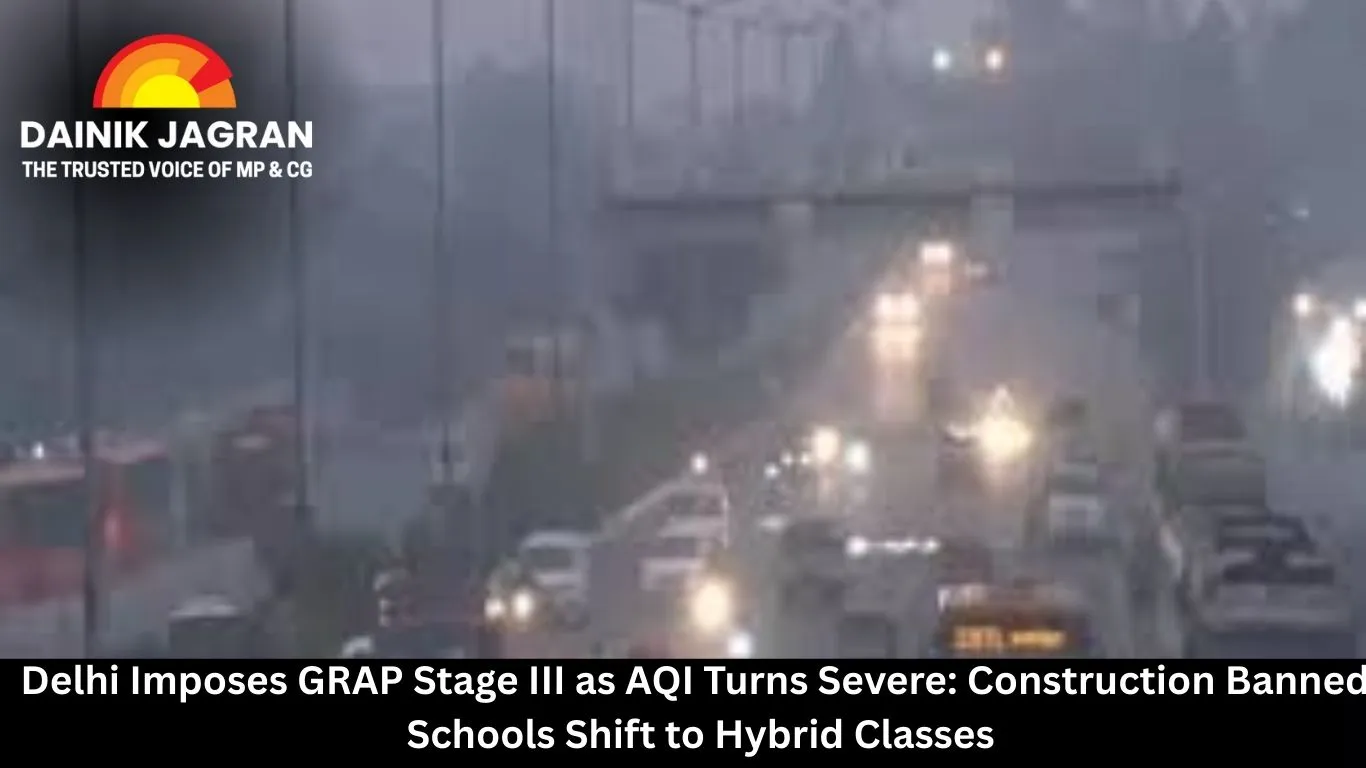
Delhi Imposes GRAP Stage III as AQI Turns Severe: Construction Banned, Schools Shift to Hybrid Classes
Digital Desk
Delhi Imposes GRAP Stage III as Air Quality Slips into ‘Severe’ Category
Delhi’s air quality situation worsened sharply on Thursday, prompting authorities to impose Stage III of the Graded Response Action Plan (GRAP) across the Delhi-NCR. The move comes after the city’s average Air Quality Index (AQI) jumped from 362 earlier in the week to 425, pushing pollution levels into the ‘severe’ category.
The Commission for Air Quality Management (CAQM) announced the decision, citing unfavourable weather conditions such as calm winds and stable atmospheric layers. These conditions prevent pollutants from dispersing, causing toxic particles to remain trapped close to the ground and leading to dense smog across the region.
With the enforcement of GRAP Stage III, several strict measures have come into effect to control major sources of pollution and protect public health.
Key Restrictions Under GRAP Stage III
One of the most significant steps is a complete ban on all non-essential construction and demolition activities across Delhi-NCR. Authorities have also ordered the closure of stone crushers and mining operations, which are known to contribute heavily to dust and particulate matter pollution. However, projects of national importance, including those related to defence, healthcare, railways, and metro services, have been exempted from the ban.
Vehicular restrictions have also been tightened. The entry of BS-IV diesel light commercial vehicles registered outside Delhi has been prohibited, except for those carrying essential goods or providing essential services. Additionally, the use of BS-III petrol and BS-IV diesel four-wheelers has been restricted across Delhi and nearby NCR districts. Both private and commercial vehicles fall under this rule, although persons with disabilities have been exempted to ensure mobility and accessibility. Traffic police have been directed to carry out strict enforcement and issue penalties for violations.
Schools Move to Hybrid Learning
In view of rising health risks, schools have been advised to shift classes up to Class 5 to a hybrid mode. This allows parents to choose between online and offline classes, helping reduce children’s exposure to polluted air. Several schools have also started limiting outdoor activities and sports sessions for senior students as a precautionary step.
What Is GRAP and Why It Matters
The Graded Response Action Plan is a key framework to tackle Delhi’s winter pollution crisis. It includes four stages based on AQI levels, ranging from ‘Poor’ to ‘Severe Plus’. Since the AQI is now firmly in the ‘Severe’ range, Stage III measures are considered crucial to prevent further deterioration.
Officials have warned that if AQI crosses 450, Stage IV restrictions could be imposed. These include a complete halt to construction activities, stricter truck entry bans, and possible closure of schools.
Experts Raise Long-Term Concerns
Environmental experts say Delhi’s annual pollution crisis is caused by a mix of weather conditions and human activities. Vehicular emissions, industrial pollution, stubble burning in neighbouring states, and seasonal factors continue to worsen air quality every winter. Scientists stress the need for long-term regional cooperation and sustainable solutions beyond emergency measures.
For now, authorities have urged residents to limit outdoor activities, use masks, and avoid unnecessary travel. GRAP Stage III restrictions will remain in place until air quality shows sustained improvement, as Delhi continues to battle hazardous pollution levels.




.jpg)




