


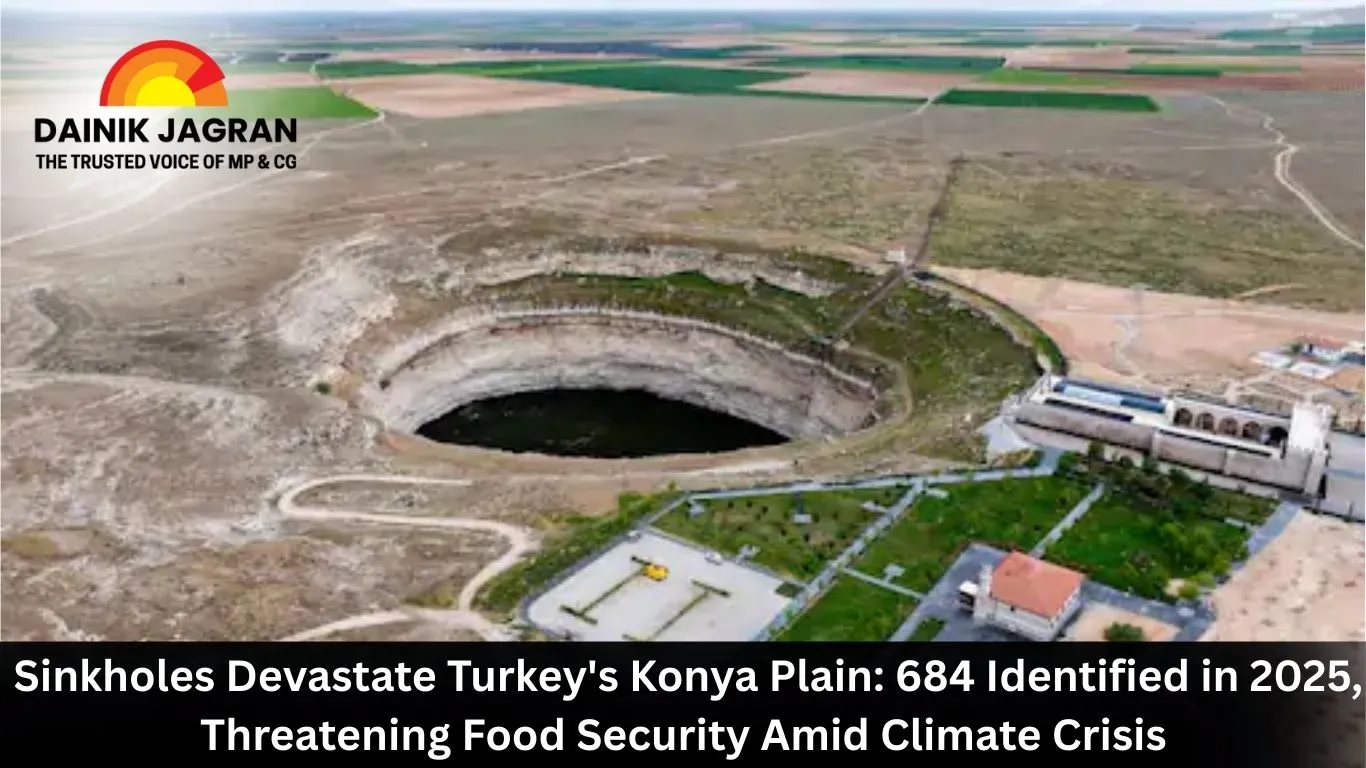
Sinkholes Devastate Turkey's Konya Plain: 684 Identified in 2025, Threatening Food Security Amid Climate Crisis
Digital Desk
Turkey's fertile Konya Plain, often called the nation's breadbasket, is crumbling under a wave of mysterious sinkholes. As of this latest update, authorities have confirmed 684 gaping craters in the region, some plunging 30 meters deep and spanning 100 feet wide.
These sudden land collapses are wiping out thousands of hectares of prime farmland, raising alarms over food security and economic fallout in a year already battered by drought.
The Konya Basin, sprawling across 2.6 million hectares – that's over 11% of Turkey's arable land – is ground zero for this environmental nightmare. According to the Disaster and Emergency Management Authority (AFAD), the Karapinar district bears the brunt, with 534 sinkholes dotting its rural landscapes.
But the numbers tell only part of the story. Researchers at Konya Technical University's Sinkhole Research Center report a staggering surge: from 299 holes in 2017 to 2,550 by 2021. In 2025 alone, at least 20 new monsters have emerged, forcing farmers to flee their fields overnight.
What’s fueling this underground apocalypse? Experts point to a toxic mix of geology, climate, and human habits. The plain's karst terrain – riddled with soluble rocks like limestone, carbonate, and gypsum – is a ticking time bomb.
When water dissolves these layers, the surface loses its footing and caves in. Add to that Turkey's driest year in 15, with rainfall at rock-bottom levels due to climate change. Aquifers aren't recharging, leaving the land parched and unstable.
The real culprit, though? Overpumping groundwater. Since the 1970s, thousands of wells – legal and illegal – have drained the basin to irrigate thirsty crops like sugar beets and maize. In some spots, water tables have dropped a jaw-dropping 60 meters.
"This crisis has simmered for decades, fueled by lax regulations and unchecked farming," says Dr. Elif Kaya, a geologist at the university. The 2025 drought has supercharged the problem, turning slow subsidence into explosive sinkholes. AFAD has flagged early warning signs in 1,850 more sites, expanding risk maps to avert disasters.
The ripple effects are brutal. Farmlands are vanishing, slashing wheat yields in Turkey's top grain hub. This could spike food prices, boost import reliance, and cost millions in losses. Livestock and wildlife are at risk, with sinkholes swallowing herds whole.
Rural families, already squeezed, face displacement – potentially fueling urban migration and social strain. "It's not just dirt giving way; it's our future," laments local farmer Ahmet Demir, whose 50-acre plot vanished into a 40-foot chasm last month.
The government isn't sitting idle. In a swift response, Ankara has cracked down on illegal wells and rolled out smarter irrigation tech. AFAD's ramped-up monitoring includes drone surveillance and community alerts to shield lives and infrastructure. Neighboring areas like Karaman and Aksaray are on high alert, as experts warn the crisis could spread if dry spells linger.
Yet, hope hinges on bolder action. "Curb groundwater abuse and adapt to climate shifts now, or kiss the breadbasket goodbye," urges Dr. Kaya. As 2025 draws to a close, Turkey stands at a crossroads: innovate or watch its granary implode. For farmers like Demir, the stakes couldn't be higher – one wrong step, and the ground swallows more than just soil.




.jpg)




