


US Lawmakers Move to End 50% Trump Tariffs on Indian Imports, Say Duties Hurt American Consumers
Digital Desk
US Lawmakers Push to Scrap 50% Trump Tariffs on Indian Goods
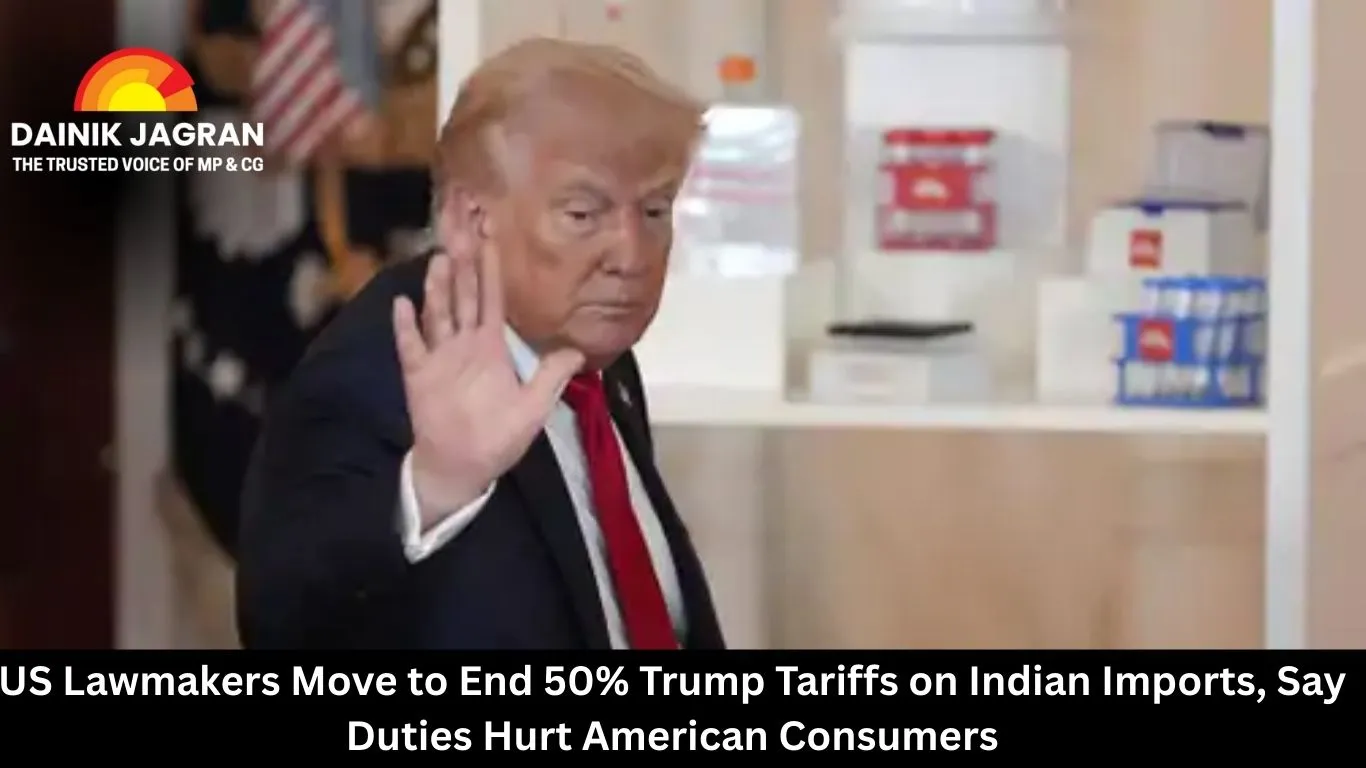
In a major development for India-US trade relations, three members of the US House of Representatives have introduced a resolution in Congress seeking to end the steep 50% tariffs imposed on Indian imports during former President Donald Trump’s administration. The lawmakers argue that these additional duties are illegal and are effectively acting as a hidden tax on American consumers.
The resolution was introduced on Friday by Representatives Deborah Ross (D-North Carolina), Marc Veasey (D-Texas), and Raja Krishnamoorthi (D-Illinois). It targets the extra 25% “secondary” tariffs imposed on India in August 2025, which were added to an earlier 25% duty. Together, these measures pushed tariffs on many Indian products to as high as 50%.
According to the lawmakers, the tariffs were meant to pressure India but have instead increased costs for everyday Americans. Products such as textiles, pharmaceutical goods, and technology components imported from India have become more expensive, adding to inflation pressures already faced by US households.
Representative Marc Veasey said the tariffs are hurting local communities. “These illegal tariffs are a tax on everyday North Texans who are already struggling with rising costs,” he said. Veasey also highlighted India’s importance as a key cultural, economic, and strategic partner of the United States.
US Local Markets Feeling the Impact
In North Carolina, Representative Deborah Ross warned that the tariffs threaten jobs and future investments. She pointed out that the state’s economy is closely connected to India through trade and a strong Indian-American community. Indian companies have invested billions of dollars in North Carolina, creating thousands of jobs, particularly in the technology and life sciences sectors.
Representative Raja Krishnamoorthi, who is Indian-American, stressed that the duties are damaging supply chains and American workers. “These tariffs disrupt supply chains, harm American workers, and drive up costs for consumers,” he said. He added that removing the tariffs would strengthen cooperation between India and the US in both economic and security areas.
Why the US Imposed 50% Tariffs on India
The Trump administration imposed economic penalties on India as part of its effort to pressure Russia over the Ukraine war. At the time, former President Trump claimed that Russia was funding the conflict through oil sales to countries like India. As a result, India faced a 25% reciprocal tariff from August 7, followed by an additional 25% penalty linked to its purchase of Russian oil from August 27.
These actions have strained trade relations between the two countries. Washington has repeatedly raised concerns about India’s high import duties and the widening trade deficit, arguing that US companies face difficulties accessing the Indian market.
India-US Trade Deal Talks Offer Hope
Despite tensions, India and the US are actively discussing a broader trade deal. Negotiations under the 1979 Aircraft Agreement have already led to zero tariffs on aircraft parts. US lawmakers believe that if India lowers taxes on American goods, the US will offer similar benefits in return.
Senate Committee Chairman Jerry Moran has also suggested that India could become a major buyer of ethanol produced from American corn and soybeans, opening new opportunities for US farmers.
If passed, the new resolution could mark a turning point in India-US trade ties and provide relief to consumers and businesses on both sides.



.jpg)




