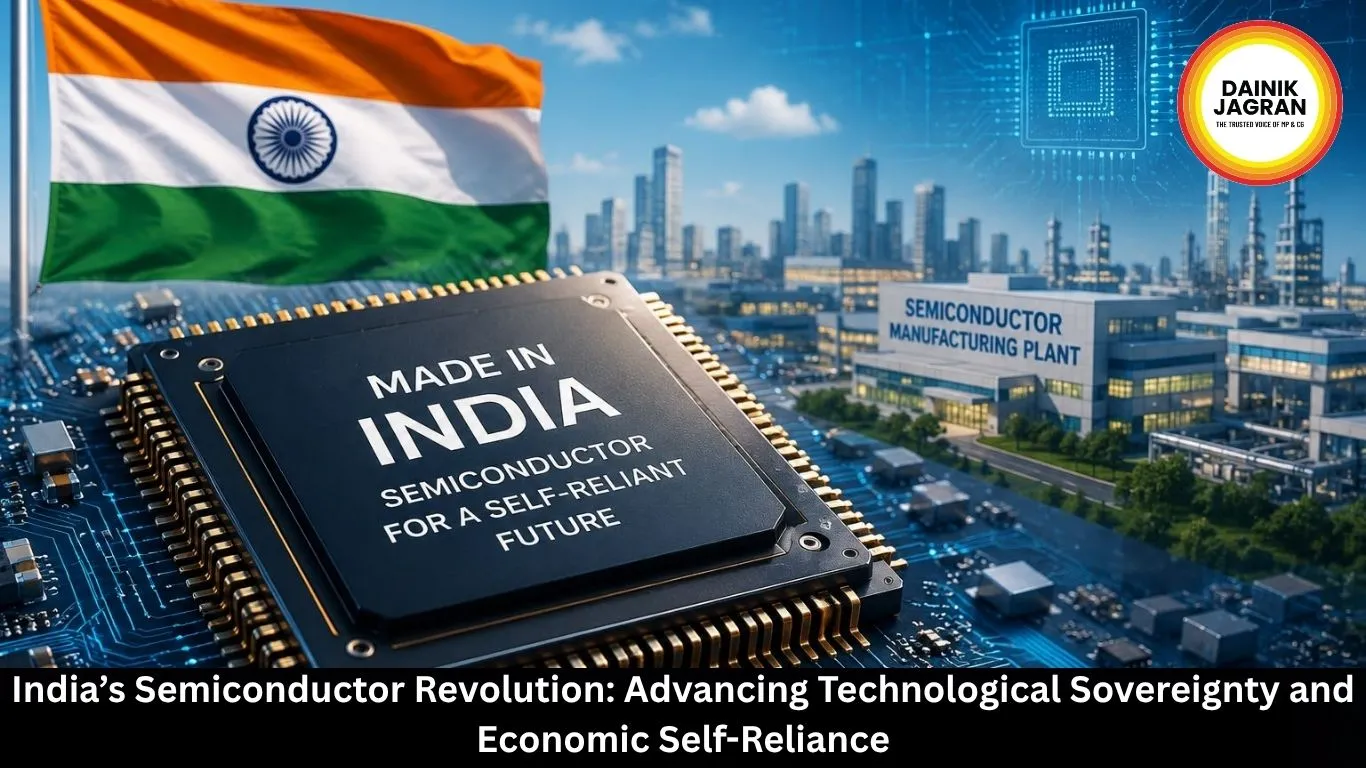
India’s Semiconductor Revolution: Advancing Technological Sovereignty and Economic Self-Reliance
New Delhi
India’s push into semiconductor manufacturing marks one of the country’s most significant industrial transformations in recent decades.
At a time when semiconductors power everything from smartphones and electric vehicles to defence systems and artificial intelligence, building domestic chip-making capabilities has become a strategic necessity rather than just an economic objective. Through the India Semiconductor Mission (ISM), the government is laying the foundation for a self-reliant semiconductor ecosystem that aims to reduce import dependence, strengthen national security, and position India as a trusted player in global technology supply chains.
Building the Foundation
The launch of the India Semiconductor Mission 1.0 marked a turning point in India’s industrial policy. Instead of focusing on isolated projects, the government adopted a comprehensive strategy to develop the entire semiconductor value chain from chip design and fabrication to assembly, packaging, testing, and advanced manufacturing.
Backed by a substantial financial commitment, the mission created a clear policy framework to attract both domestic and international investments. Incentives were introduced for semiconductor fabrication plants, Outsourced Semiconductor Assembly and Test (OSAT) facilities, Assembly, Testing, Marking and Packaging (ATMP) units, compound semiconductor projects, and chip design through the Design Linked Incentive (DLI) Scheme.
Today, what once appeared to be an ambitious vision has begun taking shape. The government has approved semiconductor projects with a combined investment commitment of over ₹1.64 lakh crore across multiple states, reflecting both the scale of the initiative and the speed at which it is being implemented.
From Policy to Production
One of the biggest milestones under ISM 1.0 has been the commencement of commercial production at Micron Technology’s semiconductor facility in Gujarat. It represents the first major operational success under the mission and demonstrates that India’s semiconductor ambitions are moving beyond policy announcements into actual manufacturing.
Several other approved projects have also made significant progress. Tata Electronics and Kaynes Semicon are expected to begin commercial production this year, while the Tata-PSMC project at Dholera, Gujarat, is steadily advancing towards establishing India’s first silicon wafer fabrication facility.
The expansion is no longer limited to one region. New projects in Gujarat, along with the first approved semiconductor project in Rajasthan, reflect the government’s effort to build a geographically diversified semiconductor manufacturing ecosystem.
At the same time, the Design Linked Incentive Scheme has strengthened India’s chip design capabilities. The programme has supported multiple design startups and companies, resulting in successful chip tape outs, fabricated prototypes, patent filings, and the training of more than a thousand specialised engineers.
Strengthening the Manufacturing Ecosystem
Developing a semiconductor industry requires far more than fabrication plants. Recognising this, the government has also begun strengthening the broader electronics manufacturing ecosystem.
A major step in this direction is the foundation stone laid for advanced Printed Circuit Board (PCB) manufacturing projects worth ₹6,750 crore in Jewar, Uttar Pradesh. These facilities will manufacture high density, multi layer PCBs, including sophisticated 20-22 layer boards that India currently imports in large quantities.
With annual PCB imports estimated at nearly ₹40,000 crore, domestic production is expected to significantly reduce dependence on foreign suppliers while supporting industries such as consumer electronics, telecommunications, defence, automotive manufacturing, and industrial equipment.
The Next Phase: India Semiconductor Mission 2.0
Having established the initial foundation, the government has now launched India Semiconductor Mission 2.0, signalling the next phase of India’s semiconductor journey.
While the first phase focused on attracting investments in fabrication, assembly, testing, and packaging, the second phase seeks to deepen India’s capabilities across the semiconductor value chain. Its priorities include semiconductor manufacturing equipment, specialty materials and chemicals, advanced packaging technologies, compound semiconductors, indigenous semiconductor intellectual property, and research and training infrastructure.
The announcement of ISM 2.0 in the Union Budget 2026-27, along with dedicated financial support, reflects a long-term and phased strategy aimed at achieving comprehensive technological self reliance. By reducing dependence not only on imported chips but also on manufacturing equipment and critical materials, India is attempting to build a more resilient semiconductor ecosystem.
Strategic Significance
Semiconductors have become the backbone of modern economies. They are indispensable for defence platforms, artificial intelligence, 5G telecommunications, electric vehicles, data centres, consumer electronics, and critical infrastructure.
India’s semiconductor mission therefore carries strategic importance beyond industrial development. By strengthening domestic manufacturing and design capabilities, the country seeks to reduce vulnerabilities associated with excessive import dependence while enhancing its technological sovereignty.
The mission has also benefited from collaborations with leading global companies from the United States, Taiwan, South Korea, and Japan. These partnerships are bringing advanced technologies, investments, and expertise that will help India gradually build indigenous capabilities.
Looking Ahead
India’s semiconductor programme has progressed from policy formulation to project approvals, construction, and the beginning of commercial production within a relatively short period. Each new facility contributes towards reducing import dependence, creating high-quality employment, building a skilled workforce, and strengthening India’s position in global technology supply chains.
The government now aims to build on the momentum created under ISM 1.0 through the expanded vision of ISM 2.0. If executed successfully, these initiatives have the potential to transform India into a globally competitive semiconductor hub while advancing the country’s long term goal of technological sovereignty and economic self-reliance.

--------
🚨 Beat the News Rush – Join Now!
Get breaking alerts, hot exclusives, and game-changing stories instantly on your phone. No delays, no fluff – just the edge you need. ⚡
Tap to join:
🟢 WhatsApp Channel: Dainik Jagran MP CG
Crave more?
🅕 Facebook: Dainik Jagran MP CG English
🅧 Twitter (X): Dainik Jagran MP CG
🅘 Instagram: Dainik Jagran MP CG
Share the fire – keep your crew ahead! 🗞️🔥
India’s Semiconductor Revolution: Advancing Technological Sovereignty and Economic Self-Reliance
New Delhi
At a time when semiconductors power everything from smartphones and electric vehicles to defence systems and artificial intelligence, building domestic chip-making capabilities has become a strategic necessity rather than just an economic objective. Through the India Semiconductor Mission (ISM), the government is laying the foundation for a self-reliant semiconductor ecosystem that aims to reduce import dependence, strengthen national security, and position India as a trusted player in global technology supply chains.
Building the Foundation
The launch of the India Semiconductor Mission 1.0 marked a turning point in India’s industrial policy. Instead of focusing on isolated projects, the government adopted a comprehensive strategy to develop the entire semiconductor value chain from chip design and fabrication to assembly, packaging, testing, and advanced manufacturing.
Backed by a substantial financial commitment, the mission created a clear policy framework to attract both domestic and international investments. Incentives were introduced for semiconductor fabrication plants, Outsourced Semiconductor Assembly and Test (OSAT) facilities, Assembly, Testing, Marking and Packaging (ATMP) units, compound semiconductor projects, and chip design through the Design Linked Incentive (DLI) Scheme.
Today, what once appeared to be an ambitious vision has begun taking shape. The government has approved semiconductor projects with a combined investment commitment of over ₹1.64 lakh crore across multiple states, reflecting both the scale of the initiative and the speed at which it is being implemented.
From Policy to Production
One of the biggest milestones under ISM 1.0 has been the commencement of commercial production at Micron Technology’s semiconductor facility in Gujarat. It represents the first major operational success under the mission and demonstrates that India’s semiconductor ambitions are moving beyond policy announcements into actual manufacturing.
Several other approved projects have also made significant progress. Tata Electronics and Kaynes Semicon are expected to begin commercial production this year, while the Tata-PSMC project at Dholera, Gujarat, is steadily advancing towards establishing India’s first silicon wafer fabrication facility.
The expansion is no longer limited to one region. New projects in Gujarat, along with the first approved semiconductor project in Rajasthan, reflect the government’s effort to build a geographically diversified semiconductor manufacturing ecosystem.
At the same time, the Design Linked Incentive Scheme has strengthened India’s chip design capabilities. The programme has supported multiple design startups and companies, resulting in successful chip tape outs, fabricated prototypes, patent filings, and the training of more than a thousand specialised engineers.
Strengthening the Manufacturing Ecosystem
Developing a semiconductor industry requires far more than fabrication plants. Recognising this, the government has also begun strengthening the broader electronics manufacturing ecosystem.
A major step in this direction is the foundation stone laid for advanced Printed Circuit Board (PCB) manufacturing projects worth ₹6,750 crore in Jewar, Uttar Pradesh. These facilities will manufacture high density, multi layer PCBs, including sophisticated 20-22 layer boards that India currently imports in large quantities.
With annual PCB imports estimated at nearly ₹40,000 crore, domestic production is expected to significantly reduce dependence on foreign suppliers while supporting industries such as consumer electronics, telecommunications, defence, automotive manufacturing, and industrial equipment.
The Next Phase: India Semiconductor Mission 2.0
Having established the initial foundation, the government has now launched India Semiconductor Mission 2.0, signalling the next phase of India’s semiconductor journey.
While the first phase focused on attracting investments in fabrication, assembly, testing, and packaging, the second phase seeks to deepen India’s capabilities across the semiconductor value chain. Its priorities include semiconductor manufacturing equipment, specialty materials and chemicals, advanced packaging technologies, compound semiconductors, indigenous semiconductor intellectual property, and research and training infrastructure.
The announcement of ISM 2.0 in the Union Budget 2026-27, along with dedicated financial support, reflects a long-term and phased strategy aimed at achieving comprehensive technological self reliance. By reducing dependence not only on imported chips but also on manufacturing equipment and critical materials, India is attempting to build a more resilient semiconductor ecosystem.
Strategic Significance
Semiconductors have become the backbone of modern economies. They are indispensable for defence platforms, artificial intelligence, 5G telecommunications, electric vehicles, data centres, consumer electronics, and critical infrastructure.
India’s semiconductor mission therefore carries strategic importance beyond industrial development. By strengthening domestic manufacturing and design capabilities, the country seeks to reduce vulnerabilities associated with excessive import dependence while enhancing its technological sovereignty.
The mission has also benefited from collaborations with leading global companies from the United States, Taiwan, South Korea, and Japan. These partnerships are bringing advanced technologies, investments, and expertise that will help India gradually build indigenous capabilities.
Looking Ahead
India’s semiconductor programme has progressed from policy formulation to project approvals, construction, and the beginning of commercial production within a relatively short period. Each new facility contributes towards reducing import dependence, creating high-quality employment, building a skilled workforce, and strengthening India’s position in global technology supply chains.
The government now aims to build on the momentum created under ISM 1.0 through the expanded vision of ISM 2.0. If executed successfully, these initiatives have the potential to transform India into a globally competitive semiconductor hub while advancing the country’s long term goal of technological sovereignty and economic self-reliance.