The flames of conflict in West Asia are being felt in every Indian kitchen, factory floor, and petrol pump — even if you cannot see it yet. The ongoing US-Israel-Iran war has choked shipping through the Strait of Hormuz, the narrow passage through which almost half of India's crude oil and nearly a third of its natural gas normally flows. And with that chokehold tightening every week, the question many Indians are asking is simple: should we be worried about fuel?
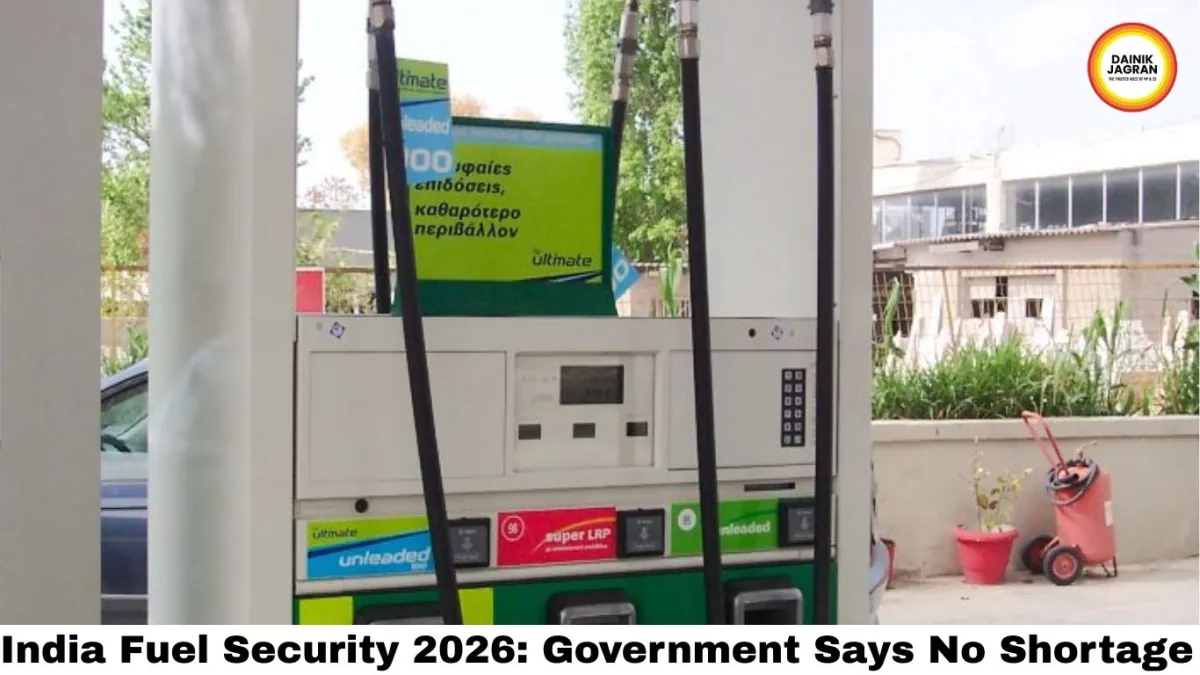
The government's answer, delivered on March 12 by Petroleum Minister Hardeep Singh Puri on the floor of the Lok Sabha, was a firm no. There is no shortage of petrol, diesel, cooking gas, aviation fuel, or kerosene, he said, and supply chains are holding up. On the surface, it sounds reassuring. But peel back a layer, and the picture becomes considerably more complicated.
📊 Key Numbers at a Glance
- ~45% of India's crude oil imports previously moved through the Strait of Hormuz
- ~30% of India's natural gas imports depended on the same route
- Petronet LNG issued a force majeure notice to QatarEnergy on March 3, 2026
- GAIL confirmed LNG allocation from Qatar had fallen to zero by March 5, 2026
- Industries are receiving only 70–80% of their energy requirements
- 2.2 million tonnes of LPG per year now being sourced from US Gulf Coast
What the Minister Said — And What He Didn't
Hardeep Puri's statement to Parliament covered the most visible end of the energy chain: retail consumers. Petrol and diesel at the pump, LPG cylinders in homes, jet fuel for commercial flights — all of these, the Minister confirmed, are adequately stocked and being supplied without interruption. That is true, and it matters, because panic-buying triggered by rumours can cause shortages even when none exist.
To counter exactly that risk, a three-minister high-level panel led by Home Minister Amit Shah — and including External Affairs Minister S. Jaishankar alongside Puri himself — was constituted on the same day to monitor supply chains daily and keep misinformation in check. The creation of such a panel signals that the government is taking this seriously, even as it publicly projects calm.
"No shortage of petrol, diesel, kerosene, aviation turbine fuel, or fuel oil" — Minister Hardeep Singh Puri, Lok Sabha, March 12, 2026
What the assurance quietly sidesteps is what is happening in the industrial and commercial gas sector — and that is where the real stress is building.
The LNG Crisis: A Quiet Emergency
On March 3, 2026, Petronet LNG — India's largest LNG importer — invoked force majeure against QatarEnergy after Qatar's LNG production facilities were struck in the wider West Asian conflict. Two days later, GAIL India confirmed that its LNG allocation under the long-standing Qatar contract had effectively dropped to zero.
This is not a minor disruption. India imports roughly a fifth of its natural gas in liquefied form, and Qatar has historically been its single largest LNG supplier. With that tap suddenly closed, gas companies have had no choice but to ration supply to industrial consumers — ceramics plants, fertiliser units, glass manufacturers, and other factories that run on natural gas are reporting they are receiving only three-quarters or less of what they need.
Who Is Most at Risk?
Households with PNG connections and CNG vehicle users have been explicitly prioritised by the government, so retail consumers will likely feel limited impact in the near term. The burden is falling unevenly on industries that either cannot easily switch fuels or that operate on tight margins where even a 20–25% supply cut is punishing. Fertiliser production is a particular concern — reduced output now could translate into higher agricultural input costs later in the year.
India's Emergency Response: Diversifying Fast
The government and state-owned oil companies are not standing still. In what looks like a well-timed hedge, Indian public sector oil companies signed a one-year contract in November 2025 to import around 2.2 million tonnes of LPG annually from the US Gulf Coast. Those shipments have been arriving since January 2026, giving India an alternative supply line that bypasses the Middle East entirely.
On crude oil, the United States has granted India a 30-day waiver allowing it to continue purchasing Russian crude — a lifeline given the disruption to Gulf supplies. Russia, which has become India's largest crude supplier over the past two years, offers a land-adjacent supply route through pipelines and northern ports that is far less exposed to the Hormuz bottleneck.
The Bigger Picture: A Wake-Up Call for Energy Policy
India's dependence on a single narrow maritime passage for nearly half its oil needs was always a strategic vulnerability. The current crisis has simply made that vulnerability visible to everyone at once. Energy policy experts have for years argued that India needs faster diversification — more LNG from the United States, Australia, and Africa; more renewable energy capacity that reduces import dependence altogether; and deeper strategic petroleum reserves to buffer supply shocks.
Some of that work is already underway. But the pace of diversification, as this crisis shows, still lags the pace at which geopolitical events can move.
What Should Ordinary Indians Expect?
In the immediate term, daily life at the retail level should remain largely unaffected if the government's assurances hold. LPG cylinders, petrol, and diesel supplies are being protected. However, if the Strait of Hormuz remains disrupted for weeks rather than days, the ripple effects — through industrial production, fertiliser costs, and eventually inflation — will be hard to contain entirely.
The most prudent reading of the situation: the government is managing a genuine crisis competently, but calling it a non-event would be premature. Watching the industrial gas situation over the next two to four weeks will be the real indicator of how well India's energy security net is holding.
Bottom Line: India's fuel security for households is intact for now, and the government's rapid diversification moves deserve credit. But with LNG supplies from Qatar effectively at zero and industries already on rationed gas, this is a crisis being managed — not a crisis that has passed. Minister Hardeep Puri's assurances are accurate for the retail consumer; for factory managers and policymakers, the real work is just beginning.




.jpg)
.jpg)
.jpg)
