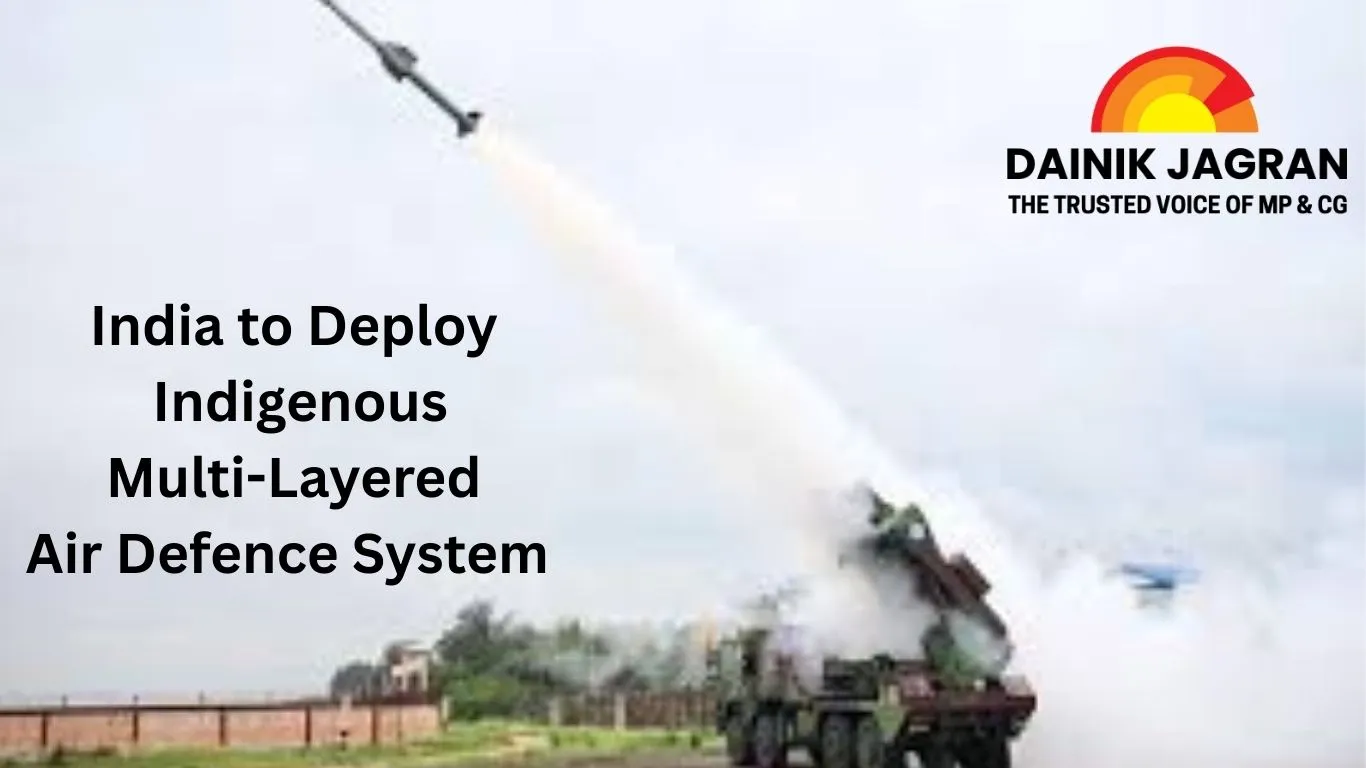
India to Deploy Indigenous Multi-Layered Air Defence System for Delhi-NCR
Digital Desk
Senior defence officials confirmed that IADWS will rely on DRDO-developed Quick Reaction Surface-to-Air Missiles (QRSAM) and Very Short-Range Air Defence System (VSHORADS) missiles, supported by a network of radars, sensors and an advanced command-and-control architecture. The Indian Air Force will operate the entire system.
The capability was validated on 23 August during tests off the Odisha coast, where IADWS successfully intercepted three different targets two high-speed fixed-wing drones and a multi-copter positioned at varying altitudes and distances. All were neutralised simultaneously.
The system forms a key element of the Sudarshan Chakra Mission, announced by Prime Minister Narendra Modi on Independence Day, aimed at countering swarm drone attacks and strengthening national air defence preparedness. Defence Minister Rajnath Singh had described the August trials as a “major boost” to India’s layered air defence capabilities.
The decision to proceed with an indigenously built shield marks a departure from earlier plans to procure the US-made NASAMS-II system, which protects Washington DC. Officials said the high acquisition cost and India’s growing domestic capability prompted the shift to a home-grown alternative.
DRDO is overseeing the integration of missiles, data links and surveillance systems to ensure coordinated response across multiple threat levels. The system’s architecture assigns QRSAM batteries to engage fast, long-range targets, while VSHORADS and laser-based Directed Energy Weapons handle low-altitude drones and saturation attacks.
The move comes amid heightened focus on national air security following Pakistan’s attempted strikes during Operation Sindoor, where India’s Akashteer command-and-control system shot down hundreds of drones and rockets. The success of Akashteer often compared to Israel’s Iron Dome has reinforced confidence in India’s indigenous defence ecosystem.
With IADWS now headed for deployment, officials say Delhi-NCR will soon be protected by a fully indigenous air defence shield capable of responding instantly to multi-directional aerial threats.




.jpg)