

Army sources said the 2026 roadmap is part of a three-tiered approach, with short-term, medium-term, and long-term strategies. The immediate focus will be on rapid battlefield situational awareness, enhanced networking, and accelerated decision-making. “2026 will be the year of Networking and Data Centricity, while 2027 will focus on the full integration of operations with artificial intelligence,” a senior official involved in the process said.

Under the broader “Decade of Transformation,” the Army has already implemented organizational reforms in 2023, focused on technology assimilation in 2024, and laid the groundwork for structural changes in 2025. These efforts are complemented by a strategic communication overhaul, creating separate channels for domestic, international, and adversary audiences. Accurate and timely information dissemination was highlighted as critical during Operation Sindoor, officials said.
Artificial intelligence and automation will play a central role in enabling faster operational decisions. The framework will rely on three pillars—data, networks, and military intelligence—supported by a secure cyber architecture. A unified digital platform is being established to integrate networks, data centres, and software hubs across the country, ensuring real-time information is available from frontline troops to senior commanders.
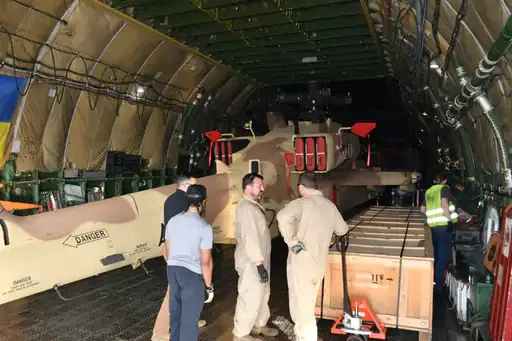
The Army has also strengthened its operational capabilities. In December 2025, India successfully conducted the first flight test of the Pinaka Long Range Guided Rocket (LRGR-120) from Chandipur, Odisha, demonstrating precision targeting over 120 kilometres. The final three Apache AH-64E attack helicopters from the United States were also delivered, completing the six-aircraft fleet for deployment with the 451 Army Aviation Squadron in Jodhpur.
In addition, Lieutenant General Ajay Kumar, Director General of the Infantry Wing, confirmed that 20 battalions of Bhairav Light Commandos are being inducted over six months, with four already operational. These initiatives underline the Army’s drive to modernize its forces and prepare for future warfare characterized by data dominance, AI integration, and networked operations.

Indian Army Unveils 2026 Roadmap Focused on AI, Data, and Network-Centric Warfare
Digital Desk
Army sources said the 2026 roadmap is part of a three-tiered approach, with short-term, medium-term, and long-term strategies. The immediate focus will be on rapid battlefield situational awareness, enhanced networking, and accelerated decision-making. “2026 will be the year of Networking and Data Centricity, while 2027 will focus on the full integration of operations with artificial intelligence,” a senior official involved in the process said.
Under the broader “Decade of Transformation,” the Army has already implemented organizational reforms in 2023, focused on technology assimilation in 2024, and laid the groundwork for structural changes in 2025. These efforts are complemented by a strategic communication overhaul, creating separate channels for domestic, international, and adversary audiences. Accurate and timely information dissemination was highlighted as critical during Operation Sindoor, officials said.
Artificial intelligence and automation will play a central role in enabling faster operational decisions. The framework will rely on three pillars—data, networks, and military intelligence—supported by a secure cyber architecture. A unified digital platform is being established to integrate networks, data centres, and software hubs across the country, ensuring real-time information is available from frontline troops to senior commanders.
The Army has also strengthened its operational capabilities. In December 2025, India successfully conducted the first flight test of the Pinaka Long Range Guided Rocket (LRGR-120) from Chandipur, Odisha, demonstrating precision targeting over 120 kilometres. The final three Apache AH-64E attack helicopters from the United States were also delivered, completing the six-aircraft fleet for deployment with the 451 Army Aviation Squadron in Jodhpur.
In addition, Lieutenant General Ajay Kumar, Director General of the Infantry Wing, confirmed that 20 battalions of Bhairav Light Commandos are being inducted over six months, with four already operational. These initiatives underline the Army’s drive to modernize its forces and prepare for future warfare characterized by data dominance, AI integration, and networked operations.
.jpg)




