Cybercrime is generally defined as “Any unlawful act where a computer or communication device or computer network is used to commit or facilitate the commission of crime”. Common forms of cybercrime include phishing, smishing, hacking, information or identity theft, data breaches, etc.
Unlike traditional crimes, cybercrimes can be committed across jurisdictions within seconds and often leave its victims financially and emotionally devastated. As information becomes more accessible, it has become more vulnerable as well to be misused. India is on the radar of cyber criminals everywhere with the growing cyber-attacks.
Advocate Anik M Iktear Uddin, partner of Prime legal (www.primelegal.in) who has 17 years of experience in the field of law, states that “India has ranked tenth overall on rate of cybercrimes that take place, third as a source of malicious activity on the internet after US and China, second as source of malicious code and fourth and eight as source or origin for web attacks and network attacks”.
The Information Technology Act, 2000 is the first cyberlawto be enacted in India.The act addresses various cybercrimes and provides guidelines for the protection of individuals online. Although cyber offences have not been explicitly defined, they have been categorised. Cyber Offences are usually generalised into the three categories that are the ones committed against person, property, and the government. It is important to note that the IT Act’s scope has now been broadened to include all the latest communications devices. Other legal frameworks include the Bharatiya Nyaya Sanhita, 2023, Protection of Children from Sexual Offences Act, 2012, etc.
So many people are using social networking websites and feel happy to share about themselves by uploading new videos, photos, comments, etc but are unaware about the drawbacks of using such sites and having access. These drawbacks include cyber bullying, vacation robberies, fake profiles, image and video morphing, Deep Fake, etc. Unlike the manner in which traditional crimes are committed, in cybercrime cases, the offended is not actually present at the location of the commission of offence, hence reducing the change of actually getting caught. Section 1(5) of the BNS, 2023 and Section 75 of the IT Act, 2000 have an important bearing to understand the procedure for registration of FIR as well as inquiry and trial into such offences.
Cybercrime patterns vary across different Indian states. According to NCRB data, cybercrime has emerged as one of the fastest growing categories of crime, with fraud accounting for the majority of reported cases. Metropolitan cities including Bengaluru, Hyderabad, Mumbai, and Delhi have become major targets for cybercriminal networks because of their large digital user base and concentration of financial activities. One of the major cybercrime incidents in India was the Cosmos Bank cyberattack in 2018. Hackers had infiltrated the bank’s systems using malware and compromised payment infrastructure by draining Rs. 94 Crore through coordinated withdrawals across multiple countries. This attack exposed vulnerabilities in banking cybersecurity and demonstrated the global reach of modern cybercriminals. Several accused were convicted in 2023 for their involvement in “India’s largest cyber bank heist”.
Given the increasing number of cybercrime case in India, it is crucial to protect victims. Victims can report incidents through the National Cyber Crime Reporting Portal or by calling the Cyber Helpline at 1930. Law enforcement agencies are continuously collaborating with banks, digital platforms, etc to freeze all suspicious activities and help recover any stolen funds. There have also been initiations of public awareness campaigns and cybersecurity education to spread digital literacy and prevent repeat victimisation.On the other hand, it is also important to value fundamental rights even while fighting cybercrime. Individuals accused of cyber offences have the right to the same constitutional protections as any other accused or individual. They are to be presumed innocent until proven guilty and entitled to fair investigation, legal representation, and due process. Shared devicesand spoofed identities can sometimes result in even innocent individuals becoming suspects. Hence, it is imperative that courts insist on proper forensic investigation and examination before imposing any criminal liability.
A cybercrime lawyer is a professional that has been trained to solve conflicts related to cybercrime. An expert in this field should be able to provide solutions to all scams, attacks, and theft of information that occur on digital platforms. A cybercrime advocate has 4 main areas of responsibility. Firstly, to ensure evidence preservation as digital evidence is volatile and easily altered. The advocates are to work alongside digital forensics experts to ensure that it is collected and safely secured, to trace its origins, and ensure the proper chain of custody. Secondly, representing the victim and ensuring recovery i.e. to draft and file formal complaints to police, to assist in freezing accounts and trace the stolen assets while also managing public relations and ensuring privacy and confidentiality. Thirdly, an advocate is expected to protect the defendants rights during interrogations and trials as well as challenge the validity of the prosecution’s digital evidence. Finally, the advocate is to offer proactive guidance to prevent any future legal issues and provide advisory services.
The main challenge for India remains to be balancing victim- centric justice and the rights of an accused. It is vital to avoid arbitrary arrests and ensure that technological evidence meets the standards of reliability and admissibility required by law. Cybercrime is no longer a niche technological issue but a social, economic, and legal challenge affecting millions of Indians. With the evolving times where fraudsters are becoming more sophisticated, India must come up with a stronger legal framework and educate the citizens to form a foundation for a just and secure digital society.
Advocate A. M. Iktear Uddin (Anik) is a well-known criminal lawyer in Bangalore with an established track record of handling complex criminal and cybercrime matters. He has received numerous awards and recognitions for his contributions to the legal profession and is widely regarded for his expertise in cybercrime litigation, investigation support, and legal defense strategies.

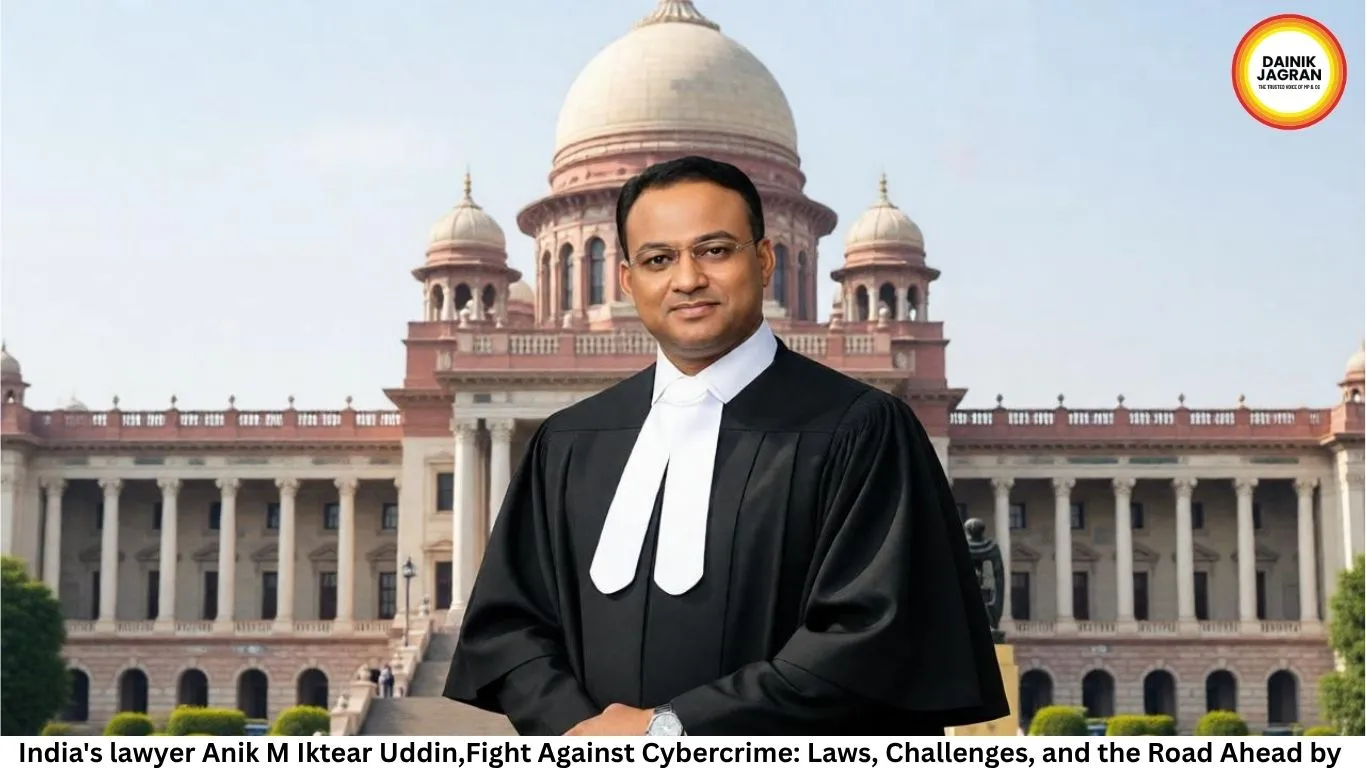
India's lawyer Anik M Iktear Uddin,Fight Against Cybercrime: Laws, Challenges, and the Road Ahead by
Rishita Sharma
Cybercrime is generally defined as “Any unlawful act where a computer or communication device or computer network is used to commit or facilitate the commission of crime”. Common forms of cybercrime include phishing, smishing, hacking, information or identity theft, data breaches, etc.
Unlike traditional crimes, cybercrimes can be committed across jurisdictions within seconds and often leave its victims financially and emotionally devastated. As information becomes more accessible, it has become more vulnerable as well to be misused. India is on the radar of cyber criminals everywhere with the growing cyber-attacks.
Advocate Anik M Iktear Uddin, partner of Prime legal (www.primelegal.in) who has 17 years of experience in the field of law, states that “India has ranked tenth overall on rate of cybercrimes that take place, third as a source of malicious activity on the internet after US and China, second as source of malicious code and fourth and eight as source or origin for web attacks and network attacks”.
The Information Technology Act, 2000 is the first cyberlawto be enacted in India.The act addresses various cybercrimes and provides guidelines for the protection of individuals online. Although cyber offences have not been explicitly defined, they have been categorised. Cyber Offences are usually generalised into the three categories that are the ones committed against person, property, and the government. It is important to note that the IT Act’s scope has now been broadened to include all the latest communications devices. Other legal frameworks include the Bharatiya Nyaya Sanhita, 2023, Protection of Children from Sexual Offences Act, 2012, etc.
So many people are using social networking websites and feel happy to share about themselves by uploading new videos, photos, comments, etc but are unaware about the drawbacks of using such sites and having access. These drawbacks include cyber bullying, vacation robberies, fake profiles, image and video morphing, Deep Fake, etc. Unlike the manner in which traditional crimes are committed, in cybercrime cases, the offended is not actually present at the location of the commission of offence, hence reducing the change of actually getting caught. Section 1(5) of the BNS, 2023 and Section 75 of the IT Act, 2000 have an important bearing to understand the procedure for registration of FIR as well as inquiry and trial into such offences.
Cybercrime patterns vary across different Indian states. According to NCRB data, cybercrime has emerged as one of the fastest growing categories of crime, with fraud accounting for the majority of reported cases. Metropolitan cities including Bengaluru, Hyderabad, Mumbai, and Delhi have become major targets for cybercriminal networks because of their large digital user base and concentration of financial activities. One of the major cybercrime incidents in India was the Cosmos Bank cyberattack in 2018. Hackers had infiltrated the bank’s systems using malware and compromised payment infrastructure by draining Rs. 94 Crore through coordinated withdrawals across multiple countries. This attack exposed vulnerabilities in banking cybersecurity and demonstrated the global reach of modern cybercriminals. Several accused were convicted in 2023 for their involvement in “India’s largest cyber bank heist”.
Given the increasing number of cybercrime case in India, it is crucial to protect victims. Victims can report incidents through the National Cyber Crime Reporting Portal or by calling the Cyber Helpline at 1930. Law enforcement agencies are continuously collaborating with banks, digital platforms, etc to freeze all suspicious activities and help recover any stolen funds. There have also been initiations of public awareness campaigns and cybersecurity education to spread digital literacy and prevent repeat victimisation.On the other hand, it is also important to value fundamental rights even while fighting cybercrime. Individuals accused of cyber offences have the right to the same constitutional protections as any other accused or individual. They are to be presumed innocent until proven guilty and entitled to fair investigation, legal representation, and due process. Shared devicesand spoofed identities can sometimes result in even innocent individuals becoming suspects. Hence, it is imperative that courts insist on proper forensic investigation and examination before imposing any criminal liability.
A cybercrime lawyer is a professional that has been trained to solve conflicts related to cybercrime. An expert in this field should be able to provide solutions to all scams, attacks, and theft of information that occur on digital platforms. A cybercrime advocate has 4 main areas of responsibility. Firstly, to ensure evidence preservation as digital evidence is volatile and easily altered. The advocates are to work alongside digital forensics experts to ensure that it is collected and safely secured, to trace its origins, and ensure the proper chain of custody. Secondly, representing the victim and ensuring recovery i.e. to draft and file formal complaints to police, to assist in freezing accounts and trace the stolen assets while also managing public relations and ensuring privacy and confidentiality. Thirdly, an advocate is expected to protect the defendants rights during interrogations and trials as well as challenge the validity of the prosecution’s digital evidence. Finally, the advocate is to offer proactive guidance to prevent any future legal issues and provide advisory services.
The main challenge for India remains to be balancing victim- centric justice and the rights of an accused. It is vital to avoid arbitrary arrests and ensure that technological evidence meets the standards of reliability and admissibility required by law. Cybercrime is no longer a niche technological issue but a social, economic, and legal challenge affecting millions of Indians. With the evolving times where fraudsters are becoming more sophisticated, India must come up with a stronger legal framework and educate the citizens to form a foundation for a just and secure digital society.
Advocate A. M. Iktear Uddin (Anik) is a well-known criminal lawyer in Bangalore with an established track record of handling complex criminal and cybercrime matters. He has received numerous awards and recognitions for his contributions to the legal profession and is widely regarded for his expertise in cybercrime litigation, investigation support, and legal defense strategies.

.jpg)