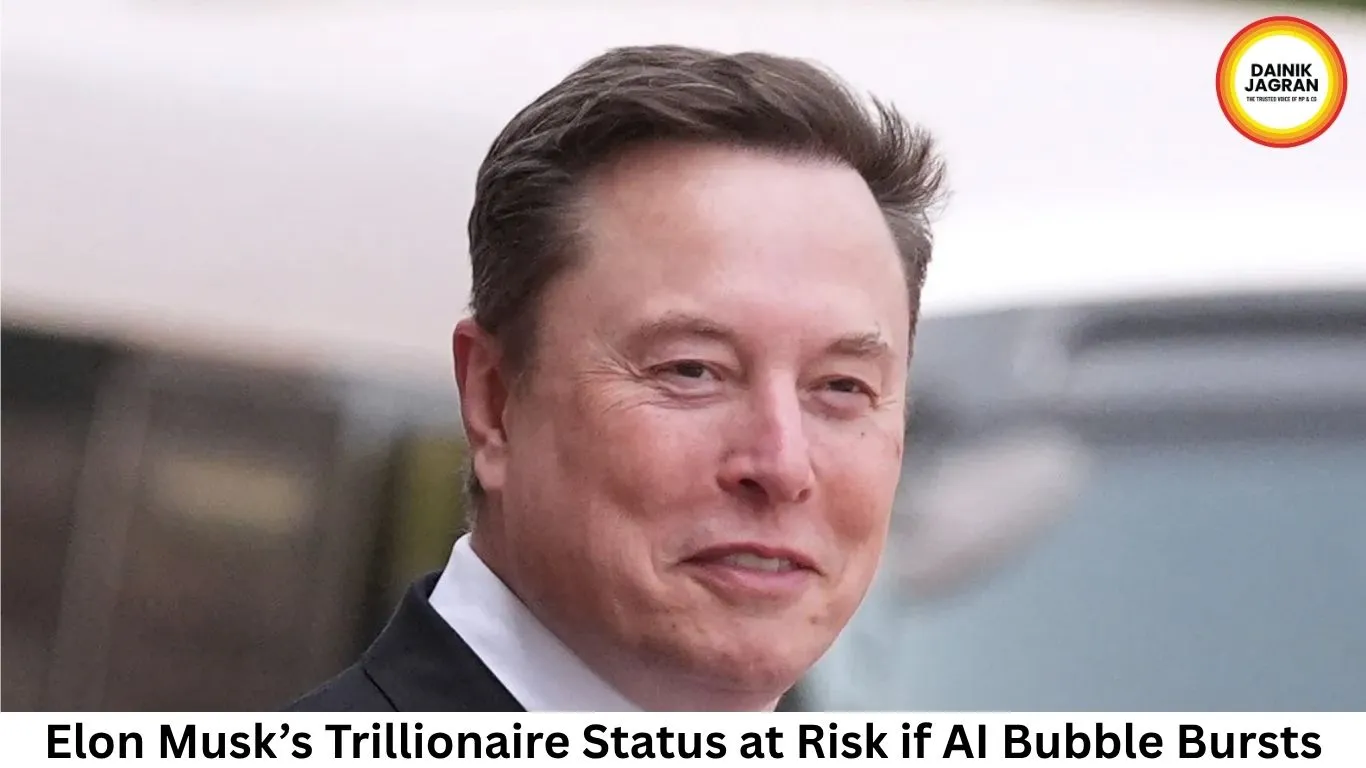
Elon Musk’s Trillionaire Status at Risk if AI Bubble Bursts
Digital Desk
SpaceX IPO pushes Elon Musk past $1 trillion net worth, but wealth remains heavily tied to Tesla and SpaceX valuations
Elon Musk has entered the history books as the world's first trillionaire following the blockbuster stock market debut of SpaceX. The successful public listing significantly boosted the valuation of the aerospace company, pushing Musk’s estimated net worth beyond $1.1 trillion. However, financial experts caution that the milestone may not be permanent. Because the vast majority of Musk’s wealth is linked to the market value of Tesla and SpaceX, any sharp correction in technology or artificial intelligence-related stocks could quickly reduce his fortune below the trillion-dollar mark. The development has renewed debate over how much of the wealth created in modern financial markets is tied to investor sentiment rather than liquid assets. As enthusiasm surrounding artificial intelligence continues to drive valuations higher, analysts warn that a potential market correction could have a significant impact on some of the world's richest individuals, including Musk.
According to market estimates, Musk's fortune surged after SpaceX completed a historic IPO that valued the company at approximately $1.77 trillion. With Musk reportedly holding nearly half of the company's shares, the listing added hundreds of billions of dollars to his net worth within a short period.
Before the SpaceX debut, major wealth trackers estimated Musk's wealth at around $780 billion. The latest valuation has now elevated him into an entirely new financial category.
From PayPal Millions to Trillion-Dollar Wealth
Musk's journey began with the sale of PayPal to eBay in 2002, a transaction that earned him roughly $175.8 million. Rather than securing his fortune, he invested most of the proceeds into ambitious ventures that many investors considered highly risky at the time.
In 2002, Musk invested approximately $100 million to establish SpaceX. Two years later, he invested around $6.35 million in Tesla, then a relatively unknown electric vehicle startup.
Both companies faced severe financial challenges in 2008, with SpaceX enduring multiple rocket failures while Tesla struggled with production and funding issues. Despite these setbacks, the businesses eventually evolved into some of the most valuable technology enterprises in the world.
Massive Returns on Early Investments
Financial analysts estimate that Musk transformed an initial investment of roughly $106 million into ownership stakes worth more than $1.1 trillion. The appreciation represents one of the most extraordinary wealth-creation stories in modern business history.
Tesla remains one of the world's leading electric vehicle manufacturers, while SpaceX dominates commercial space launches and satellite-based internet services through its Starlink network.
Why Musk Could Lose Trillionaire Status
Despite the headline figure, Musk's wealth is largely paper wealth rather than cash holdings. His net worth fluctuates daily based on stock prices and company valuations.
Analysts note that the current valuations of Tesla, SpaceX, and several artificial intelligence-focused companies have benefited from strong investor enthusiasm surrounding AI-driven growth. If that enthusiasm weakens or a broader market correction occurs, share prices could decline rapidly.
A significant fall in Tesla or SpaceX valuations would immediately reduce Musk's estimated net worth. As a result, the world's first trillionaire could lose that status just as quickly as he attained it.
Beyond Tesla and SpaceX
Apart from his two flagship companies, Musk also owns substantial stakes in several other ventures. These include X, the social media platform formerly known as Twitter, artificial intelligence startup xAI, brain-chip developer Neuralink, and infrastructure company The Boring Company.
While these businesses contribute billions of dollars to Musk's portfolio, their combined value remains significantly smaller than his holdings in Tesla and SpaceX.
SpaceX's Growing Strategic Influence
SpaceX has evolved far beyond a commercial rocket company. Through Starlink, it provides satellite internet services across remote regions and conflict zones worldwide.
The company also plays a crucial role in launching satellites, astronauts, and national security payloads for the United States government. This strategic importance has increased SpaceX's influence in both economic and geopolitical affairs.
Musk has repeatedly stated that the long-term objective behind SpaceX is to fund the development of Starship, a fully reusable spacecraft designed to support future human settlements on Mars.

--------
🚨 Beat the News Rush – Join Now!
Get breaking alerts, hot exclusives, and game-changing stories instantly on your phone. No delays, no fluff – just the edge you need. ⚡
Tap to join:
🟢 WhatsApp Channel: Dainik Jagran MP CG
Crave more?
🅕 Facebook: Dainik Jagran MP CG English
🅧 Twitter (X): Dainik Jagran MP CG
🅘 Instagram: Dainik Jagran MP CG
Share the fire – keep your crew ahead! 🗞️🔥
Elon Musk’s Trillionaire Status at Risk if AI Bubble Bursts
Digital Desk
Elon Musk has entered the history books as the world's first trillionaire following the blockbuster stock market debut of SpaceX. The successful public listing significantly boosted the valuation of the aerospace company, pushing Musk’s estimated net worth beyond $1.1 trillion. However, financial experts caution that the milestone may not be permanent. Because the vast majority of Musk’s wealth is linked to the market value of Tesla and SpaceX, any sharp correction in technology or artificial intelligence-related stocks could quickly reduce his fortune below the trillion-dollar mark. The development has renewed debate over how much of the wealth created in modern financial markets is tied to investor sentiment rather than liquid assets. As enthusiasm surrounding artificial intelligence continues to drive valuations higher, analysts warn that a potential market correction could have a significant impact on some of the world's richest individuals, including Musk.
According to market estimates, Musk's fortune surged after SpaceX completed a historic IPO that valued the company at approximately $1.77 trillion. With Musk reportedly holding nearly half of the company's shares, the listing added hundreds of billions of dollars to his net worth within a short period.
Before the SpaceX debut, major wealth trackers estimated Musk's wealth at around $780 billion. The latest valuation has now elevated him into an entirely new financial category.
From PayPal Millions to Trillion-Dollar Wealth
Musk's journey began with the sale of PayPal to eBay in 2002, a transaction that earned him roughly $175.8 million. Rather than securing his fortune, he invested most of the proceeds into ambitious ventures that many investors considered highly risky at the time.
In 2002, Musk invested approximately $100 million to establish SpaceX. Two years later, he invested around $6.35 million in Tesla, then a relatively unknown electric vehicle startup.
Both companies faced severe financial challenges in 2008, with SpaceX enduring multiple rocket failures while Tesla struggled with production and funding issues. Despite these setbacks, the businesses eventually evolved into some of the most valuable technology enterprises in the world.
Massive Returns on Early Investments
Financial analysts estimate that Musk transformed an initial investment of roughly $106 million into ownership stakes worth more than $1.1 trillion. The appreciation represents one of the most extraordinary wealth-creation stories in modern business history.
Tesla remains one of the world's leading electric vehicle manufacturers, while SpaceX dominates commercial space launches and satellite-based internet services through its Starlink network.
Why Musk Could Lose Trillionaire Status
Despite the headline figure, Musk's wealth is largely paper wealth rather than cash holdings. His net worth fluctuates daily based on stock prices and company valuations.
Analysts note that the current valuations of Tesla, SpaceX, and several artificial intelligence-focused companies have benefited from strong investor enthusiasm surrounding AI-driven growth. If that enthusiasm weakens or a broader market correction occurs, share prices could decline rapidly.
A significant fall in Tesla or SpaceX valuations would immediately reduce Musk's estimated net worth. As a result, the world's first trillionaire could lose that status just as quickly as he attained it.
Beyond Tesla and SpaceX
Apart from his two flagship companies, Musk also owns substantial stakes in several other ventures. These include X, the social media platform formerly known as Twitter, artificial intelligence startup xAI, brain-chip developer Neuralink, and infrastructure company The Boring Company.
While these businesses contribute billions of dollars to Musk's portfolio, their combined value remains significantly smaller than his holdings in Tesla and SpaceX.
SpaceX's Growing Strategic Influence
SpaceX has evolved far beyond a commercial rocket company. Through Starlink, it provides satellite internet services across remote regions and conflict zones worldwide.
The company also plays a crucial role in launching satellites, astronauts, and national security payloads for the United States government. This strategic importance has increased SpaceX's influence in both economic and geopolitical affairs.
Musk has repeatedly stated that the long-term objective behind SpaceX is to fund the development of Starship, a fully reusable spacecraft designed to support future human settlements on Mars.