

J&K Drug Crisis: 13% Population Affected in Addiction Surge
Digital Desk
Jammu & Kashmir battles narcotics crisis with 13.5 lakh addicted. 100-day campaign launched. Cross-border networks identified. 704 NDPS FIRs registered.
J&K Drug Crisis Deepens: 13% of Population Affected as Cross-Border Networks Flourish
State launches 100-day anti-narcotics campaign; 165 trafficking hotspots identified
Jammu and Kashmir is grappling with a narcotics crisis of alarming proportions. Official estimates reveal that more than 13.5 lakh people — roughly 13% of the state's 1.3 crore population — are now battling drug addiction, a figure that has more than doubled since 2022 when the count stood at around 6 lakh.
The rapid spike has forced the administration to confront what officials describe as an existential challenge rivaling terrorism itself. Police officials have attributed the surge to organized trafficking networks operating across the Punjab-J&K border and infiltration routes from Pakistan, where drug cartels have established supply chains feeding the valley's burgeoning demand.
"We are facing a two-pronged crisis," said DGP Nalin Prabhat during a recent briefing, bracketing Pakistan-sponsored terrorism and narcotics networks as twin threats to the region's stability.
Supply Lines from Across Borders
The pathways are now well-established. Narcotics flow through border areas from Punjab, with organized gangs managing the distribution at ground level. Recovery stories and community accounts paint a picture of systematic recruitment, where dealers exploit economic vulnerability and social disconnection to expand their networks.
Mohammad Amin, a resident of South Kashmir, recounts how his son's descent began innocuously — with cigarettes during school years. What seemed like adolescent experimentation spiraled into hashish use, then heroin dependency. Desperation eventually drove the young man to sell household possessions to fund his habit, a trajectory now playing out across hundreds of families in the state.
Adil Bhat, who has recovered from addiction, points to the organizational structure behind the crisis. "These aren't random dealers," he explained. "There are organized gangs with direct links to Punjab-based suppliers. The supply chain is sophisticated."
165 Hotspots Under Surveillance
Law enforcement has responded with intensity. The administration has registered 704 FIRs under the Narcotic Drugs and Psychotropic Substances (NDPS) Act, while identifying 165 high-risk areas where trafficking activity is concentrated. These zones now face enhanced surveillance and targeted enforcement operations.
The crackdown has yielded arrests — over 830 drug peddlers and addicts have been detained under the ongoing campaign. But officials acknowledge this reflects only surface-level disruption of networks that operate with considerable sophistication.
Unprecedented Administrative Action
The government has introduced a punitive measure with no precedent in the state. Individuals convicted or engaged in drug trafficking face systematic cancellation of all identity documents — Aadhaar cards, passports, arms licenses, commercial permits, and driving licenses. The intent is twofold: to disrupt trafficking logistics and impose lasting social consequences on those involved in the trade.
Early implementation figures suggest the policy has teeth. Authorities have cancelled 300 driving licenses and de-registered 130 vehicles involved in drug movement. Meanwhile, 110 pharmaceutical licenses have been suspended, with two permanently revoked.
Transport operators and retail channels linked to trafficking networks have also faced heightened scrutiny and action.
Campaign Mobilization
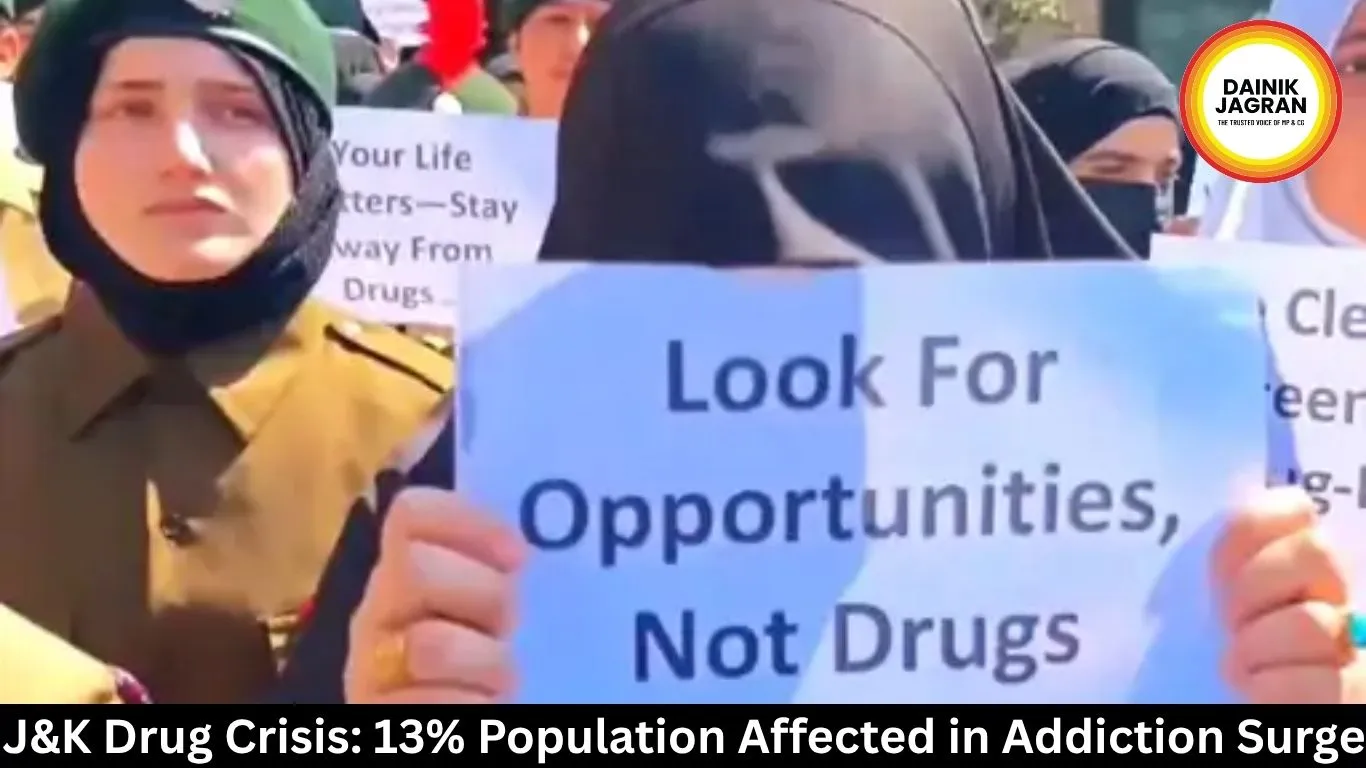
To counter the crisis at the grassroots level, the state launched a 100-day anti-narcotics campaign in recent weeks. The response has been substantial — over 1 crore people have joined the initiative, participating in awareness rallies, seminars, and foot marches across districts.
Female students have emerged as active participants, amplifying messaging in schools and communities. Sports events and targeted seminars continue to reach vulnerable populations, particularly youth in areas where drug prevalence is highest.
The Broader Challenge
What began as a containable issue has transformed into a public health and social order challenge of the first magnitude. The doubling of addiction figures in just two years signals that awareness campaigns and enforcement alone may prove insufficient without addressing underlying vulnerabilities — economic distress, educational gaps, and social alienation — that make recruitment into addiction and trafficking networks easier.
Officials remain committed to the 100-day push, viewing it as a critical window to disrupt networks and shift community perception. Whether the campaign's momentum translates into sustained reduction in addiction rates remains an open question.
For families like Mohammad Amin's, the outcome will determine whether the next generation escapes the pattern that has already claimed so many.
--------
๐จ Beat the News Rush โ Join Now!
Get breaking alerts, hot exclusives, and game-changing stories instantly on your phone. No delays, no fluff โ just the edge you need. โก
Tap to join:ย
๐ข WhatsApp Channel: Dainik Jagran MP CG
Crave more?
๐ Facebook: Dainik Jagran MP CG English
๐ ง Twitter (X): Dainik Jagran MP CG
๐ Instagram: Dainik Jagran MP CG
Share the fire โ keep your crew ahead! ๐๏ธ๐ฅ
J&K Drug Crisis: 13% Population Affected in Addiction Surge
Digital Desk
J&K Drug Crisis Deepens: 13% of Population Affected as Cross-Border Networks Flourish
State launches 100-day anti-narcotics campaign; 165 trafficking hotspots identified
Jammu and Kashmir is grappling with a narcotics crisis of alarming proportions. Official estimates reveal that more than 13.5 lakh people — roughly 13% of the state's 1.3 crore population — are now battling drug addiction, a figure that has more than doubled since 2022 when the count stood at around 6 lakh.
The rapid spike has forced the administration to confront what officials describe as an existential challenge rivaling terrorism itself. Police officials have attributed the surge to organized trafficking networks operating across the Punjab-J&K border and infiltration routes from Pakistan, where drug cartels have established supply chains feeding the valley's burgeoning demand.
"We are facing a two-pronged crisis," said DGP Nalin Prabhat during a recent briefing, bracketing Pakistan-sponsored terrorism and narcotics networks as twin threats to the region's stability.
Supply Lines from Across Borders
The pathways are now well-established. Narcotics flow through border areas from Punjab, with organized gangs managing the distribution at ground level. Recovery stories and community accounts paint a picture of systematic recruitment, where dealers exploit economic vulnerability and social disconnection to expand their networks.
Mohammad Amin, a resident of South Kashmir, recounts how his son's descent began innocuously — with cigarettes during school years. What seemed like adolescent experimentation spiraled into hashish use, then heroin dependency. Desperation eventually drove the young man to sell household possessions to fund his habit, a trajectory now playing out across hundreds of families in the state.
Adil Bhat, who has recovered from addiction, points to the organizational structure behind the crisis. "These aren't random dealers," he explained. "There are organized gangs with direct links to Punjab-based suppliers. The supply chain is sophisticated."
165 Hotspots Under Surveillance
Law enforcement has responded with intensity. The administration has registered 704 FIRs under the Narcotic Drugs and Psychotropic Substances (NDPS) Act, while identifying 165 high-risk areas where trafficking activity is concentrated. These zones now face enhanced surveillance and targeted enforcement operations.
The crackdown has yielded arrests — over 830 drug peddlers and addicts have been detained under the ongoing campaign. But officials acknowledge this reflects only surface-level disruption of networks that operate with considerable sophistication.
Unprecedented Administrative Action
The government has introduced a punitive measure with no precedent in the state. Individuals convicted or engaged in drug trafficking face systematic cancellation of all identity documents — Aadhaar cards, passports, arms licenses, commercial permits, and driving licenses. The intent is twofold: to disrupt trafficking logistics and impose lasting social consequences on those involved in the trade.
Early implementation figures suggest the policy has teeth. Authorities have cancelled 300 driving licenses and de-registered 130 vehicles involved in drug movement. Meanwhile, 110 pharmaceutical licenses have been suspended, with two permanently revoked.
Transport operators and retail channels linked to trafficking networks have also faced heightened scrutiny and action.
Campaign Mobilization
To counter the crisis at the grassroots level, the state launched a 100-day anti-narcotics campaign in recent weeks. The response has been substantial — over 1 crore people have joined the initiative, participating in awareness rallies, seminars, and foot marches across districts.
Female students have emerged as active participants, amplifying messaging in schools and communities. Sports events and targeted seminars continue to reach vulnerable populations, particularly youth in areas where drug prevalence is highest.
The Broader Challenge
What began as a containable issue has transformed into a public health and social order challenge of the first magnitude. The doubling of addiction figures in just two years signals that awareness campaigns and enforcement alone may prove insufficient without addressing underlying vulnerabilities — economic distress, educational gaps, and social alienation — that make recruitment into addiction and trafficking networks easier.
Officials remain committed to the 100-day push, viewing it as a critical window to disrupt networks and shift community perception. Whether the campaign's momentum translates into sustained reduction in addiction rates remains an open question.
For families like Mohammad Amin's, the outcome will determine whether the next generation escapes the pattern that has already claimed so many.


