


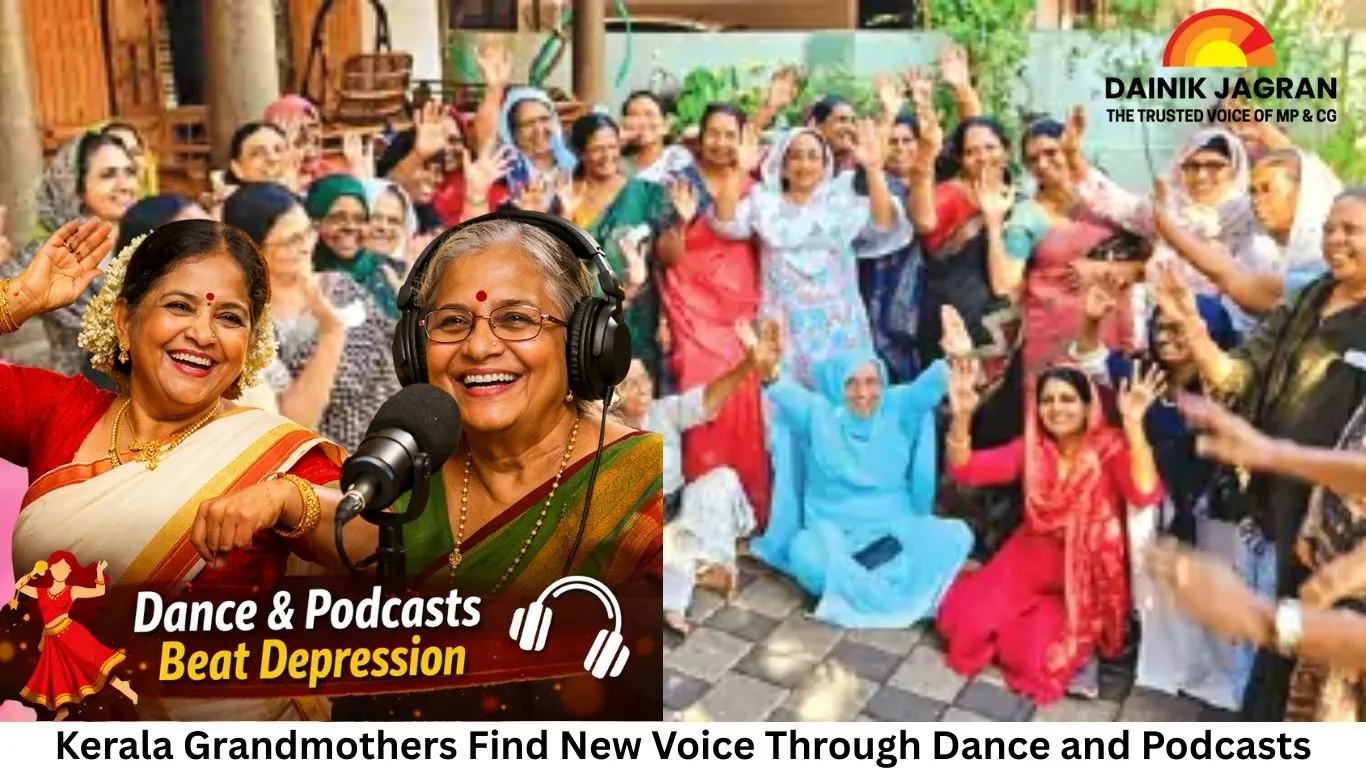
Kerala Grandmothers Find New Voice Through Dance and Podcasts, Turning Passion Into a Path Out of Depression
Digital Desk
The women, most of whom are in their late 50s and above, say engaging in the arts has helped them regain confidence and emotional balance after decades spent prioritising household responsibilities. Several members report that regular participation in group activities has reduced their dependence on medication prescribed for depression.
“We devoted our lives to family, work and caregiving. Only after retirement did we realise we had neglected ourselves,” said Annis Francis, coordinator of WSM. “This space allows women to rediscover talents they were forced to set aside.”
Through weekly meetings and collaborative projects, members encourage one another to pursue interests ranging from classical dance and singing to podcasting and creative writing. Some have begun recording podcasts that reflect on ageing, mental health and women’s autonomy, while others have performed at local cultural events—often for the first time in their lives.
One participant described the change as transformative. “Many of us were struggling silently with depression,” she said. “Supporting each other helped us regain control of our lives. Starting something new at this age makes us feel powerful—almost like superwomen.”
The initiative has also opened conversations around unpaid domestic labour and emotional burnout. Savitri, another member, said many educated women had spent years confined to domestic roles without recognition. “Inside our homes, we became unpaid workers,” she said. “Here, we sing, dance and plan our futures together.”
Mental health experts note that the experience of these women reflects a broader national trend. According to data from the Indian Council of Medical Research (ICMR), women in India are more vulnerable to depression than men, particularly after the age of 50. Studies estimate that over one-fifth of women above this age experience moderate to severe depressive symptoms, often linked to loneliness, financial dependence and loss of purpose after retirement.
By fostering peer support and creative engagement, groups like WSM are addressing these challenges outside formal clinical settings. Members say the collective has also strengthened their ability to make independent decisions and speak out against social practices that marginalise older women.
As Kerala grapples with an ageing population, the women of WSM offer a counter-narrative—one where later life is not defined by withdrawal, but by renewal, creativity and community.
.jpg)




