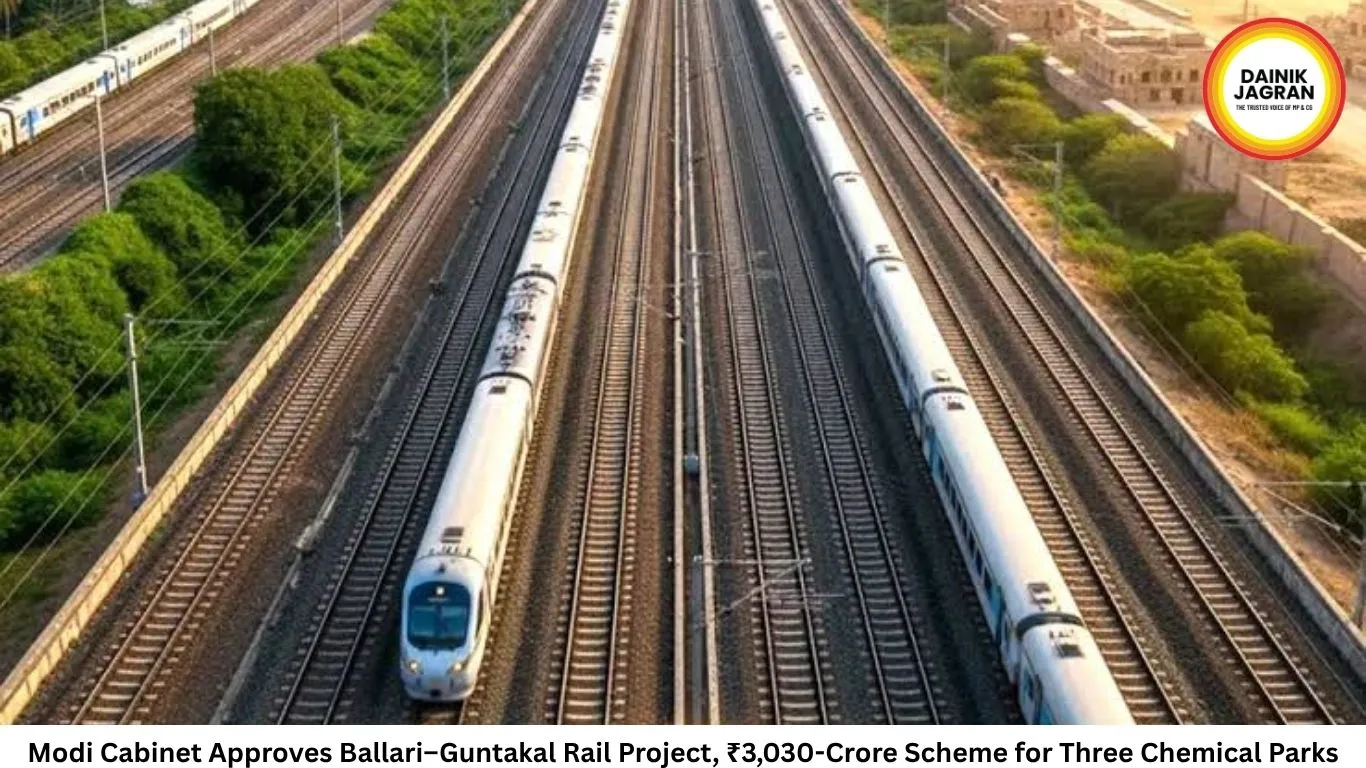
Modi Cabinet Approves Ballari–Guntakal Rail Project, ₹3,030-Crore Scheme for Three Chemical Parks

Digital Desk

Modi Cabinet Approves Ballari–Guntakal Rail Project, ₹3,030-Crore Scheme for Three Chemical Parks

The Union Cabinet, chaired by Prime Minister Narendra Modi, has approved a ₹1,264-crore railway expansion project connecting Karnataka and Andhra Pradesh and a ₹3,030-crore BHAVYA-Rasayan scheme to establish three dedicated chemical parks aimed at boosting industrial growth, connectivity, and employment.

The Union Cabinet, chaired by Prime Minister Narendra Modi, on Friday approved two major infrastructure and industrial development proposals, including the expansion of the Ballari–Guntakal railway section and a ₹3,030-crore BHAVYA-Rasayan scheme for setting up three dedicated chemical parks across the country.

Announcing the decisions after the Cabinet meeting, Union Minister Ashwini Vaishnaw said the projects are aimed at strengthening rail connectivity, improving logistics, attracting industrial investment, and generating employment as part of the government's broader Viksit Bharat vision.

Ballari–Guntakal Railway Project Gets Cabinet Nod

The Cabinet Committee on Economic Affairs approved the construction of the third and fourth railway lines on the Ballari–Guntakal section, which passes through parts of Karnataka and Andhra Pradesh.

The project has an estimated cost of ₹1,264 crore and is expected to significantly enhance rail capacity on one of the region's important freight and passenger corridors.

According to Vaishnaw, the project has been developed under the PM Gati Shakti National Master Plan, which focuses on integrated infrastructure planning, multimodal connectivity, and improving logistics efficiency across the country.

The expansion will add nearly 46 kilometres to the Indian Railways network and improve the movement of passengers, freight, and essential services.

Improved Connectivity for Three Districts

The railway project will cover three districts across Karnataka and Andhra Pradesh and is expected to improve connectivity for approximately 99 villages with a combined population of around 700,000 people.

The increased rail capacity will facilitate smoother passenger services and faster freight movement, helping industries in the region reduce transportation costs and improve supply chain efficiency.

The government also said the project would strengthen rail access to several tourist destinations, including Ballari Fort and the Shri Kumaraswamy Temple, encouraging tourism and regional economic development.

₹3,030-Crore BHAVYA-Rasayan Scheme Approved

The Cabinet also approved the BHAVYA-Rasayan (Bharat Industrial Development Scheme – Chemicals), a new initiative announced in the Union Budget for FY 2026-27.

The scheme aims to establish three dedicated chemical parks equipped with modern common infrastructure and essential utilities to promote investment in India's chemical manufacturing sector.

The total financial outlay for the scheme is ₹3,030 crore, of which ₹3,000 crore will be used for creating common infrastructure within the parks, while ₹30 crore has been allocated for administrative expenses.

The scheme will remain operational for five years, from FY 2026-27 to FY 2030-31.

Centre to Provide Up to ₹1,000 Crore Per Park

Under the scheme, the Central Government will provide financial assistance of up to ₹1,000 crore for each chemical park.

However, the grant will be conditional on the respective state government contributing at least ₹500 crore toward the project.

Vaishnaw said the initiative is expected to create world-class industrial infrastructure that will attract substantial private investment. Each chemical park has the potential to host industrial units involving investments ranging between ₹15,000 crore and ₹20,000 crore, significantly expanding India's manufacturing capabilities.

Focus on Employment and Industrial Growth

The government expects the chemical parks to generate thousands of direct and indirect jobs while strengthening India's position as a global manufacturing hub.

Modern shared infrastructure will reduce the cost of setting up industries, improve operational efficiency, and encourage both domestic and foreign investors to establish manufacturing facilities in the parks.

Officials believe the initiative will enhance India's competitiveness in the global chemicals sector while supporting the country's long-term industrial growth strategy.

Supporting the Viksit Bharat Vision

The Cabinet's decisions reflect the government's continued emphasis on infrastructure expansion and industrial development as key drivers of economic growth.

While the Ballari–Guntakal railway project is expected to improve connectivity, freight movement, and regional development, the BHAVYA-Rasayan scheme aims to accelerate industrialisation by creating modern chemical manufacturing clusters with strong infrastructure support.

Together, the two projects are expected to strengthen logistics networks, attract investment, generate employment, and contribute to India's ambition of becoming a developed economy in the coming years.

--------

🚨 Beat the News Rush – Join Now!

Get breaking alerts, hot exclusives, and game-changing stories instantly on your phone. No delays, no fluff – just the edge you need. ⚡

Tap to join: 

🟢 WhatsApp Channel: Dainik Jagran MP CG

Crave more?

🅕 Facebook: Dainik Jagran MP CG English

🅧 Twitter (X): Dainik Jagran MP CG

🅘 Instagram: Dainik Jagran MP CG

Share the fire – keep your crew ahead! 🗞️🔥

english.dainikjagranmpcg.com
24 Jul 2026 By Rishita

Modi Cabinet Approves Ballari–Guntakal Rail Project, ₹3,030-Crore Scheme for Three Chemical Parks

Digital Desk

The Union Cabinet, chaired by Prime Minister Narendra Modi, on Friday approved two major infrastructure and industrial development proposals, including the expansion of the Ballari–Guntakal railway section and a ₹3,030-crore BHAVYA-Rasayan scheme for setting up three dedicated chemical parks across the country.

Announcing the decisions after the Cabinet meeting, Union Minister Ashwini Vaishnaw said the projects are aimed at strengthening rail connectivity, improving logistics, attracting industrial investment, and generating employment as part of the government's broader Viksit Bharat vision.

Ballari–Guntakal Railway Project Gets Cabinet Nod

The Cabinet Committee on Economic Affairs approved the construction of the third and fourth railway lines on the Ballari–Guntakal section, which passes through parts of Karnataka and Andhra Pradesh.

The project has an estimated cost of ₹1,264 crore and is expected to significantly enhance rail capacity on one of the region's important freight and passenger corridors.

According to Vaishnaw, the project has been developed under the PM Gati Shakti National Master Plan, which focuses on integrated infrastructure planning, multimodal connectivity, and improving logistics efficiency across the country.

The expansion will add nearly 46 kilometres to the Indian Railways network and improve the movement of passengers, freight, and essential services.

Improved Connectivity for Three Districts

The railway project will cover three districts across Karnataka and Andhra Pradesh and is expected to improve connectivity for approximately 99 villages with a combined population of around 700,000 people.

The increased rail capacity will facilitate smoother passenger services and faster freight movement, helping industries in the region reduce transportation costs and improve supply chain efficiency.

The government also said the project would strengthen rail access to several tourist destinations, including Ballari Fort and the Shri Kumaraswamy Temple, encouraging tourism and regional economic development.

₹3,030-Crore BHAVYA-Rasayan Scheme Approved

The Cabinet also approved the BHAVYA-Rasayan (Bharat Industrial Development Scheme – Chemicals), a new initiative announced in the Union Budget for FY 2026-27.

The scheme aims to establish three dedicated chemical parks equipped with modern common infrastructure and essential utilities to promote investment in India's chemical manufacturing sector.

The total financial outlay for the scheme is ₹3,030 crore, of which ₹3,000 crore will be used for creating common infrastructure within the parks, while ₹30 crore has been allocated for administrative expenses.

The scheme will remain operational for five years, from FY 2026-27 to FY 2030-31.

Centre to Provide Up to ₹1,000 Crore Per Park

Under the scheme, the Central Government will provide financial assistance of up to ₹1,000 crore for each chemical park.

However, the grant will be conditional on the respective state government contributing at least ₹500 crore toward the project.

Vaishnaw said the initiative is expected to create world-class industrial infrastructure that will attract substantial private investment. Each chemical park has the potential to host industrial units involving investments ranging between ₹15,000 crore and ₹20,000 crore, significantly expanding India's manufacturing capabilities.

Focus on Employment and Industrial Growth

The government expects the chemical parks to generate thousands of direct and indirect jobs while strengthening India's position as a global manufacturing hub.

Modern shared infrastructure will reduce the cost of setting up industries, improve operational efficiency, and encourage both domestic and foreign investors to establish manufacturing facilities in the parks.

Officials believe the initiative will enhance India's competitiveness in the global chemicals sector while supporting the country's long-term industrial growth strategy.

Supporting the Viksit Bharat Vision

The Cabinet's decisions reflect the government's continued emphasis on infrastructure expansion and industrial development as key drivers of economic growth.

While the Ballari–Guntakal railway project is expected to improve connectivity, freight movement, and regional development, the BHAVYA-Rasayan scheme aims to accelerate industrialisation by creating modern chemical manufacturing clusters with strong infrastructure support.

Together, the two projects are expected to strengthen logistics networks, attract investment, generate employment, and contribute to India's ambition of becoming a developed economy in the coming years.

https://english.dainikjagranmpcg.com/national/modi-cabinet-approves-ballari%E2%80%93guntakal-rail-project-%E2%82%B93030-crore-scheme-for-three/article-23443

Trending News