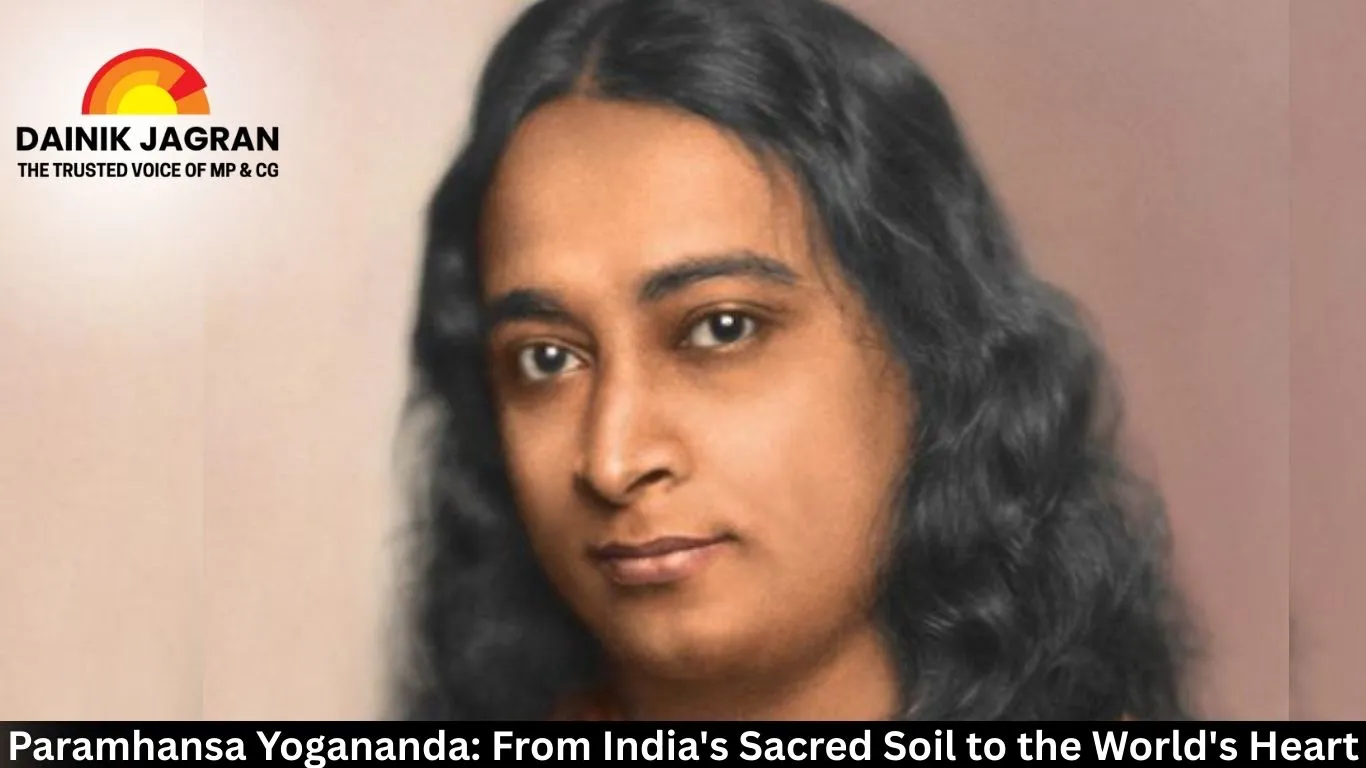
Paramhansa Yogananda: From India's Sacred Soil to the World's Heart
CA (Dr.) Alok Misra
This article is offered in reverence to Paramhansa Yogananda (1893–1952), the revered author of Autobiography of a Yogi and one of India’s greatest spiritual messengers to the modern world. 5th January marks his 133rd birth anniversary, a fitting occasion to remember a life guided by faith, discipline, and complete trust in God.
Born on 5th January 1893 in Gorakhpur, Uttar Pradesh, as Mukunda Lal Ghosh, Yogananda showed deep devotion to the Divine Mother from early childhood. Saints, sacred places, and prayer drew him naturally, and even as a boy he sensed that his life carried a higher purpose, though its full meaning would unfold only through years of seeking and inner discipline.
That purpose was revealed shortly after his birth. When Mukunda was still an infant, his mother carried him to Banaras to meet her revered guru, Lahiri Mahasaya. Blessing the child, Lahiri Mahasaya assured her that her son would grow to become a yogi and would guide many souls toward God. This sacred blessing quietly marked the beginning of a life destined for spiritual service.
This destiny unfolded through India’s ancient guru–shishya tradition, linking Yogananda to the sacred lineage of Mahavatar Babaji, Lahiri Mahasaya, and his own guru, Sri Yukteshwar. His first meeting with Sri Yukteshwar in Varanasi proved life-changing. Amid the noise of the city, he felt an instant inner recognition. Without many words, disciple and guru understood that their paths were now joined.
Life under Sri Yukteshwar was not one of comfort, but of transformation. The guru’s love expressed itself through strict guidance, simplicity, and constant self-examination. Comfort was never the aim; freedom was. Yogananda later reflected that a true guru removes weakness not by indulgence, but by awakening inner strength. Even moments of deep spiritual joy were balanced with humble duties, teaching that God-realization must rest on humility, service, and responsibility.
Though firmly rooted in India’s spiritual soil, Yogananda was chosen for a wider mission. Before leaving for the West, he experienced deep uncertainty. The thought of leaving his motherland for a world so different troubled him greatly. In prayer and meditation, he sought only God’s guidance. At this moment of surrender, Mahavatar Babaji appeared and assured him that God would be with him and protect him. Strengthened by this divine assurance, Yogananda accepted the call to serve humanity beyond India’s borders.
In 1920, at the age of twenty-seven, he traveled to the United States to speak at the International Congress of Religious Liberals in Boston. Even during the sea voyage, his faith was tested. When unexpectedly invited to address fellow passengers, he felt momentarily unprepared. Turning inward in silent prayer, words flowed effortlessly. Later, he admitted that he could not recall what he had spoken—it was as though the Divine had spoken through him.
America presented many challenges, yet seekers soon gathered around him—men and women who had achieved material success but felt an inner emptiness. Yogananda understood that the soul’s longing is universal. Through simple language and personal example, he introduced yoga and meditation not as rituals, but as practical paths to inner peace and self-realization.
Even before going abroad, Yogananda had laid the foundation of his spiritual mission by establishing the Yogoda Satsanga Society of India in 1917. When his work began to attract growing interest in the West, he gave it a lasting institutional form by founding the Self-Realization Fellowship in 1920.
Through these organizations, he spread the teachings of yoga, meditation, and God-realization across continents. His tireless travel, lectures, and personal guidance touched countless lives, while the publication of Autobiography of a Yogi in 1946 carried India’s spiritual heritage to readers around the world and continues to inspire generations of seekers.
Though he lived much of his life in the West, Yogananda’s heart remained with India. He often reminded Indians that their greatest gift to humanity is spiritual wisdom, while urging them to combine spirituality with discipline, education, and balanced living. For him, spirituality and daily life were not separate paths, but one continuous journey.
To the modern reader—especially the youth—his message remains simple and powerful: make sincere effort, live with faith, and trust that divine help follows honest striving. He often said that effort itself is progress. In a restless world, his life quietly teaches that peace begins within.
Paramhansa Yogananda’s journey—from India’s sacred soil to the world’s heart—was guided not by ambition, but by obedience to God’s call. It stands as a reminder that when humility meets faith, one life can become a channel through which timeless wisdom flows to humanity.
Author: CA (Dr.) Alok Misra is a Chartered Accountant, author, and Founder of Vanprastha Resorts and Vanprastha Foundation.
--------
🚨 Beat the News Rush – Join Now!
Get breaking alerts, hot exclusives, and game-changing stories instantly on your phone. No delays, no fluff – just the edge you need. ⚡
Tap to join:
🟢 WhatsApp Channel: Dainik Jagran MP CG
Crave more?
🅕 Facebook: Dainik Jagran MP CG English
🅧 Twitter (X): Dainik Jagran MP CG
🅘 Instagram: Dainik Jagran MP CG
Share the fire – keep your crew ahead! 🗞️🔥
Paramhansa Yogananda: From India's Sacred Soil to the World's Heart
CA (Dr.) Alok Misra
Born on 5th January 1893 in Gorakhpur, Uttar Pradesh, as Mukunda Lal Ghosh, Yogananda showed deep devotion to the Divine Mother from early childhood. Saints, sacred places, and prayer drew him naturally, and even as a boy he sensed that his life carried a higher purpose, though its full meaning would unfold only through years of seeking and inner discipline.
That purpose was revealed shortly after his birth. When Mukunda was still an infant, his mother carried him to Banaras to meet her revered guru, Lahiri Mahasaya. Blessing the child, Lahiri Mahasaya assured her that her son would grow to become a yogi and would guide many souls toward God. This sacred blessing quietly marked the beginning of a life destined for spiritual service.
This destiny unfolded through India’s ancient guru–shishya tradition, linking Yogananda to the sacred lineage of Mahavatar Babaji, Lahiri Mahasaya, and his own guru, Sri Yukteshwar. His first meeting with Sri Yukteshwar in Varanasi proved life-changing. Amid the noise of the city, he felt an instant inner recognition. Without many words, disciple and guru understood that their paths were now joined.
Life under Sri Yukteshwar was not one of comfort, but of transformation. The guru’s love expressed itself through strict guidance, simplicity, and constant self-examination. Comfort was never the aim; freedom was. Yogananda later reflected that a true guru removes weakness not by indulgence, but by awakening inner strength. Even moments of deep spiritual joy were balanced with humble duties, teaching that God-realization must rest on humility, service, and responsibility.
Though firmly rooted in India’s spiritual soil, Yogananda was chosen for a wider mission. Before leaving for the West, he experienced deep uncertainty. The thought of leaving his motherland for a world so different troubled him greatly. In prayer and meditation, he sought only God’s guidance. At this moment of surrender, Mahavatar Babaji appeared and assured him that God would be with him and protect him. Strengthened by this divine assurance, Yogananda accepted the call to serve humanity beyond India’s borders.
In 1920, at the age of twenty-seven, he traveled to the United States to speak at the International Congress of Religious Liberals in Boston. Even during the sea voyage, his faith was tested. When unexpectedly invited to address fellow passengers, he felt momentarily unprepared. Turning inward in silent prayer, words flowed effortlessly. Later, he admitted that he could not recall what he had spoken—it was as though the Divine had spoken through him.
America presented many challenges, yet seekers soon gathered around him—men and women who had achieved material success but felt an inner emptiness. Yogananda understood that the soul’s longing is universal. Through simple language and personal example, he introduced yoga and meditation not as rituals, but as practical paths to inner peace and self-realization.
Even before going abroad, Yogananda had laid the foundation of his spiritual mission by establishing the Yogoda Satsanga Society of India in 1917. When his work began to attract growing interest in the West, he gave it a lasting institutional form by founding the Self-Realization Fellowship in 1920.
Through these organizations, he spread the teachings of yoga, meditation, and God-realization across continents. His tireless travel, lectures, and personal guidance touched countless lives, while the publication of Autobiography of a Yogi in 1946 carried India’s spiritual heritage to readers around the world and continues to inspire generations of seekers.
Though he lived much of his life in the West, Yogananda’s heart remained with India. He often reminded Indians that their greatest gift to humanity is spiritual wisdom, while urging them to combine spirituality with discipline, education, and balanced living. For him, spirituality and daily life were not separate paths, but one continuous journey.
To the modern reader—especially the youth—his message remains simple and powerful: make sincere effort, live with faith, and trust that divine help follows honest striving. He often said that effort itself is progress. In a restless world, his life quietly teaches that peace begins within.
Paramhansa Yogananda’s journey—from India’s sacred soil to the world’s heart—was guided not by ambition, but by obedience to God’s call. It stands as a reminder that when humility meets faith, one life can become a channel through which timeless wisdom flows to humanity.
Author: CA (Dr.) Alok Misra is a Chartered Accountant, author, and Founder of Vanprastha Resorts and Vanprastha Foundation.