Parliament Monsoon Session 2026: Lok Sabha Productivity Hits 15%

Digital desk

Parliament Monsoon Session 2026: Lok Sabha Productivity Hits 15%

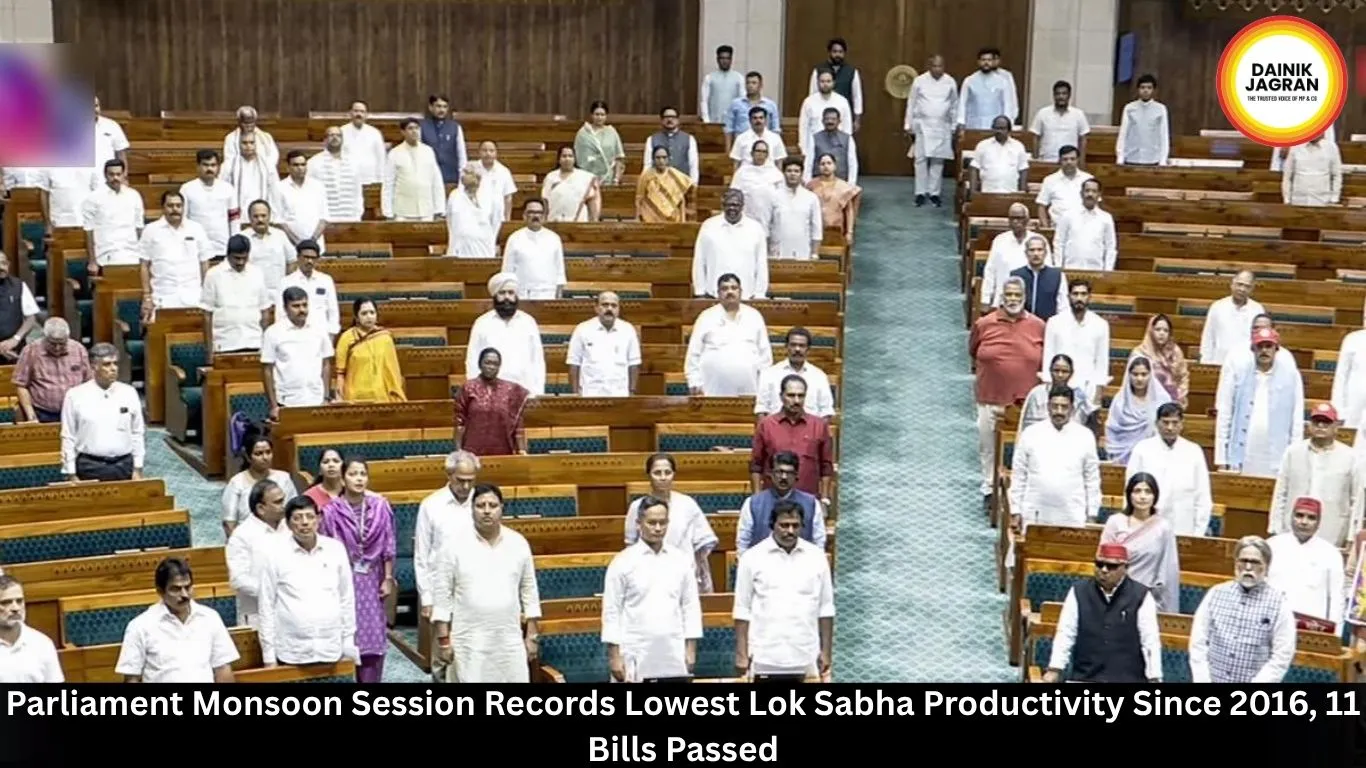
Parliament's Monsoon Session ended with Lok Sabha productivity at 15%, its lowest since 2016. Eleven Bills were passed, with nine cleared without an MP speaking on them.


Parliament’s Monsoon Session concluded on August 13 with the Lok Sabha recording its lowest productivity since 2016, even as both Houses passed 11 Bills amid repeated disruptions.

According to data from PRS Legislative Research, the Lok Sabha functioned at just 15% of its scheduled time, matching its lowest productivity recorded during the Winter Session of 2016. The Rajya Sabha recorded productivity of 33%, its lowest since the Budget Session of 2023, when productivity stood at 24%.

Session Ends Amid Disruptions

The Monsoon Session was marked by repeated disruptions, which significantly reduced the time available for legislative and parliamentary business.

Also Read... Uttarakhand Tunnel Accident: 3 Workers Feared Trapped, 16 Rescued in Pipalkoti

Despite the disruptions, Parliament managed to pass 11 Bills before the session concluded on August 13.

Also Read... Kerala University VC Mohanan Kunnummal Faces Criticism Over Vande Mataram Remark

The legislative output, however, came alongside concerns over the limited opportunity for detailed debate on several pieces of legislation.

Also Read... Kolkata Hotel Fire: 9 Killed, Bangladeshi Nationals Among Victims

Nine Bills Passed Without Debate

One of the notable features of the session was that nine of the 11 Bills passed by Parliament did not have any MP speaking on them.

The development has raised questions about the extent of parliamentary scrutiny of legislation during a session in which disruptions substantially curtailed the functioning of both Houses.

While Bills were taken up and cleared, the limited participation in debates meant that several pieces of legislation moved through the legislative process without recorded interventions from individual MPs.

Lok Sabha Productivity at 15%

The Lok Sabha's productivity stood at 15%, according to PRS Legislative Research data.

This figure equals the lowest productivity recorded by the Lower House since 2016. The disruptions meant that a large portion of the scheduled parliamentary time could not be utilised for debates, discussions and other listed business.

The figure highlights the impact of repeated adjournments and interruptions during the session.

Rajya Sabha Records 33%

The Rajya Sabha recorded productivity of 33% during the Monsoon Session.

Although higher than the Lok Sabha's figure, this was the Upper House's lowest productivity since the Budget Session of 2023, when it recorded productivity of 24%.

The two Houses therefore ended the session with substantial portions of their scheduled working time lost.

11 Bills Cleared

Despite the limited functioning, Parliament passed 11 Bills during the session.

The legislative business demonstrated that the government was able to move several proposals through both Houses even as disruptions affected the overall functioning of Parliament.

However, the fact that nine Bills were passed without any MP speaking on them has drawn attention to the difference between legislative output and parliamentary debate.

Debate Remains a Concern

Parliamentary productivity is generally assessed not only by the number of Bills passed but also by the time spent on debates, discussions, questions and scrutiny of government business.

The Monsoon Session's figures therefore present a mixed picture: 11 Bills were passed, but the Houses operated for only a fraction of their scheduled time.

The low productivity also comes amid continuing concerns over disruptions and the loss of opportunities for MPs to raise issues of public importance.

Session Concludes on August 13

The Monsoon Session formally concluded on August 13, 2026, bringing to an end a session heavily affected by disruptions.

The productivity figures released by PRS Legislative Research provide a measure of the scale of the impact. While legislative business continued, the low utilisation of scheduled parliamentary time and limited debate on several Bills remain key features of the session.

The figures are likely to renew discussions over the functioning of Parliament, the role of debate in the legislative process and the need to ensure that disruptions do not prevent MPs from effectively scrutinising legislation.

 

english.dainikjagranmpcg.com
19 Aug 2026 By Abhishek Joshi

Parliament Monsoon Session 2026: Lok Sabha Productivity Hits 15%

Digital desk

Parliament’s Monsoon Session concluded on August 13 with the Lok Sabha recording its lowest productivity since 2016, even as both Houses passed 11 Bills amid repeated disruptions.

According to data from PRS Legislative Research, the Lok Sabha functioned at just 15% of its scheduled time, matching its lowest productivity recorded during the Winter Session of 2016. The Rajya Sabha recorded productivity of 33%, its lowest since the Budget Session of 2023, when productivity stood at 24%.

Session Ends Amid Disruptions

The Monsoon Session was marked by repeated disruptions, which significantly reduced the time available for legislative and parliamentary business.

Despite the disruptions, Parliament managed to pass 11 Bills before the session concluded on August 13.

The legislative output, however, came alongside concerns over the limited opportunity for detailed debate on several pieces of legislation.

Nine Bills Passed Without Debate

One of the notable features of the session was that nine of the 11 Bills passed by Parliament did not have any MP speaking on them.

The development has raised questions about the extent of parliamentary scrutiny of legislation during a session in which disruptions substantially curtailed the functioning of both Houses.

While Bills were taken up and cleared, the limited participation in debates meant that several pieces of legislation moved through the legislative process without recorded interventions from individual MPs.

Lok Sabha Productivity at 15%

The Lok Sabha's productivity stood at 15%, according to PRS Legislative Research data.

This figure equals the lowest productivity recorded by the Lower House since 2016. The disruptions meant that a large portion of the scheduled parliamentary time could not be utilised for debates, discussions and other listed business.

The figure highlights the impact of repeated adjournments and interruptions during the session.

Rajya Sabha Records 33%

The Rajya Sabha recorded productivity of 33% during the Monsoon Session.

Although higher than the Lok Sabha's figure, this was the Upper House's lowest productivity since the Budget Session of 2023, when it recorded productivity of 24%.

The two Houses therefore ended the session with substantial portions of their scheduled working time lost.

11 Bills Cleared

Despite the limited functioning, Parliament passed 11 Bills during the session.

The legislative business demonstrated that the government was able to move several proposals through both Houses even as disruptions affected the overall functioning of Parliament.

However, the fact that nine Bills were passed without any MP speaking on them has drawn attention to the difference between legislative output and parliamentary debate.

Debate Remains a Concern

Parliamentary productivity is generally assessed not only by the number of Bills passed but also by the time spent on debates, discussions, questions and scrutiny of government business.

The Monsoon Session's figures therefore present a mixed picture: 11 Bills were passed, but the Houses operated for only a fraction of their scheduled time.

The low productivity also comes amid continuing concerns over disruptions and the loss of opportunities for MPs to raise issues of public importance.

Session Concludes on August 13

The Monsoon Session formally concluded on August 13, 2026, bringing to an end a session heavily affected by disruptions.

The productivity figures released by PRS Legislative Research provide a measure of the scale of the impact. While legislative business continued, the low utilisation of scheduled parliamentary time and limited debate on several Bills remain key features of the session.

The figures are likely to renew discussions over the functioning of Parliament, the role of debate in the legislative process and the need to ensure that disruptions do not prevent MPs from effectively scrutinising legislation.

 

https://english.dainikjagranmpcg.com/national/parliament-monsoon-session-2026-lok-sabha-productivity-hits-15/article-26716

--------

🚨 Beat the News Rush – Join Now!

Get breaking alerts, hot exclusives, and game-changing stories instantly on your phone. No delays, no fluff – just the edge you need. ⚡

Tap to join: 

🟢 WhatsApp Channel: Dainik Jagran MP CG

Crave more?

🅕 Facebook: Dainik Jagran MP CG English

🅧 Twitter (X): Dainik Jagran MP CG

🅘 Instagram: Dainik Jagran MP CG

Share the fire – keep your crew ahead! 🗞️🔥

Trending News