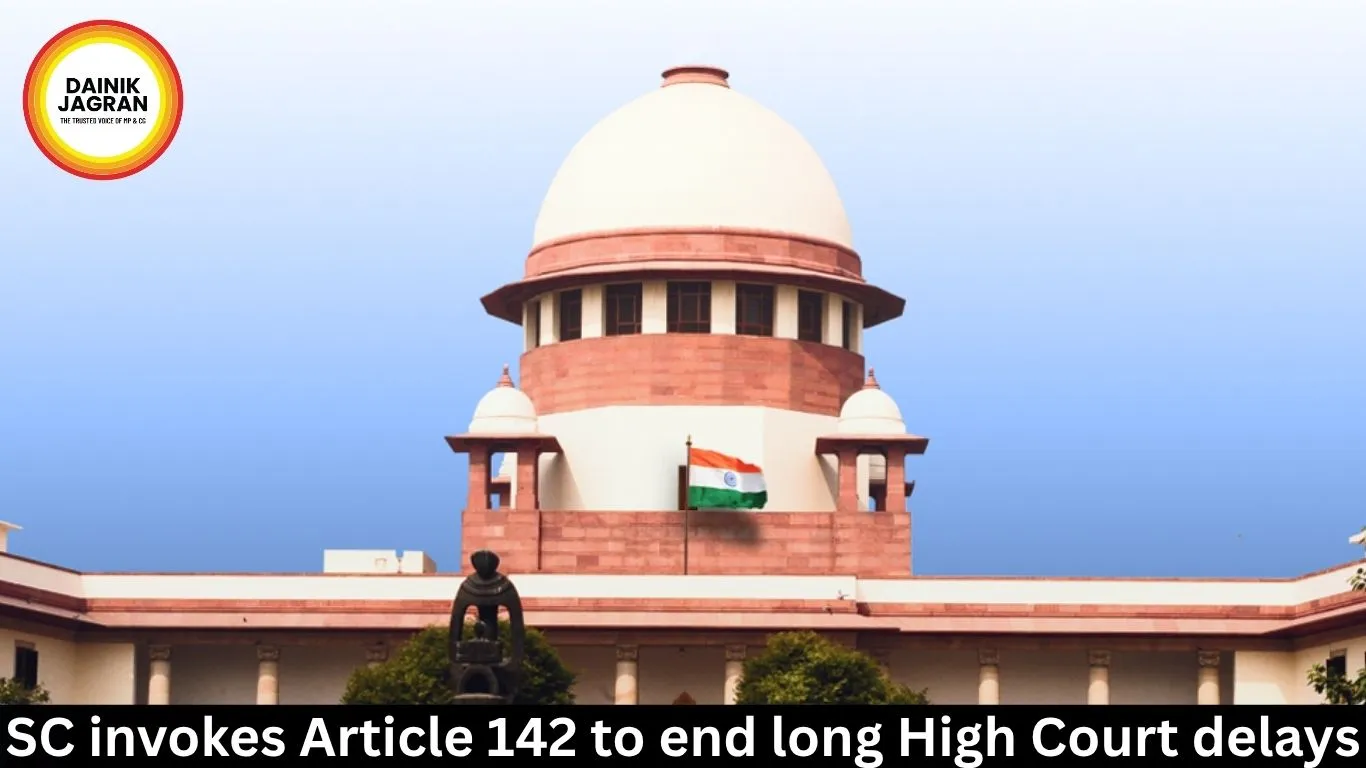
SC sets 3-month cap for reserved verdicts in High Courts
Digital Desk
The Supreme Court invokes Article 142 to enforce a strict three-month cap for reserved verdicts in High Courts, aiming to tackle India's massive case backlog.
Three-month cap for reserved verdicts
In a major move to check judicial delays, the Supreme Court has issued strict binding guidelines to all High Courts across India, directing them to pronounce judgments within three months of reserving them. A bench headed by Chief Justice Surya Kant on Friday invoked extraordinary powers under Article 142 of the Constitution, stating that long delays in delivering verdicts severely compromise the justice delivery system and cause irreparable harm to litigants.
The top court's directions came during a hearing of a matter involving Pila Pahan and the State of Jharkhand. Expressing deep concern over the growing trend of High Courts withholding verdicts for months—and in some cases, years—the apex court emphasized that accountability must begin at the top tiers of the judiciary. Legal experts have welcomed the development, noting that while older guidelines existed, the explicit invocation of Article 142 makes these timelines strictly enforceable.
Swift orders for bail pleas
Apart from final judgments, the Supreme Court laid down an uncompromising timeline for personal liberty matters. High Courts must now endeavor to pronounce orders on bail applications on the very same day the arguments conclude. If a bench chooses to reserve its order on a bail plea under exceptional circumstances, the judgment must be pronounced and uploaded onto the official court portal by the next day.
Ground-level reports from various High Courts indicate that bail orders often take weeks to be typed and signed, extending the detention of individuals who have already been granted relief. The apex court sought to plug this gap by ordering that copies of bail or sentence suspension orders be communicated to jail authorities digitally without any bureaucratic lag.
Jail release within 24 hours
"The delivery of justice cannot be decoupled from the speed of its execution," the bench observed. Under the newly issued mandates, jail authorities must process the release of an accused or prisoner on the same day they receive the official bail communication. If administrative or verification hurdles arise late in the evening, the release must happen no later than the following day.
pendency numbers hit new high
The landmark ruling comes against the backdrop of an unprecedented backlog gripping the Indian judiciary. According to recent data, more than 92,000 cases are pending in Supreme Court files alone. Sources familiar with court administration attribute this steep rise to the exponential increase in digital e-filing avenues since the pandemic, which has made filing cases easier but has drastically outpaced the disposal rate.
| Court Level | Pending Cases (Approx.) |
| Supreme Court | ~92,385 |
| High Courts (25) | ~63,63,406 |
| Total Indian Judiciary | > 5.49 Crore |
The crisis is not limited to the top court. In a submission made to the Rajya Sabha late last year, the central government confirmed that the total pendency across all levels of the judiciary has breached the 5.49 crore mark, with the 25 High Courts accounting for over 63.6 lakh unresolved cases.
Lawyers flag systemic bottlenecks
Reacting to the development, senior advocates practicing in the national capital pointed out that while the three-month cap for reserved verdicts is a stellar step, structural reforms are desperately needed. "The pressure on High Court judges is immense due to unfilled vacancies," a member of the Supreme Court Bar Association said on condition of anonymity. "However, keeping a judgment reserved for six months to a year dilutes the arguments presented. This deadline will force better judicial discipline."
High Courts face implementation test
The immediate challenge moves to the registrars-general of all 25 High Courts, who will have to create tracking mechanisms to monitor compliance with the Supreme Court's three-month cap for reserved verdicts. Legal observers state that the top court may require periodic compliance reports from High Courts to ensure the order is implemented in spirit. With the apex court setting a strict example, litigants hope the era of endless waiting for reserved judgments will finally draw to a close.

--------
π¨ Beat the News Rush β Join Now!
Get breaking alerts, hot exclusives, and game-changing stories instantly on your phone. No delays, no fluff β just the edge you need. β‘
Tap to join:Β
π’ WhatsApp Channel: Dainik Jagran MP CG
Crave more?
π Facebook: Dainik Jagran MP CG English
π § Twitter (X): Dainik Jagran MP CG
π Instagram: Dainik Jagran MP CG
Share the fire β keep your crew ahead! ποΈπ₯
SC sets 3-month cap for reserved verdicts in High Courts
Digital Desk
Three-month cap for reserved verdicts
In a major move to check judicial delays, the Supreme Court has issued strict binding guidelines to all High Courts across India, directing them to pronounce judgments within three months of reserving them. A bench headed by Chief Justice Surya Kant on Friday invoked extraordinary powers under Article 142 of the Constitution, stating that long delays in delivering verdicts severely compromise the justice delivery system and cause irreparable harm to litigants.
The top court's directions came during a hearing of a matter involving Pila Pahan and the State of Jharkhand. Expressing deep concern over the growing trend of High Courts withholding verdicts for months—and in some cases, years—the apex court emphasized that accountability must begin at the top tiers of the judiciary. Legal experts have welcomed the development, noting that while older guidelines existed, the explicit invocation of Article 142 makes these timelines strictly enforceable.
Swift orders for bail pleas
Apart from final judgments, the Supreme Court laid down an uncompromising timeline for personal liberty matters. High Courts must now endeavor to pronounce orders on bail applications on the very same day the arguments conclude. If a bench chooses to reserve its order on a bail plea under exceptional circumstances, the judgment must be pronounced and uploaded onto the official court portal by the next day.
Ground-level reports from various High Courts indicate that bail orders often take weeks to be typed and signed, extending the detention of individuals who have already been granted relief. The apex court sought to plug this gap by ordering that copies of bail or sentence suspension orders be communicated to jail authorities digitally without any bureaucratic lag.
Jail release within 24 hours
"The delivery of justice cannot be decoupled from the speed of its execution," the bench observed. Under the newly issued mandates, jail authorities must process the release of an accused or prisoner on the same day they receive the official bail communication. If administrative or verification hurdles arise late in the evening, the release must happen no later than the following day.
pendency numbers hit new high
The landmark ruling comes against the backdrop of an unprecedented backlog gripping the Indian judiciary. According to recent data, more than 92,000 cases are pending in Supreme Court files alone. Sources familiar with court administration attribute this steep rise to the exponential increase in digital e-filing avenues since the pandemic, which has made filing cases easier but has drastically outpaced the disposal rate.
| Court Level | Pending Cases (Approx.) |
| Supreme Court | ~92,385 |
| High Courts (25) | ~63,63,406 |
| Total Indian Judiciary | > 5.49 Crore |
The crisis is not limited to the top court. In a submission made to the Rajya Sabha late last year, the central government confirmed that the total pendency across all levels of the judiciary has breached the 5.49 crore mark, with the 25 High Courts accounting for over 63.6 lakh unresolved cases.
Lawyers flag systemic bottlenecks
Reacting to the development, senior advocates practicing in the national capital pointed out that while the three-month cap for reserved verdicts is a stellar step, structural reforms are desperately needed. "The pressure on High Court judges is immense due to unfilled vacancies," a member of the Supreme Court Bar Association said on condition of anonymity. "However, keeping a judgment reserved for six months to a year dilutes the arguments presented. This deadline will force better judicial discipline."
High Courts face implementation test
The immediate challenge moves to the registrars-general of all 25 High Courts, who will have to create tracking mechanisms to monitor compliance with the Supreme Court's three-month cap for reserved verdicts. Legal observers state that the top court may require periodic compliance reports from High Courts to ensure the order is implemented in spirit. With the apex court setting a strict example, litigants hope the era of endless waiting for reserved judgments will finally draw to a close.