SC Working Strength Hits Record 37 With 5 New Judges

Digital Desk

SC Working Strength Hits Record 37 With 5 New Judges

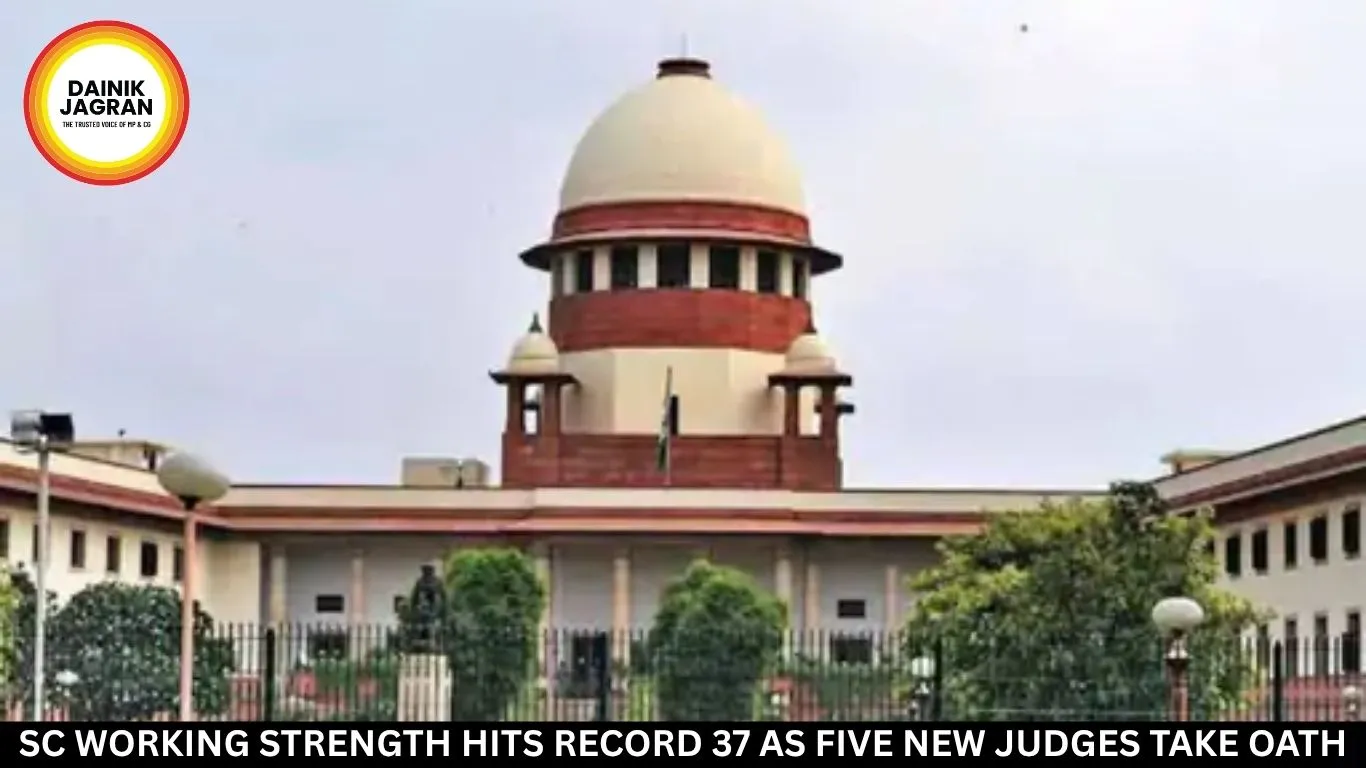
The Supreme Court makes history as 5 new judges take oath under CJI Surya Kant, pushing the working strength to a record 37 amidst a new sanctioned cap of 38.


The Supreme Court of India reaches its highest working strength in history following the swift clearance and swearing-in of five new jurists, leaving the top court just one judge short of its newly revised maximum limit.

Historic Day At Tilak Marg

 The Supreme Court premises witnessed history on Tuesday morning as Chief Justice of India Surya Kant administered the oath of office to five newly appointed judges. The induction brings the working strength of the country’s apex court to an unprecedented 37, the highest since its inception in 1950.

The low vacancy rate marks a significant milestone for the Indian judiciary, which has long grappled with a massive backlog of litigations. The expansion follows an exceptionally swift turnaround by the executive, with the Centre clearing the recommendations made by the Supreme Court Collegium in less than four days.

Rapid Change In Sanctioned Limits

The appointments come on the heels of the Union Cabinet’s recent legislative push to expand judicial capacity. Just last month, the Centre promulgated the Supreme Court (Number of Judges) Amendment Ordinance, 2026, which effectively raised the court's maximum sanctioned strength from 34 to 38 judges.

Legal experts point out that the prompt execution of these selections highlights a rare, seamless coordination between the judiciary and the executive. However, court officials familiar with the roster indicate that the record-high bench strength of 37 will be short-lived. The apex court is slated to see two quick retirements later this month, with Justice Pankaj Mithal and Justice JK Maheshwari reaching superannuation on June 16 and June 28, respectively.

Direct Elevation From The Bar

Among the new appointees, the spotlight remains firmly on Senior Advocate V Mohana. Her swearing-in marks only the second instance in the history of the Indian judiciary where a woman practitioner has been elevated directly from the Bar to the Supreme Court bench, following Justice Indu Malhotra’s historic appointment in 2018.

With her induction, the Supreme Court now has two sitting women jurists, the other being Justice BV Nagarathna. Observers of the court note that the move injects crucial gender diversity into the higher echelon of law, especially as Justice Nagarathna is poised to break further ground as India’s first woman Chief Justice in late 2027.

Diverse High Court Experience Represented

The legal backgrounds of the other four judges show deep administrative and judicial expertise spanning multiple states.

  • Justice Sheel Nagu: Elevated after a tenure as Chief Justice of the Punjab and Haryana High Court. Enrolled in 1987, he rose through the Madhya Pradesh High Court and previously served on highly sensitive in-house judicial investigative panels.

  • Justice Shree Chandrashekhar: Brings wide geographic experience, having moved from the Jharkhand High Court to the Rajasthan High Court, before heading the Bombay High Court as its Chief Justice.

  • Justice Sanjeev Sachdeva: A former senior practitioner from Delhi who served extensively as a permanent judge in the national capital before his recent leadership role at the Madhya Pradesh High Court.

  • Justice Arun Palli: Holds over a decade of judicial experience originating from Chandigarh, most recently serving as the Chief Justice of the High Court of Jammu & Kashmir and Ladakh.

Tackling The Massive Pendency Challenge

Court corridors are optimistic that the enhanced bench strength will directly alleviate the structural pressures slowing down the disposal of cases. National data systems recently indicated that pendency in the top court has climbed past the 93,000-case mark.

Beyond regular civil and criminal appeals, the availability of 37 working judges will allow Chief Justice Surya Kant greater operational flexibility. The move is expected to clear the logistical bottlenecks that frequently delay the formation of five-judge Constitution Benches, which are vital for deciding complex statutory and civil rights questions.

 

--------

🚨 Beat the News Rush – Join Now!

Get breaking alerts, hot exclusives, and game-changing stories instantly on your phone. No delays, no fluff – just the edge you need. ⚡

Tap to join: 

🟢 WhatsApp Channel: Dainik Jagran MP CG

Crave more?

🅕 Facebook: Dainik Jagran MP CG English

🅧 Twitter (X): Dainik Jagran MP CG

🅘 Instagram: Dainik Jagran MP CG

Share the fire – keep your crew ahead! 🗞️🔥

english.dainikjagranmpcg.com
02 Jun 2026 By Abhishek Joshi

SC Working Strength Hits Record 37 With 5 New Judges

Digital Desk

The Supreme Court of India reaches its highest working strength in history following the swift clearance and swearing-in of five new jurists, leaving the top court just one judge short of its newly revised maximum limit.

Historic Day At Tilak Marg

 The Supreme Court premises witnessed history on Tuesday morning as Chief Justice of India Surya Kant administered the oath of office to five newly appointed judges. The induction brings the working strength of the country’s apex court to an unprecedented 37, the highest since its inception in 1950.

The low vacancy rate marks a significant milestone for the Indian judiciary, which has long grappled with a massive backlog of litigations. The expansion follows an exceptionally swift turnaround by the executive, with the Centre clearing the recommendations made by the Supreme Court Collegium in less than four days.

Rapid Change In Sanctioned Limits

The appointments come on the heels of the Union Cabinet’s recent legislative push to expand judicial capacity. Just last month, the Centre promulgated the Supreme Court (Number of Judges) Amendment Ordinance, 2026, which effectively raised the court's maximum sanctioned strength from 34 to 38 judges.

Legal experts point out that the prompt execution of these selections highlights a rare, seamless coordination between the judiciary and the executive. However, court officials familiar with the roster indicate that the record-high bench strength of 37 will be short-lived. The apex court is slated to see two quick retirements later this month, with Justice Pankaj Mithal and Justice JK Maheshwari reaching superannuation on June 16 and June 28, respectively.

Direct Elevation From The Bar

Among the new appointees, the spotlight remains firmly on Senior Advocate V Mohana. Her swearing-in marks only the second instance in the history of the Indian judiciary where a woman practitioner has been elevated directly from the Bar to the Supreme Court bench, following Justice Indu Malhotra’s historic appointment in 2018.

With her induction, the Supreme Court now has two sitting women jurists, the other being Justice BV Nagarathna. Observers of the court note that the move injects crucial gender diversity into the higher echelon of law, especially as Justice Nagarathna is poised to break further ground as India’s first woman Chief Justice in late 2027.

Diverse High Court Experience Represented

The legal backgrounds of the other four judges show deep administrative and judicial expertise spanning multiple states.

  • Justice Sheel Nagu: Elevated after a tenure as Chief Justice of the Punjab and Haryana High Court. Enrolled in 1987, he rose through the Madhya Pradesh High Court and previously served on highly sensitive in-house judicial investigative panels.

  • Justice Shree Chandrashekhar: Brings wide geographic experience, having moved from the Jharkhand High Court to the Rajasthan High Court, before heading the Bombay High Court as its Chief Justice.

  • Justice Sanjeev Sachdeva: A former senior practitioner from Delhi who served extensively as a permanent judge in the national capital before his recent leadership role at the Madhya Pradesh High Court.

  • Justice Arun Palli: Holds over a decade of judicial experience originating from Chandigarh, most recently serving as the Chief Justice of the High Court of Jammu & Kashmir and Ladakh.

Tackling The Massive Pendency Challenge

Court corridors are optimistic that the enhanced bench strength will directly alleviate the structural pressures slowing down the disposal of cases. National data systems recently indicated that pendency in the top court has climbed past the 93,000-case mark.

Beyond regular civil and criminal appeals, the availability of 37 working judges will allow Chief Justice Surya Kant greater operational flexibility. The move is expected to clear the logistical bottlenecks that frequently delay the formation of five-judge Constitution Benches, which are vital for deciding complex statutory and civil rights questions.


https://english.dainikjagranmpcg.com/national/sc-working-strength-hits-record-37-with-5-new-judges/article-19606

Latest News