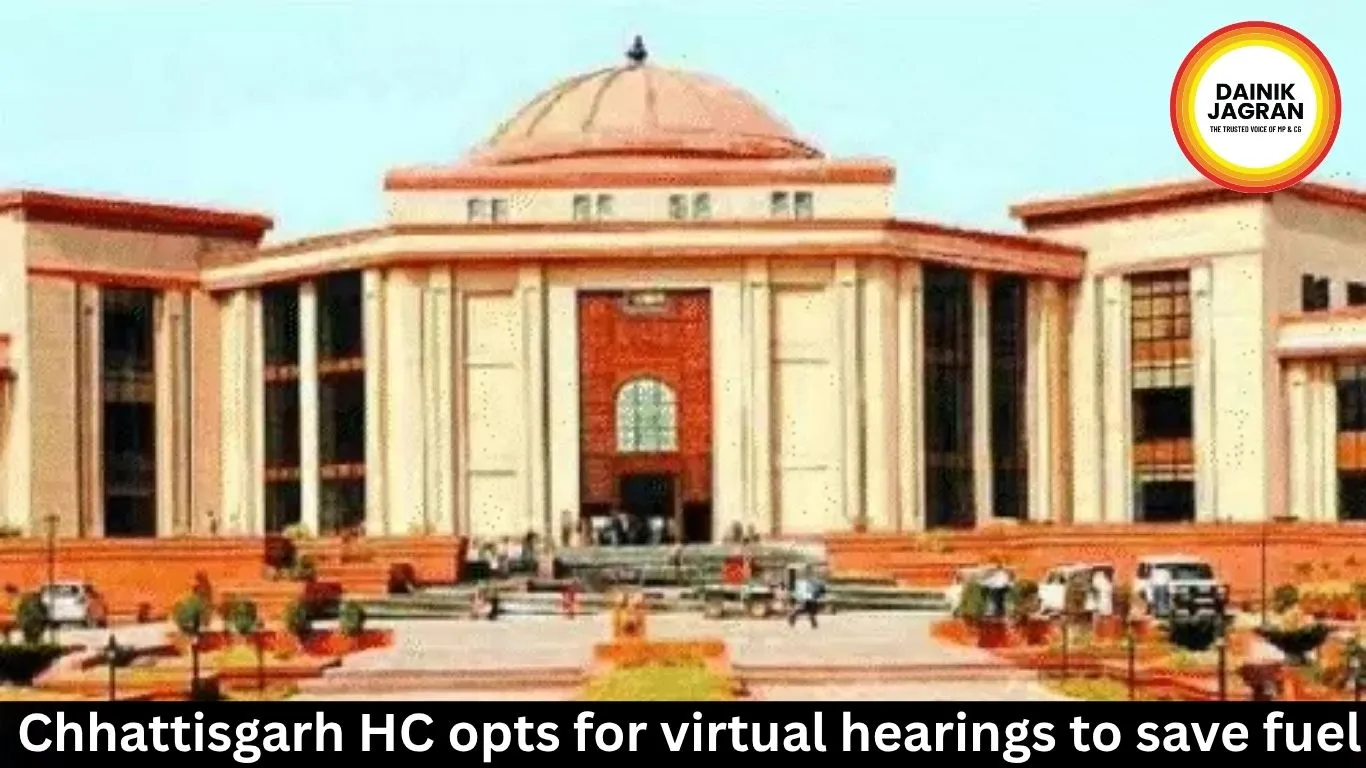
Chhattisgarh HC opts for virtual hearings to save fuel
Digital Desk
Chhattisgarh High Court moves summer vacation hearings online. Chief Justice mandates virtual courts, car-pooling, and staff WFH to save fuel and resources.
Chhattisgarh HC shifts to virtual hearings for summer vacation to save fuel
Chief Justice Ramesh Sinha issues circular introducing video conferencing, employee work-from-home rotation, and car-pooling for judges to curb resource depletion.
In a significant move aimed at environmental conservation and resource optimization, the Chhattisgarh High Court has decided to alter its daily functioning. Prompted by recent guidelines from the Supreme Court, the high court administration has issued a circular transitioning its upcoming summer vacation sessions largely into virtual hearings to save fuel and cut administrative costs.
The directive, issued under the guidance of Chief Justice Ramesh Sinha, comes as a major relief to legal professionals and litigants facing intense summer heat across the state, eliminating the immediate need for physical presence in the courtroom.
Virtual by default
According to the official circular issued by the high court administration, judicial proceedings during the summer vacation will primarily be conducted through video conferencing. Registry officials confirmed that the decision is designed to minimize vehicular movement and reduce electricity consumption within the sprawling court complex in Bilaspur. However, recognizing infrastructure limitations, the administration has kept a window open for physical appearances. Lawyers who face technical difficulties joining virtually will be permitted to present their cases in person.
Remote work transition
The optimization drive extends beyond the courtroom to court staff and administrative wings. Under the new protocol, employees of the high court as well as subordinate district courts will be transitioned to a partial work-from-home module. To ensure that daily judicial tracking and paperwork do not suffer, a strict 50 percent rotational attendance roster will be implemented. Officials staying back at home are mandated to remain reachable via phones and official communication channels throughout standard working hours.
Shared judicial transits
In an unusual step toward institutional accountability, the high court has proposed a comprehensive vehicle-pooling system. The plan covers judicial officers, registry staff, and ministerial employees across the state's legal framework. More notably, the circular includes an official request advising high court judges to adopt car-pooling measures while commuting to the court, setting a direct example of state-level fuel conservation from the top tier of the judiciary.
Technical setup expedited
Sources familiar with the matter said that the high court registry has already begun upgrading its digital bandwidth to avoid potential server crashes during high-volume virtual sessions. IT teams have been directed to run diagnostic tests on communication links connecting district court hubs with the main registry. The administration emphasized that the swift transition aims to balance institutional responsibility toward the environment without creating backlogs or disrupting the public's access to timely justice.

--------
🚨 Beat the News Rush – Join Now!
Get breaking alerts, hot exclusives, and game-changing stories instantly on your phone. No delays, no fluff – just the edge you need. ⚡
Tap to join:
🟢 WhatsApp Channel: Dainik Jagran MP CG
Crave more?
🅕 Facebook: Dainik Jagran MP CG English
🅧 Twitter (X): Dainik Jagran MP CG
🅘 Instagram: Dainik Jagran MP CG
Share the fire – keep your crew ahead! 🗞️🔥
Chhattisgarh HC opts for virtual hearings to save fuel
Digital Desk
Chhattisgarh HC shifts to virtual hearings for summer vacation to save fuel
Chief Justice Ramesh Sinha issues circular introducing video conferencing, employee work-from-home rotation, and car-pooling for judges to curb resource depletion.
In a significant move aimed at environmental conservation and resource optimization, the Chhattisgarh High Court has decided to alter its daily functioning. Prompted by recent guidelines from the Supreme Court, the high court administration has issued a circular transitioning its upcoming summer vacation sessions largely into virtual hearings to save fuel and cut administrative costs.
The directive, issued under the guidance of Chief Justice Ramesh Sinha, comes as a major relief to legal professionals and litigants facing intense summer heat across the state, eliminating the immediate need for physical presence in the courtroom.
Virtual by default
According to the official circular issued by the high court administration, judicial proceedings during the summer vacation will primarily be conducted through video conferencing. Registry officials confirmed that the decision is designed to minimize vehicular movement and reduce electricity consumption within the sprawling court complex in Bilaspur. However, recognizing infrastructure limitations, the administration has kept a window open for physical appearances. Lawyers who face technical difficulties joining virtually will be permitted to present their cases in person.
Remote work transition
The optimization drive extends beyond the courtroom to court staff and administrative wings. Under the new protocol, employees of the high court as well as subordinate district courts will be transitioned to a partial work-from-home module. To ensure that daily judicial tracking and paperwork do not suffer, a strict 50 percent rotational attendance roster will be implemented. Officials staying back at home are mandated to remain reachable via phones and official communication channels throughout standard working hours.
Shared judicial transits
In an unusual step toward institutional accountability, the high court has proposed a comprehensive vehicle-pooling system. The plan covers judicial officers, registry staff, and ministerial employees across the state's legal framework. More notably, the circular includes an official request advising high court judges to adopt car-pooling measures while commuting to the court, setting a direct example of state-level fuel conservation from the top tier of the judiciary.
Technical setup expedited
Sources familiar with the matter said that the high court registry has already begun upgrading its digital bandwidth to avoid potential server crashes during high-volume virtual sessions. IT teams have been directed to run diagnostic tests on communication links connecting district court hubs with the main registry. The administration emphasized that the swift transition aims to balance institutional responsibility toward the environment without creating backlogs or disrupting the public's access to timely justice.