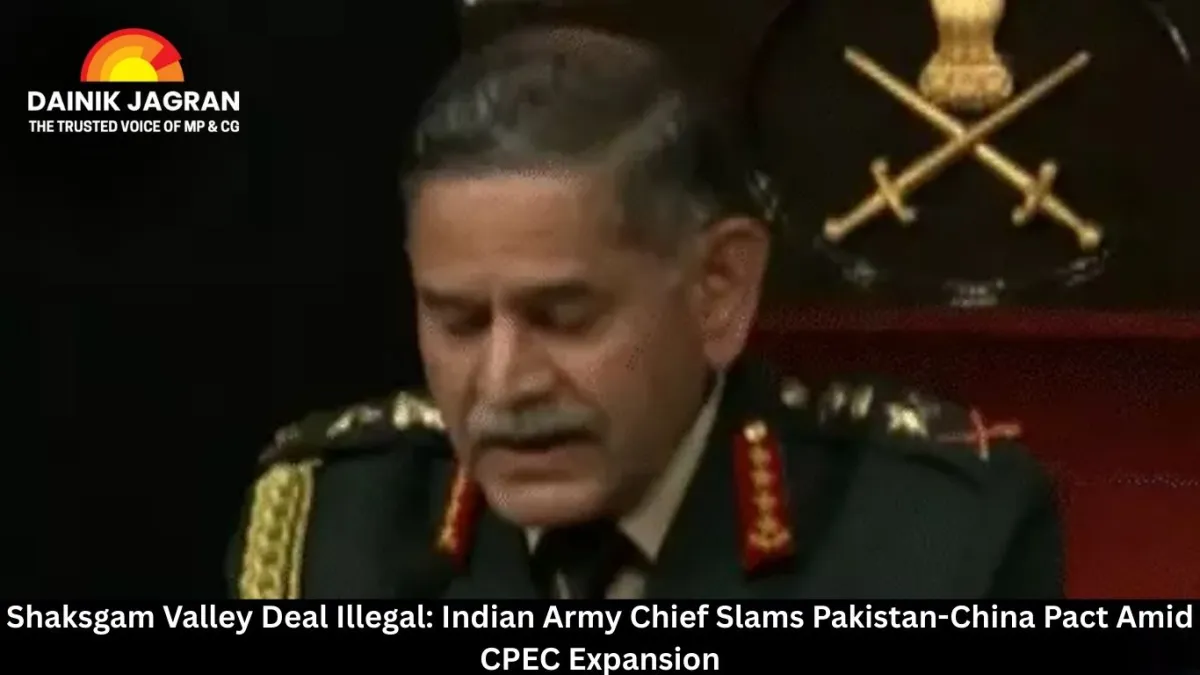
Shaksgam Valley Deal Illegal: Indian Army Chief Slams Pakistan-China Pact Amid CPEC Expansion
In a bold first press conference of 2026, Indian Army Chief General Upendra Dwivedi declared the 1963 Pakistan-China agreement on Shaksgam Valley illegal. Speaking from New Delhi just hours ago, he rejected any activities in the region, especially China's China-Pakistan Economic Corridor (CPEC) projects. This comes amid rising concerns over Beijing's infrastructure push in territory India claims as its own.
The statement underscores India's firm stance on Pakistan-occupied Kashmir (PoK), where Shaksgam Valley—part of Jammu and Kashmir—lies under Chinese control. General Dwivedi echoed the Ministry of External Affairs, dismissing a recent joint China statement on CPEC 2.0 as unlawful.
Why Shaksgam Valley Matters Now
Shaksgam Valley, nestled in the Karakoram range northeast of Siachen Glacier, is no remote outpost. It's strategically vital near the India-China-Pakistan tri-junction, linking to the Karakoram Pass.
Reports reveal China building a 75 km-long, 10-meter-wide all-weather road here. This alters ground realities in India's sovereign territory, heightening Ladakh and Siachen security risks. Ladakh Lt Governor Kavindra Gupta reinforced this, stating PoK belongs to India and warning against China's "expansionist policies." He added India has evolved since 1962—any aggression will face a strong response.
-
Historical Context: Post-1947 J&K accession, Shaksgam Valley became Indian. Pakistan ceded it to China in 1963 amid 1950s incursions, ignoring India's protests.
-
Current Trigger: Post-Doklam, China's military buildup and CPEC extensions through PoK fuel tensions.
-
Strategic Impact: CPEC corridor enhances Pakistan-China connectivity, threatening India's northern borders.
India's Unwavering Position
General Dwivedi clarified: "We do not approve of any activity in the valley." Experts like retired Lt Gen DS Hooda note this reaffirms India's map, where Shaksgam Valley remains integral. The MEA monitors closely, signaling diplomatic pushback.
This flare-up matters right now amid global shifts—US-China rivalry and India's border pacts like Quad amplify Delhi's resolve. China's actions risk escalation, but India's military modernization deters adventurism.
Path Forward for India
For citizens, this highlights border vigilance. Actionable steps include:
-
Supporting diplomatic protests via petitions.
-
Staying informed on PoK developments.
-
Backing self-reliance in defense tech.
India's message is clear: Shaksgam Valley is non-negotiable. As CPEC advances, New Delhi's vigilance protects sovereignty.