


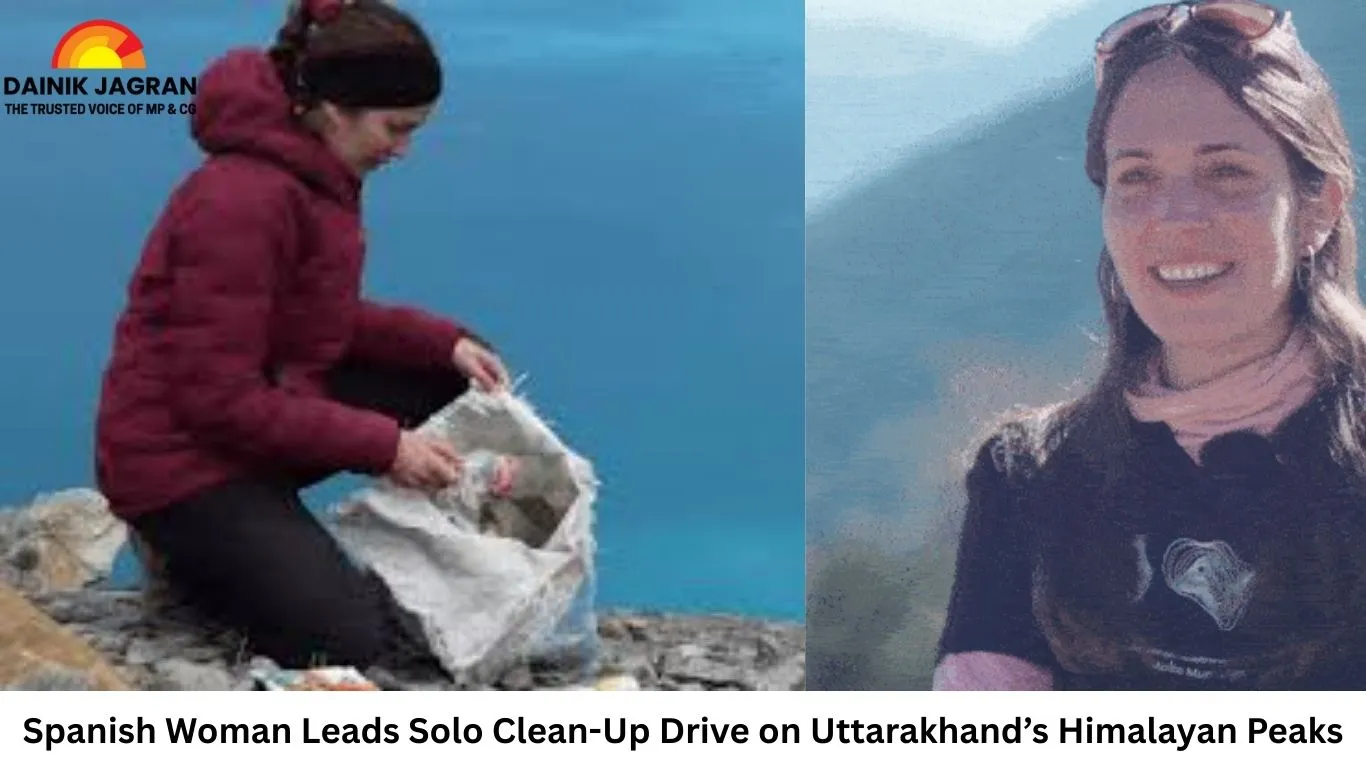
Spanish Woman Leads Solo Clean-Up Drive on Uttarakhand’s Himalayan Peaks, Removes Over 200 kg of Waste
Digital Desk
Colil first arrived in India nearly two years ago, drawn by an interest in trekking and yoga. While hiking along Himalayan trails in Uttarakhand and later during a trek on Nepal’s Annapurna circuit, she was disturbed by the volume of plastic, food wrappers and discarded equipment littering areas considered sacred and ecologically fragile. Instead of returning home, she chose to stay back and address the problem herself.
Today, Colil is leading what she calls the “108 Peak Campaign”, an initiative aimed at cleaning waste from 108 mountain peaks and routes across the Himalayas. The number 108 holds cultural and spiritual significance in Indian tradition, a symbolism that inspired her commitment. Since formally launching the campaign in 2023, she has trekked to oxygen-deficient heights carrying heavy sacks of garbage down on her back — often on trails where even experienced climbers rely on walking sticks and oxygen support.
By profession, Colil is a graphic designer, but during her time in Uttarakhand she has also taught yoga and trekking, particularly in Rishikesh. She says the contrast between waste management practices in European mountains and the Himalayan region left a lasting impression. In Spain, trekkers are expected to carry back their waste, a norm she found largely absent on popular Indian trails.
Her work gained local support when she partnered with Manoj Rana, a trekker from Lohajung village in Chamoli district. The two met in Rishikesh, and their shared concern for the mountains led to collaboration. Rana says the initiative began by repeatedly cleaning the same trails in his home region, only to see them littered again within days. That cycle prompted them to expand the effort into a structured campaign combining clean-up work with awareness.
According to Colil, removing trash is only part of the challenge. Preventing it from returning requires changing behaviour. To that end, she and Rana now conduct awareness sessions in local schools, speaking to children about environmental protection, climate change and the long-term impact of waste on fragile mountain ecosystems. They also engage with local women, whom they see as key to influencing household and community practices.
Colil finds it deeply contradictory that the Himalayas are revered as divine in Indian culture yet treated carelessly on the ground. That paradox, she says, strengthened her resolve. Over time, Uttarakhand has become more than a place of work. “This is home now,” she often tells those she meets on the trails.
As tourism and trekking continue to expand in the region, environmentalists warn that unmanaged waste poses a growing threat to water sources, wildlife and local livelihoods. Colil’s campaign, though modest in scale, has drawn attention to an issue often overlooked. Her effort stands as a reminder that conservation, whether led by locals or outsiders, ultimately depends on shared responsibility for the mountains that sustain millions downstream.




.jpg)




