
Strange Pattern of ED Raids Raises Eyebrows Ahead of State Elections
Digital Desk
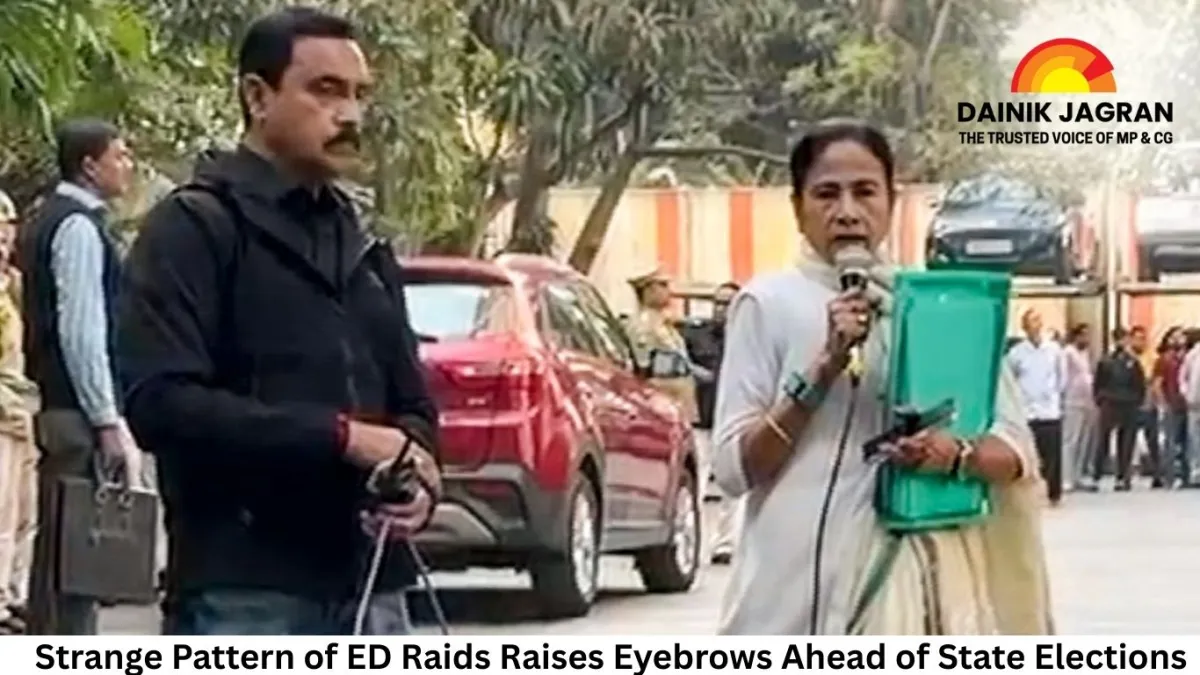
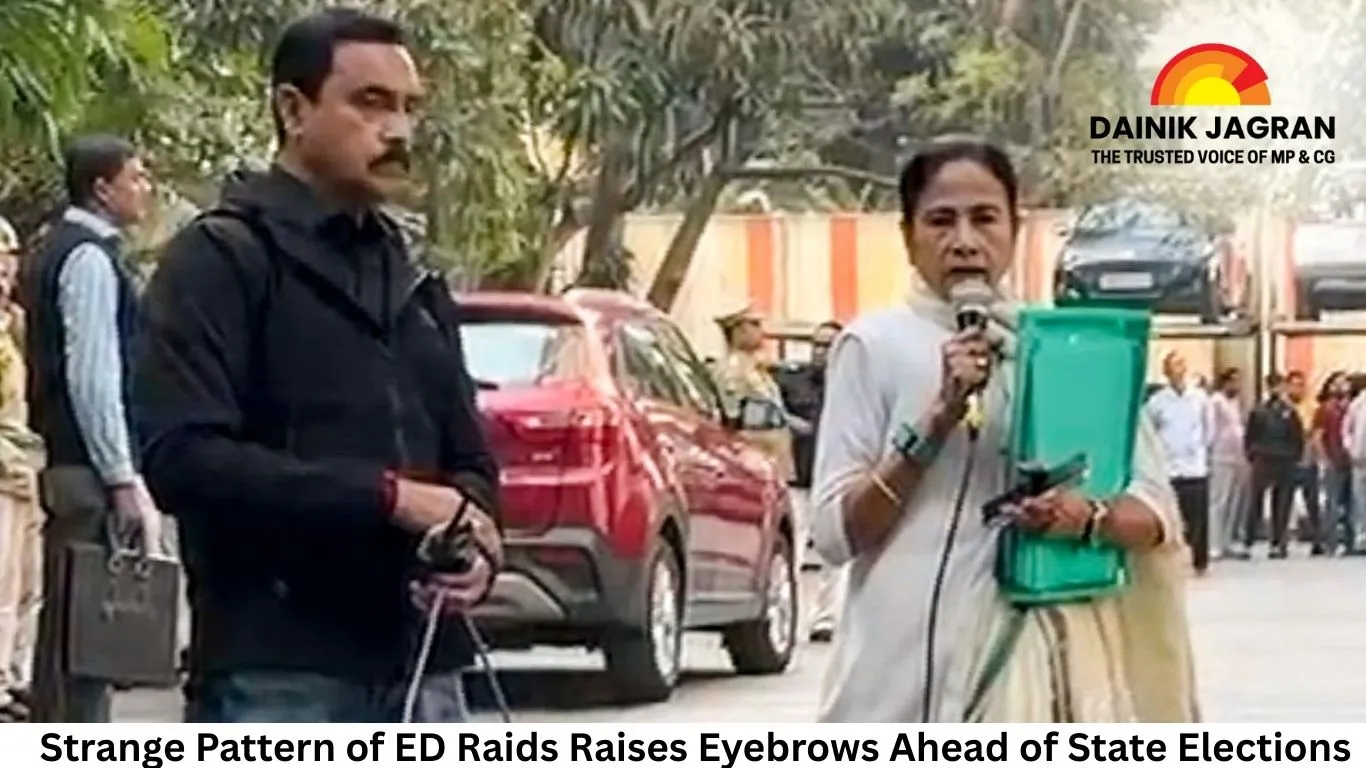
The latest high-profile action occurred on January 8, when ED officials raided locations linked to I-PAC in Kolkata. Chief Minister Mamata Banerjee personally arrived at the site during the operation, carrying out files amid heightened scrutiny. The West Bengal assembly elections are scheduled before May 2026, and the raids are based on a case originally registered by the CBI on November 27, 2020, concerning coal smuggling and hawala networks.
This is not an isolated trend. In the past four years, similar pre-election ED interventions have occurred in Jharkhand, Delhi, and Maharashtra. In Jharkhand, ED registered a land and money-laundering case in 2023, leading to Chief Minister Hemant Soren’s arrest months before the 2024 assembly elections. In Delhi, investigations into a 2022 liquor policy money-laundering case saw the arrest of CM Arvind Kejriwal in March 2024, ahead of the February 2025 elections. Maharashtra witnessed ED raids in November 2024, connected to a 2021 case involving ₹125 crore in alleged election funding, days before civic polls.
Ahead of the 2026 elections, Tamil Nadu’s ruling DMK faces scrutiny over cases linked to alcohol, real estate, and shell companies. In Assam, leaders associated with Congress and AIUDF are reportedly under ED observation, affecting election funding channels. Kerala’s LDF government is contending with probes related to gold smuggling and cooperative bank matters, while Puducherry sees the agency monitoring business and political alliances closely.
Analysts note that although the ED asserts its actions are legally mandated, the timing—often shortly before elections—has sparked criticism of potential political impact. Historically, these raids have occasionally influenced political equations, though not always altering election outcomes.
Political observers caution that the growing perception of selective enforcement could affect public trust, emphasizing the need for transparency in high-stakes investigations during the electoral season. Meanwhile, parties in affected states are recalibrating strategies in response to the increasing regulatory scrutiny.

.jpg)