


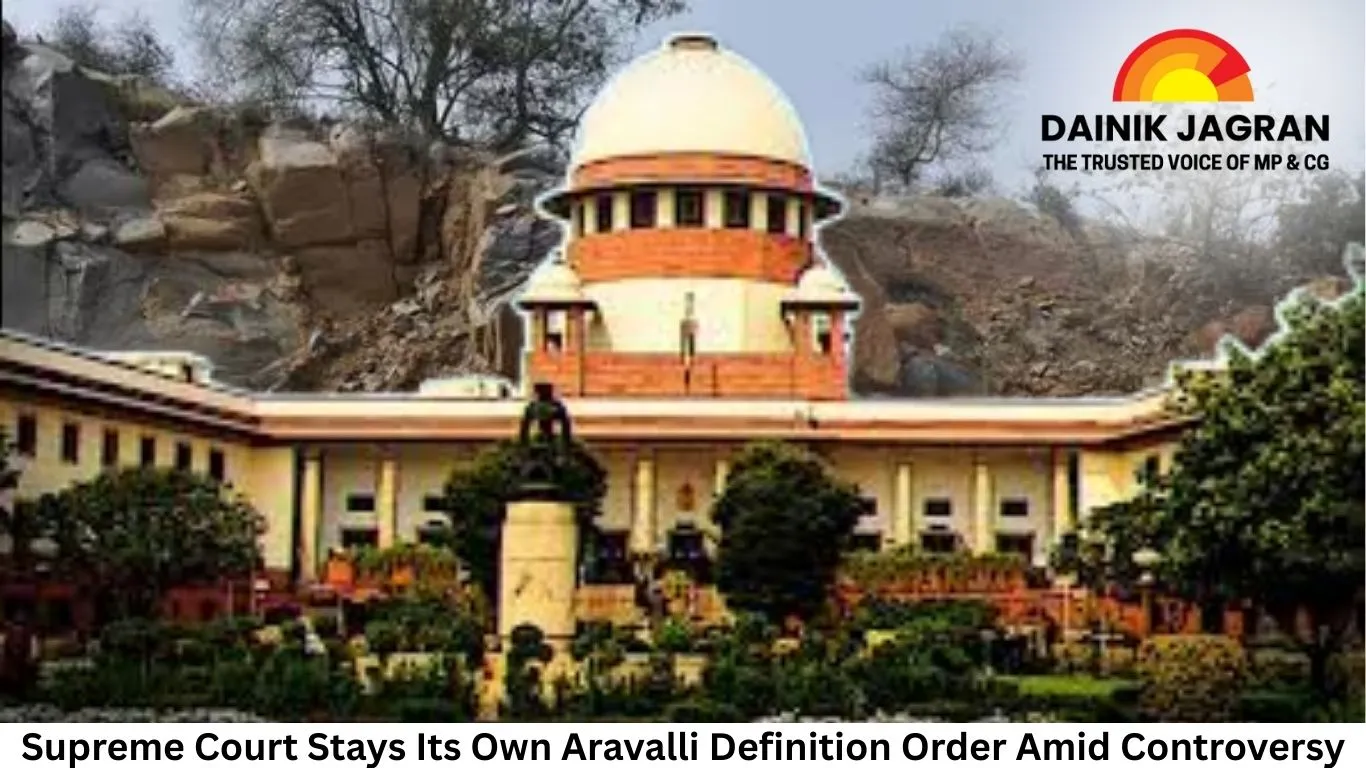
Supreme Court Stays Its Own Aravalli Definition Order Amid Controversy
Digital Desk
A vacation bench led by Chief Justice Surya Kant put the earlier ruling and expert committee recommendations in abeyance, announcing plans to constitute a new high-powered panel of independent experts for a fresh review.
The court issued notices to the Centre and states including Rajasthan, Haryana, Gujarat, and Delhi, scheduling the next hearing for January 21, 2026. Solicitor General Tushar Mehta highlighted "several misconceptions" surrounding the November judgment, assuring the bench that states had been directed to pause further actions.
Chief Justice Kant noted that the court's observations and the report had been misinterpreted, necessitating clarification on key issues like ecological continuity and whether limiting protection to hills over 100 metres could create regulatory gaps. The November order had defined "Aravalli Hill" as landforms rising 100 metres or more above local relief, with ranges as clusters within 500 metres. It banned new mining leases pending a sustainable plan.
Critics, including environmentalists and opposition leaders like Congress's Jairam Ramesh, argued this could exclude over 90 per cent of the range from strict safeguards, opening lower areas to mining and development. Ramesh welcomed the stay as a "flicker of hope" but demanded the Environment Minister's resignation, alleging the original push favoured mining interests.
The Centre maintained fears were unfounded, insisting protections remained robust and no new leases would be granted. Protests had erupted across north India following the earlier ruling, underscoring the Aravallis' role as a vital barrier against desertification and groundwater recharge zone.
The new committee will address ambiguities, including potential paradoxes in defining protected areas and preserving the range's integrity.This development offers temporary relief to activists, though the battle over balancing ecology and development persists.
.jpg)




