


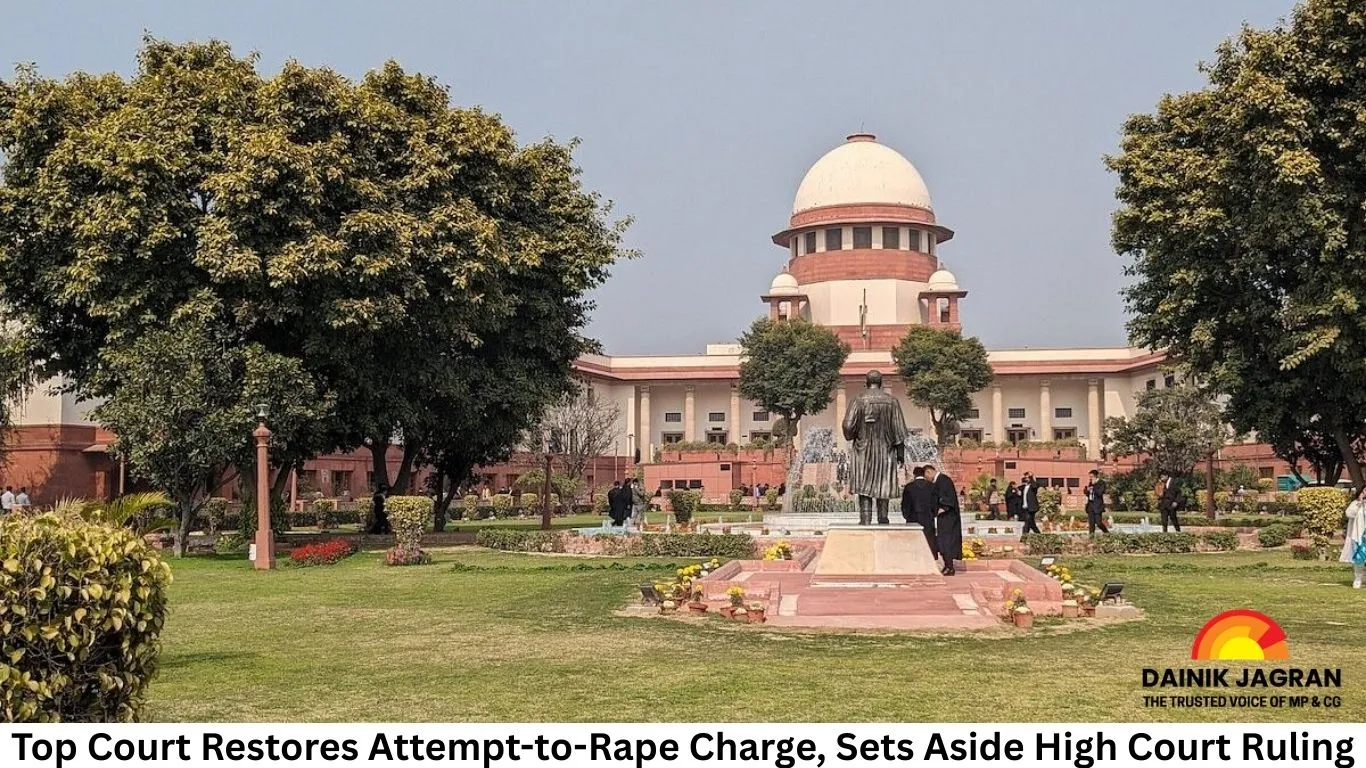
Top Court Restores Attempt-to-Rape Charge, Sets Aside High Court Ruling
Digital Desk
The case originated in Kasganj district of Uttar Pradesh, where a woman filed a complaint in January 2022 alleging that three youths intercepted her 14-year-old daughter in November 2021 while she was returning home. According to the complaint, two of the accused touched the minor inappropriately, attempted to drag her under a culvert, and broke the string of her pyjama. A special court had issued summons in 2023 under serious charges, including attempt to rape.
On March 17, 2025, however, the High Court ruled that the alleged acts did not meet the legal threshold for rape or attempted rape and ordered that those charges be removed. The judgment drew sharp criticism from legal commentators and civil society groups, who argued it set a troubling precedent for interpreting sexual offences involving minors.
Taking suo motu cognisance, the Supreme Court stayed the High Court order on March 25, 2025. In subsequent hearings, a bench that included Justices B. R. Gavai and A. G. Masih observed that certain remarks in the High Court ruling reflected an “insensitive and inhuman approach.” The bench warned that judicial observations must not discourage victims or create pressure to withdraw complaints.
In its final verdict, the apex court restored the attempt-to-rape charge and directed that the trial proceed accordingly. It stressed that consent obtained through coercion, intimidation, or deception cannot be treated as valid, and that courts must evaluate intent, conduct, and surrounding circumstances rather than isolating individual acts.
Legal experts say the ruling clarifies how courts should interpret preparatory acts in sexual assault cases and underscores the judiciary’s responsibility to adopt survivor-sensitive language. The judgment is expected to influence future trial court assessments of similar allegations, particularly those involving minors.
The matter will now continue before the trial court, which will examine evidence and witness testimony in light of the Supreme Court’s restored charges.
.jpg)




