

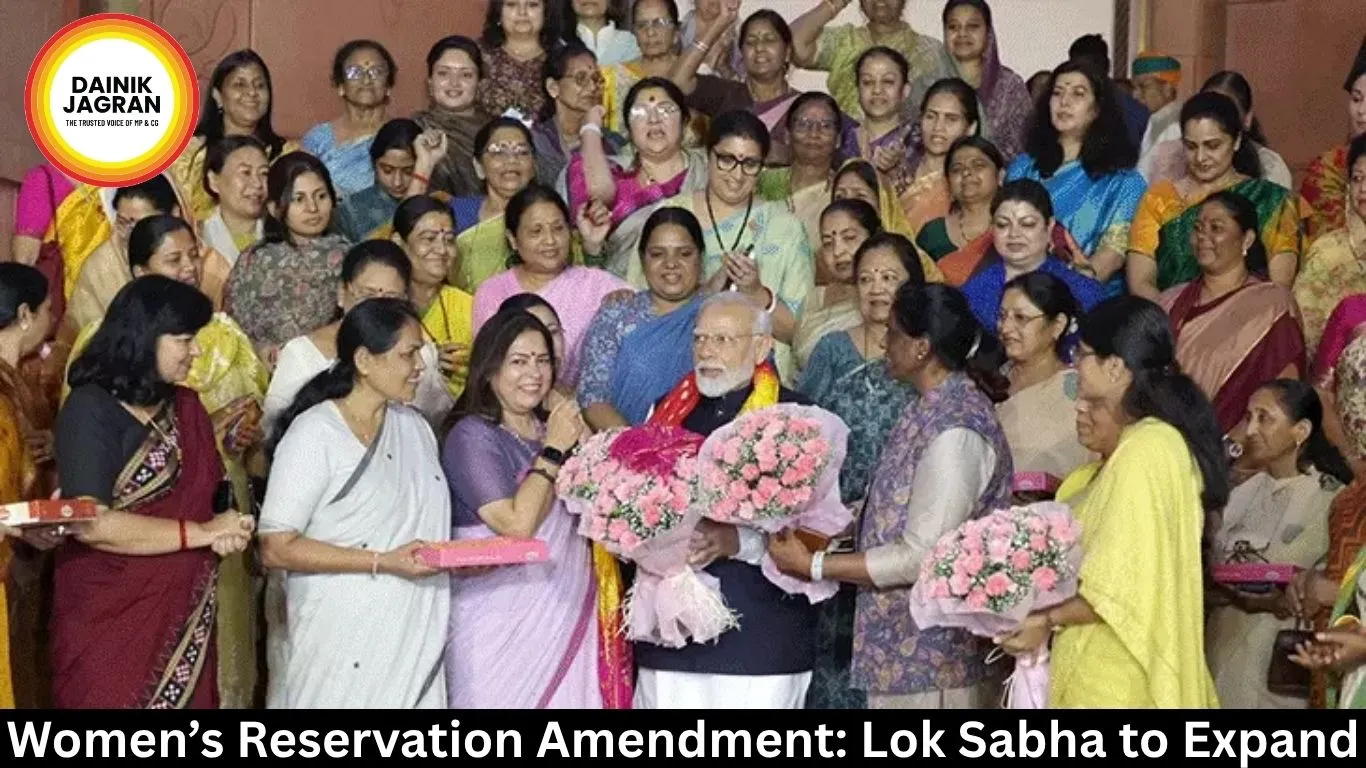
Women’s Reservation Amendment: Lok Sabha to Expand

Digital Desk

Women’s Reservation Amendment: Lok Sabha to Expand

Women’s Reservation Amendment proposes 273 seats for women in Lok Sabha, likely to expand to 816 seats ahead of 2029 elections.


Women’s Reservation Amendment Cleared; Lok Sabha May Expand to 816

The Women’s Reservation Amendment proposes 273 seats for women in an expanded Lok Sabha, likely to be taken up in the upcoming Parliament session

Cabinet Clears Draft

In a major policy move, the Union Cabinet chaired by Prime Minister Narendra Modi has approved a draft amendment to the Women’s Reservation framework, paving the way for a significant restructuring of parliamentary representation. The proposal includes increasing the strength of the Lok Sabha from 543 to 816 seats, with 273 seats earmarked for women.

The Women’s Reservation Amendment is expected to be introduced during a special session of Parliament scheduled between April 16 and 18, according to officials familiar with the development.

Key Proposal Details

Under the proposed amendment, one-third of the total seats in the Lok Sabha will be reserved for women. This reservation will follow a vertical framework, ensuring that women also receive representation within seats already reserved for Scheduled Castes (SC) and Scheduled Tribes (ST).

Officials indicated that similar provisions will be extended to state legislative assemblies, aligning representation norms across the country.

Implementation Timeline

As per the current proposal, the law will come into effect from March 31, 2029. It is expected to be implemented for the first time during the 2029 general elections, along with select state assembly elections.

The delayed rollout is linked to the need for fresh delimitation and restructuring of constituencies before the reservation can be operationalised.

Delimitation Changes Ahead

The Centre is also preparing to introduce a separate bill to amend the Delimitation Act. This will allow authorities to redraw constituency boundaries and determine the new allocation of seats.

Sources suggest that the delimitation exercise could be based on the 2011 Census data instead of waiting for the 2027 Census, potentially accelerating the process. The revised framework will apply to all states and Union Territories, including Delhi, Jammu & Kashmir, and Puducherry.

State-wise Seat Impact

Initial estimates indicate that several states will witness a substantial rise in parliamentary seats. Uttar Pradesh is likely to see the highest increase, with seats rising from 80 to 120. Maharashtra may expand from 48 to 72 seats, while Bihar could see its tally grow from 40 to 60.

Other states such as Madhya Pradesh, Tamil Nadu, Delhi, and Jharkhand are also expected to gain additional seats, with a corresponding share reserved for women.

Historical Context

The demand for women’s reservation in legislative bodies dates back to the pre-independence era. In 1931, leaders such as Begum Shah Nawaz and Sarojini Naidu advocated equal political rights for women.

Post-independence, the issue gained traction through various committees and policy frameworks. The 73rd and 74th Constitutional Amendments in 1993 marked a milestone by mandating one-third reservation for women in Panchayati Raj institutions and urban local bodies. Several states later increased this quota to 50%.

Policy and Political Impact

The Women’s Reservation Amendment is expected to significantly enhance women’s participation in legislative processes. Policy experts believe the move could reshape political representation and decision-making at both national and state levels.

However, analysts also note that the success of the reform will depend on effective implementation, timely delimitation, and political consensus across parties.

What Lies Ahead

The government is likely to prioritise the passage of the amendment bill during the upcoming special session. Once approved by Parliament, the focus will shift to delimitation and administrative preparations ahead of 2029.

As India moves towards expanding its legislative framework, the Women’s Reservation Amendment is being seen as a landmark step in strengthening inclusive governance and democratic representation.


 

--------

🚨 Beat the News Rush – Join Now!

Get breaking alerts, hot exclusives, and game-changing stories instantly on your phone. No delays, no fluff – just the edge you need. ⚡

Tap to join: 

🟢 WhatsApp Channel: Dainik Jagran MP CG

Crave more?

🅕 Facebook: Dainik Jagran MP CG English

🅧 Twitter (X): Dainik Jagran MP CG

🅘 Instagram: Dainik Jagran MP CG

Share the fire – keep your crew ahead! 🗞️🔥

english.dainikjagranmpcg.com
09 Apr 2026 By Abhishek Joshi

Women’s Reservation Amendment: Lok Sabha to Expand

Digital Desk

Women’s Reservation Amendment Cleared; Lok Sabha May Expand to 816

The Women’s Reservation Amendment proposes 273 seats for women in an expanded Lok Sabha, likely to be taken up in the upcoming Parliament session

Cabinet Clears Draft

In a major policy move, the Union Cabinet chaired by Prime Minister Narendra Modi has approved a draft amendment to the Women’s Reservation framework, paving the way for a significant restructuring of parliamentary representation. The proposal includes increasing the strength of the Lok Sabha from 543 to 816 seats, with 273 seats earmarked for women.

The Women’s Reservation Amendment is expected to be introduced during a special session of Parliament scheduled between April 16 and 18, according to officials familiar with the development.

Key Proposal Details

Under the proposed amendment, one-third of the total seats in the Lok Sabha will be reserved for women. This reservation will follow a vertical framework, ensuring that women also receive representation within seats already reserved for Scheduled Castes (SC) and Scheduled Tribes (ST).

Officials indicated that similar provisions will be extended to state legislative assemblies, aligning representation norms across the country.

Implementation Timeline

As per the current proposal, the law will come into effect from March 31, 2029. It is expected to be implemented for the first time during the 2029 general elections, along with select state assembly elections.

The delayed rollout is linked to the need for fresh delimitation and restructuring of constituencies before the reservation can be operationalised.

Delimitation Changes Ahead

The Centre is also preparing to introduce a separate bill to amend the Delimitation Act. This will allow authorities to redraw constituency boundaries and determine the new allocation of seats.

Sources suggest that the delimitation exercise could be based on the 2011 Census data instead of waiting for the 2027 Census, potentially accelerating the process. The revised framework will apply to all states and Union Territories, including Delhi, Jammu & Kashmir, and Puducherry.

State-wise Seat Impact

Initial estimates indicate that several states will witness a substantial rise in parliamentary seats. Uttar Pradesh is likely to see the highest increase, with seats rising from 80 to 120. Maharashtra may expand from 48 to 72 seats, while Bihar could see its tally grow from 40 to 60.

Other states such as Madhya Pradesh, Tamil Nadu, Delhi, and Jharkhand are also expected to gain additional seats, with a corresponding share reserved for women.

Historical Context

The demand for women’s reservation in legislative bodies dates back to the pre-independence era. In 1931, leaders such as Begum Shah Nawaz and Sarojini Naidu advocated equal political rights for women.

Post-independence, the issue gained traction through various committees and policy frameworks. The 73rd and 74th Constitutional Amendments in 1993 marked a milestone by mandating one-third reservation for women in Panchayati Raj institutions and urban local bodies. Several states later increased this quota to 50%.

Policy and Political Impact

The Women’s Reservation Amendment is expected to significantly enhance women’s participation in legislative processes. Policy experts believe the move could reshape political representation and decision-making at both national and state levels.

However, analysts also note that the success of the reform will depend on effective implementation, timely delimitation, and political consensus across parties.

What Lies Ahead

The government is likely to prioritise the passage of the amendment bill during the upcoming special session. Once approved by Parliament, the focus will shift to delimitation and administrative preparations ahead of 2029.

As India moves towards expanding its legislative framework, the Women’s Reservation Amendment is being seen as a landmark step in strengthening inclusive governance and democratic representation.

 

https://english.dainikjagranmpcg.com/national/women%E2%80%99s-reservation-amendment-lok-sabha-to-expand/article-16699

Latest News


